
TL;DR

Get the latest gadgets delivered free — and shop member deals
- Fast, free delivery on millions of items
- Access to Prime Big Deal Days deals on October 6–7
- Prime Video, Amazon Music and more included
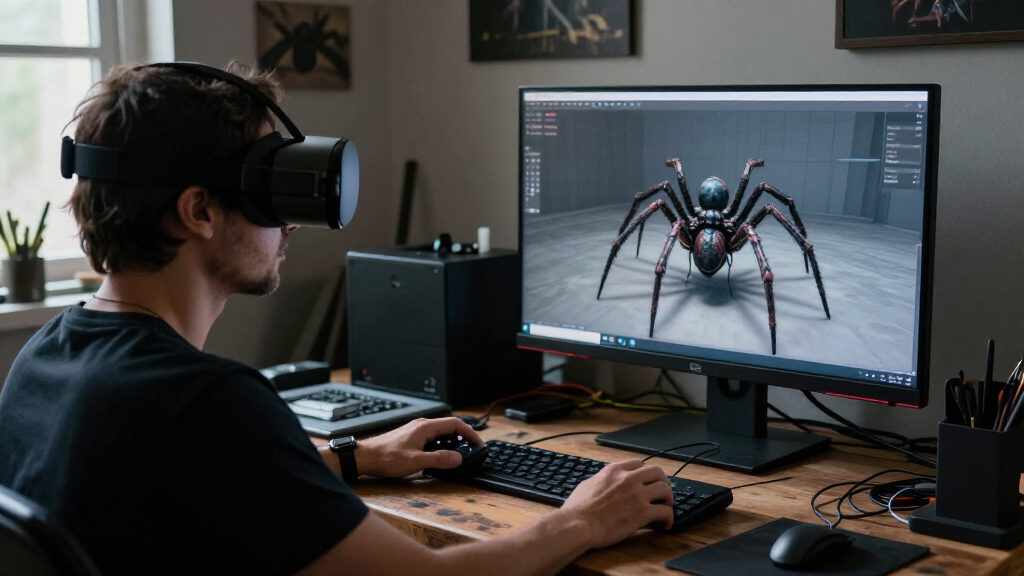
Athens-based artist Theo Triantafyllidis, winner of the 2026 Frieze Artist Award, will present “Feral Metaverse (Spider), 2026” at Frieze London. The work pairs a climbable physical sculpture with a multiplayer digital environment; Google says its team used Gemini while developing visual elements for the game.
Athens-based artist Theo Triantafyllidis, the winner of the 2026 Frieze Artist Award, will present a climbable giant spider sculpture connected to a multiplayer virtual world at Frieze London. The installation, titled Feral Metaverse (Spider), 2026, is scheduled to be on view in Regent’s Park from Oct. 14–18, bringing visitors’ physical interactions into a shared digital game.
Frieze and Google Arts & Culture describe the work as both a soft, climbable spider structure and a live multiplayer experience. Visitors are encouraged to help one another climb onto its legs. The activity then extends into the “Feral Metaverse,” where players move and collaborate in a shared digital environment, according to the announcement published by Google on Oct. 6.
The award is co-commissioned and co-produced with Forma, in collaboration with Google Arts & Culture. Google says the award gave Triantafyllidis the opportunity to expand a project team that included sculptors, fabricators, textile designers, game developers and civil engineers. The announcement does not provide the award’s financial value or a detailed account of how the project was funded.
Google also says the team used Gemini in its creative workflow to generate sketches, character designs, backdrops and 3D renders that helped shape the game’s look. The company describes Gemini as a tool and collaborator in this process. That is Google’s account of the production workflow; the announcement does not specify which outputs were retained, how they were edited, or how much of the finished work was generated with the system.
The project makes participation part of the artwork: visitors are not only looking at a sculpture but are asked to climb it with other people and then engage with a digital environment. Frieze and Google frame cooperation, advice-sharing and learning as central to the experience. That design connects a physical encounter at an art fair with interaction on screen, rather than treating the game as a separate presentation.
The work also brings together several disciplines, from textile design and sculpture to game development and engineering. Its use of Gemini is a further point of interest because it places a generative AI tool inside a specific art-making process. The available announcement describes the tool’s role in generating visual material, but does not establish that the AI independently designed or built the installation.
climbable sculpture for art installations
As an affiliate, we earn on qualifying purchases.
As an affiliate, we earn on qualifying purchases.
Triantafyllidis’s Hybrid Art Practice
Frieze describes Triantafyllidis as an artist whose practice includes video games, live simulations, performances and physical installations. His projects use constructed worlds to explore complex subjects through play, according to the award announcement. The spider work continues that approach by linking a tangible structure to a multiplayer simulation.
The Frieze Artist Award supports artists creating ambitious new work at points in their careers, the organizers say. The 2026 project will be shown during Frieze London in Regent’s Park. Google’s report also directs readers to Google Arts & Culture for more about how the work was made, but it does not provide a full technical description of the game or the sculpture.
““Spiders are the original engineers.””
— Theo Triantafyllidis, as quoted in Google’s Oct. 6 announcement
multiplayer virtual world gaming setup
As an affiliate, we earn on qualifying purchases.
As an affiliate, we earn on qualifying purchases.
Details of the Game and AI Use
The announcement does not explain how many people can join a game session, how long each session lasts, or what hardware visitors will use. It also gives no technical details about how the physical booth and virtual environment connect, beyond saying that the experience moves between the screen and the booth.
The precise contribution of Gemini remains unclear. Google lists categories of generated material, but does not say which appeared in the final game or describe the artists’ editing and selection process. The report also does not set out accessibility arrangements for climbing, visitor safety procedures, or what happens to the installation after Frieze London ends.
interactive art sculpture for exhibitions
As an affiliate, we earn on qualifying purchases.
As an affiliate, we earn on qualifying purchases.
The Frieze London Presentation
The work is scheduled to be on view at Frieze London in Regent’s Park from Oct. 14 through Oct. 18, 2026. Visitors will be able to encounter the sculpture and its linked multiplayer game during the fair, according to the announcement. Further information about the making of the project is available through Google Arts & Culture; no later exhibition dates or post-fair plans have been announced in the source material.
digital art creation tools with AI
As an affiliate, we earn on qualifying purchases.
As an affiliate, we earn on qualifying purchases.
Key Questions
Who made the giant spider artwork?
Theo Triantafyllidis, an Athens-based artist and the 2026 Frieze Artist Award winner, created Feral Metaverse (Spider), 2026.
Where and when can visitors see it?
The work is scheduled to appear at Frieze London in Regent’s Park from Oct. 14–18, 2026.
How does the physical sculpture connect to the virtual world?
Visitors are encouraged to help one another climb onto the spider sculpture. The experience then extends into a shared multiplayer digital environment. The announcement does not provide further technical details about the connection.
How was Gemini used in making the project?
Google says the team used Gemini to generate sketches, character designs, backdrops and 3D renders. The announcement does not say which outputs appear in the final work or detail how they were revised.
Source: rss
Fall Picks
fall essentials
As an affiliate, we earn on qualifying purchases.