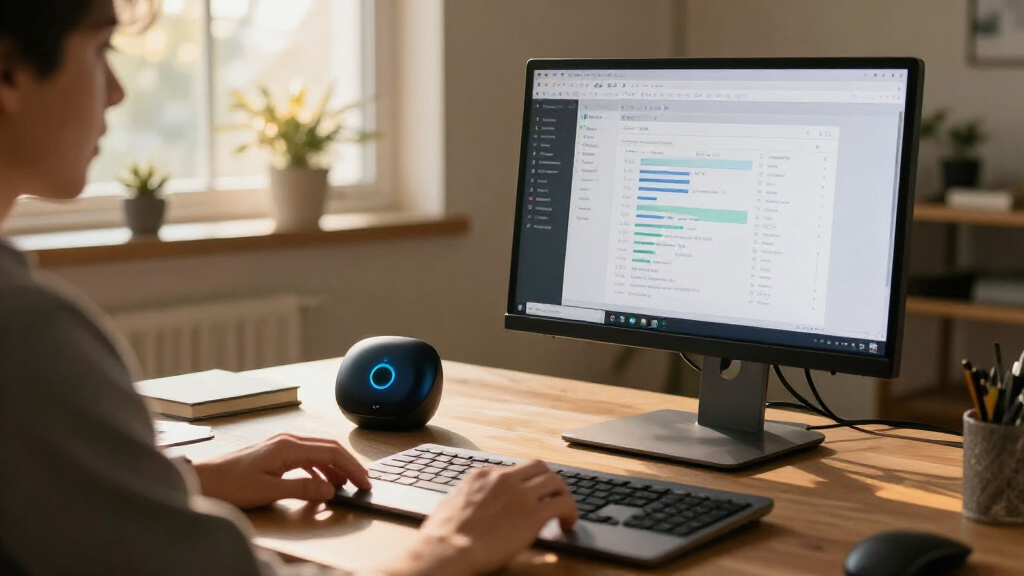

🔍 Read the full analysis: What Running Memory-Enabled AI Agents Taught Us on ThorstenMeyerAI.com

Get the latest gadgets delivered free with Prime
- Fast, free delivery on millions of items
- Prime Video, Amazon Music and more included
- Member-only deals all year
TL;DR
Anthropic published a research post on Nov. 6, 2026, describing how Claude agents save, organize and correct information between sessions. Its reported tests suggest structured, selective notes can outperform large collections of files, while a separate account of running agents highlights risks including stale or misplaced memory. The results are Anthropic’s own evaluations, not peer-reviewed findings.
Anthropic published a research post on Nov. 6, 2026, describing how its Claude models can save and organize information between conversations, then revisit those notes to correct or refine them. The post reports results from the company’s own evaluations; a separate account by Thorsten Meyer, who says he runs Claude-based agents, describes operational problems such as stale notes and lost handoff details.
Anthropic distinguishes an agent’s working context—the information available during a current session—from memory stored for later sessions. Its definition covers knowledge gained from user interactions and assigned tasks that is saved in a form the model can read later. It does not include changes to model weights, learning within a single conversation or summaries used to make room in a context window.
The post describes several parts of a memory system: notes selected for retention, a process for judging what is likely to matter again, and a between-session review Anthropic calls “dreaming.” During that review, an agent can compare saved notes with transcripts, correct errors or create new representations. Those representations might include a linked wiki, while a memory hierarchy can load a small overview every time and retrieve deeper material only when needed.
Anthropic reports a Pokémon Red test comparing one run each of Claude Sonnet 3.7 and Claude Fable 5 at about 10,000 game steps. Sonnet 3.7 created 413 files across 225 folders and had earned one badge; Fable 5 created nine files in two folders and a top-level dashboard, and had earned four. Anthropic also reports that a self-built wiki raised performance on 25 questions about company documents from 13% to 48% of graded criteria over 128 sessions. These are company-reported results, and the Pokémon comparison was a single run for each model.
Infographic 01 · Remember less, remember the right things
What the screen shows does not belong in memory
Money and position can be read off the screen every turn. Plans, strategy and tested rules exist only if the agent writes them down.
Claude Fable 5 wrote nine files in two folders, plus one top-level dashboard file (global.md) with its goal, plan and rules for using memory.
Memory files at about 10,000 steps
One run each, Pokémon Red, a memory folder the model could read and write
Over 17 steps, Sonnet 3.7 created six files, deleted nine others and took no actions in the game.
Source: Anthropic, The components of agent memory (research post, 6 Nov 2026). One run per model, Anthropic’s own evaluation.
Powered by Thorsten Meyer AI
Why Selective Agent Memory Matters
Memory can make an agent more useful across repeated tasks: it may retain a user’s preferences, tested procedures or project decisions rather than require them to be restated in every session. But the source material shows that saving more is not automatically better. In Anthropic’s game test, the model that produced fewer, more organized files also had progressed further at the reported checkpoint. The comparison suggests a possible advantage for concise, actionable memory, though a single run cannot establish that the memory design caused the difference.
The practical risk is that saved information can be wrong, outdated or attached to the wrong task. Meyer’s account says his team encountered index overload, stale memory, crossed messages and incomplete handoffs. Those are operational observations from his agents, not findings independently validated by Anthropic. Taken together, the reports point to memory quality and maintenance as design issues, not just storage problems.
Products Worth Considering

Apple MacBook Air 13.6-inch Laptop with M5 Chip, 16GB Memory, 512GB SSD, Sky Blue
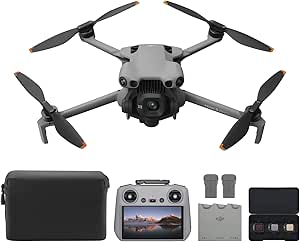
DJI Mini 5 Pro Fly More Combo with DJI RC 2

Anker SOLIX C1000 Gen 2 Portable Power Station, 1,024Wh
As an affiliate, we earn on qualifying purchases.
From Blank Sessions to Saved Notes
Traditional chat sessions generally rely on the information available in the current conversation. When a new session begins without a saved memory system, earlier details may not be available. Agent memory adds a separate store that can be read in later sessions, creating a need to decide what to save and when to retrieve it.
Anthropic’s post draws an analogy to offline memory processing in neuroscience and refers to prior work on “sleep-time compute” from researchers at Letta and UC Berkeley. It adapts that idea to agents reviewing logs between tasks. The source article also links memory design to a broader transition from single-session chat toward agents expected to handle recurring work, but the post’s reported evaluations do not by themselves establish how well these systems perform across real-world deployments.
““knowledge that Claude gains from experience—including interactions with users and tasks it’s been assigned—and that it retains between sessions, saved as context it can read later.””
— Anthropic, in its definition of agent memory
Limits of the Reported Tests
Anthropic’s results come from its own evaluations, published as a research post rather than a peer-reviewed paper. The source says several results are single runs; it does not provide enough detail here to judge how reliably the reported differences would recur across models, tasks or repeated trials. The Pokémon result is a comparison at one checkpoint, not evidence of a general performance ranking.
The source material does not specify the full evaluation setup, all scoring procedures or whether the reported gains would hold in external deployments. It also does not establish how often an agent’s saved notes are wrong, how reliably “dreaming” catches errors, or what safeguards prevent private or irrelevant information from being retained. Meyer’s account offers practical observations but does not provide a controlled comparison or independent verification.
Testing Memory Beyond One Run
The next evidence to watch for is whether Anthropic or independent researchers publish repeatable evaluations across more tasks, models and runs, with enough methodological detail to assess the results. Such tests could clarify whether structured memory consistently helps, which kinds of notes are most useful and how correction processes perform when saved information conflicts with newer instructions.
For users and developers, the immediate question is how memory is managed in the systems they use: what gets retained, how it can be reviewed or corrected, and whether the agent can distinguish old information from current instructions. The source material does not announce a product release or a timetable for further research, so the next publication or deployment milestone remains unknown.
Key Questions
What did Anthropic publish?
Anthropic published a research post on Nov. 6, 2026, outlining components of agent memory, including saved notes, between-session review and structures for retrieving information later.
How is agent memory different from a context window?
A context window holds information available during the current session. Agent memory is information saved in a form the model can read in a later session.
Did Anthropic prove that fewer memory files improve performance?
No. The Pokémon comparison involved one run per model, according to the source. It shows different file counts and badge totals at a reported checkpoint, but cannot establish that file organization alone caused the difference.
What does Anthropic mean by “dreaming”?
Anthropic uses “dreaming” for an agent’s review of logs and transcripts between sessions. The agent may correct saved notes, add new information or change how memory is organized.
What problems remain with AI agent memory?
The source describes risks including outdated or incorrect notes, overloaded indexes, crossed messages and information lost during handoffs. How consistently current systems detect and correct those problems remains unclear.
Source: ThorstenMeyerAI.com