When choosing an air purifier for your studio, don’t focus on HEPA filters alone. Consider units that support ventilation to improve airflow and reduce stale air buildup. Look for models with low noise levels so your work or relaxation isn’t disturbed. Odor and chemical fume control are essential if you use paints or solvents, and adjustable fan speeds help customize airflow. Keep exploring to discover more features that will create a healthier, more comfortable workspace.
Key Takeaways
- Prioritize low noise levels or whisper-quiet modes to prevent disruptions during work or recordings.
- Choose units with activated carbon filters to effectively eliminate odors and chemical fumes common in studio environments.
- Opt for models with adjustable fan speeds for customized airflow based on current air quality needs.
- Ensure the purifier supports existing ventilation systems to enhance overall airflow and indoor air exchange.
- Look for easy maintenance features to sustain filter performance and consistent air quality in long-term studio use.
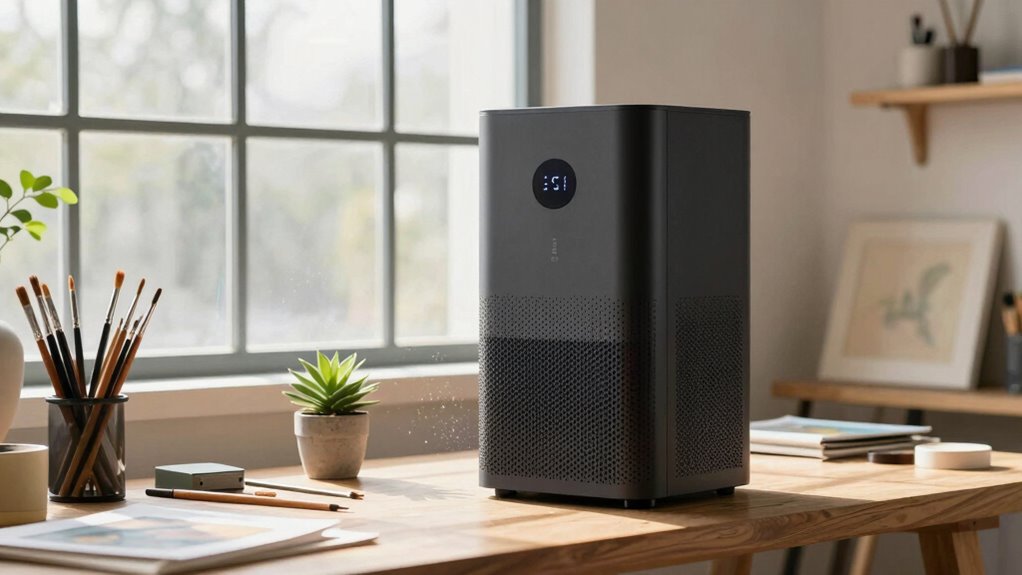
Creating a healthy and comfortable environment in your studio is essential, especially if you spend long hours working or creating. One of the biggest challenges you’ll face is managing ventilation. Studios often have limited airflow, especially in enclosed spaces, which can lead to stale air and increased buildup of indoor pollutants. Air purifiers can help, but they’re not a one-size-fits-all solution. When choosing one, you need to consider how it addresses ventilation challenges. For example, some units come with features like fans that help circulate air more effectively, improving overall airflow and reducing stuffiness. Others might be designed to work alongside existing ventilation systems, enhancing their efficiency. Keep in mind that poor ventilation can cause indoor air quality to deteriorate quickly, making it harder to concentrate and potentially impacting your health over time. Proper air circulation isn’t just about filtering pollutants; it’s about creating a balanced environment where fresh air replaces stale air regularly. Incorporating units with ventilation support features can further optimize airflow and air quality in your studio.
Noise levels are another critical factor often overlooked when selecting air purifiers for your studio. If your space is a sanctuary for creativity or focus, loud machines can be disruptive. Many air purifiers are noisy, especially at higher fan speeds, which can interfere with your work, recordings, or relaxation. It’s worth investing in models specifically designed for quiet operation—those with low decibel ratings or whisper-quiet modes. When shopping, check reviews or specifications to find units that won’t drown out your music, voice recordings, or quiet moments of focus. Remember, a noisy purifier might seem like a minor annoyance at first but can considerably impact your workflow and comfort over time. Balance is key: you want an air purifier that provides effective filtration without becoming a constant background noise.
Beyond just HEPA filters, consider additional features that enhance your studio environment. Activated carbon filters, for instance, can tackle odors and chemical fumes that might linger in your space, especially if you work with paints, solvents, or other strong-smelling materials. Also, look for units with adjustable fan speeds and easy maintenance options. These allow you to customize airflow based on your needs and ensure your purifier remains effective and quiet. Ultimately, the right air purifier should integrate seamlessly into your studio, improving air quality without adding new challenges like excessive noise or poor ventilation. By paying attention to these details, you create a space where you can breathe easily, work efficiently, and stay comfortable for hours on end.
Frequently Asked Questions
How Loud Are Studio Air Purifiers During Operation?
Studio air purifiers typically produce noise levels between 25 to 60 decibels, depending on the fan speed and model. You’ll notice higher noise during maximum settings, but quieter operation is available with sound dampening features. If you need a peaceful environment, choose a purifier with adjustable speeds and sound-dampening technology. This way, you maintain good air quality without disrupting your workflow or recording sessions.
What Maintenance Is Required for Long-Term Use?
You need to stay on top of filter replacement to keep your purifier running smoothly. Check the filter lifespan regularly—most filters need changing every 6 to 12 months, depending on usage. Keep the unit clean by wiping it down and vacuuming pre-filters if applicable. Following these simple steps guarantees your air purifier keeps working like a charm, and you won’t be caught off guard when it’s time for a change.
Can Air Purifiers Handle Specific Studio Pollutants Like Fumes?
Yes, air purifiers can handle studio pollutants like fumes with the right features. Look for models that offer fume filtration and chemical removal capabilities, such as activated carbon filters, to effectively target volatile organic compounds (VOCs) and fumes. You should choose a purifier specifically designed for chemical removal, ensuring it can handle the unique pollutants in your studio environment for cleaner, safer air.
Are Portable Air Purifiers Effective for Large Studios?
Portable air purifiers can work wonders, but for large studios, they’re like trying to put out a wildfire with a garden hose. Their effectiveness drops as studio size increases, especially compared to stationary units designed for big spaces. If you’re dealing with a massive area, opting for stationary air purifiers provides the coverage and power needed, while portable ones are best suited for smaller, targeted spots.
How Energy-Efficient Are Different Air Purifier Models?
Different air purifier models vary in energy consumption, but many now prioritize power efficiency. You’ll find that energy-efficient units use less power while still maintaining high filtration performance, helping you save on electricity costs. Look for models with an Energy Star rating or adjustable fan speeds, so you can optimize power efficiency based on your studio’s needs. Choosing these options guarantees clean air without excessive energy use.
Conclusion
So, when choosing an air purifier for your studio, remember that it’s not just about “HEPA” filters. Think about your space’s unique needs—like odors, VOCs, or humidity. Don’t fall into the trap of thinking one feature rules them all; instead, see it as a puzzle where every piece matters. After all, your studio’s air quality is the canvas, and the right purifier is the brush that brings clarity and inspiration to your creative space.