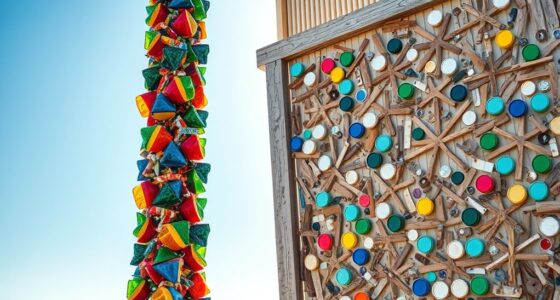
Biodegradable artworks embrace decay as part of their design, highlighting sustainability and the natural cycle of life. You can choose eco-friendly materials like organic fibers, natural dyes, or compostable plastics that break down over time, reducing waste and environmental impact. This approach encourages you to rethink permanence, creating pieces that change and disappear, deepening your connection to nature. If you continue exploring, you’ll discover how artists craft these temporary visions to inspire ecological awareness and resilience.
Key Takeaways
- Select renewable, biodegradable materials like organic fibers, natural dyes, or compostable plastics to ensure intentional decay.
- Design artworks with natural degradation timelines in mind, influencing material choice and structural complexity.
- Incorporate eco-friendly techniques that accelerate or control decay processes, such as microbial or enzymatic action.
- Plan for the artwork’s lifecycle, considering environmental factors like moisture, temperature, and exposure to elements.
- Use symbolic or structural elements that emphasize impermanence, encouraging viewers to reflect on decay and renewal.
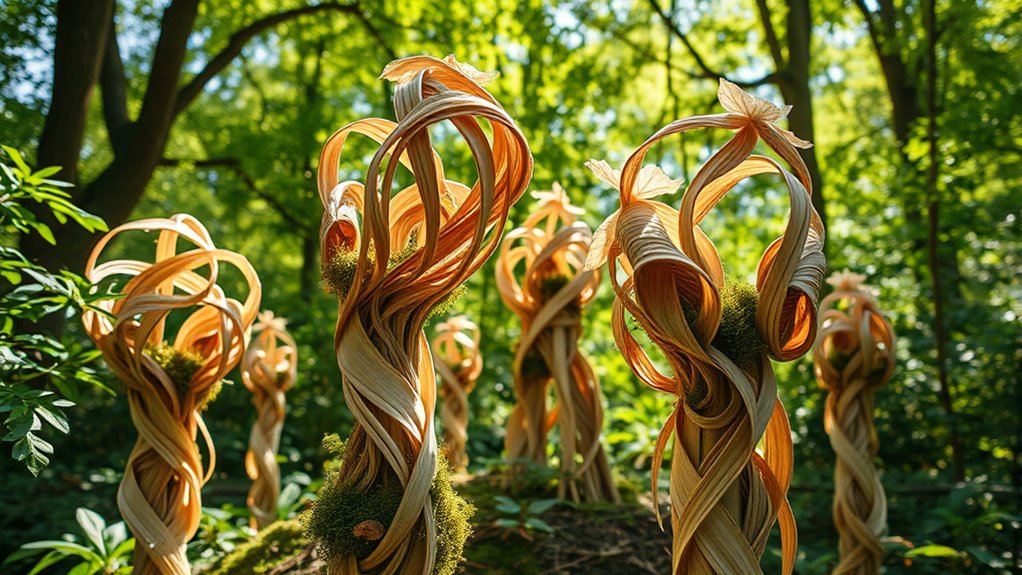
Have you ever contemplated art that not only inspires but also benefits the environment? Biodegradable artworks challenge traditional notions of permanence, pushing you to think differently about the lifecycle of creative pieces. By focusing on sustainable materials, these artworks are crafted to naturally break down over time, reducing waste and minimizing ecological impact. When you choose biodegradable mediums like organic fibers, natural dyes, or compostable plastics, you’re actively participating in a process that prioritizes environmental health. This approach transforms art from a static object into a dynamic event, where decay becomes part of the artistic message. It’s a conscious shift that emphasizes responsible creation and consumption, encouraging viewers to reflect on sustainability and the transient nature of life itself.
Using sustainable materials isn’t just about reducing ecological impact; it’s a statement of values. You’re opting for resources that are renewable, biodegradable, and ethically sourced, ensuring your art aligns with ecological principles. For example, artists who work with bamboo, recycled paper, or plant-based inks are intentionally choosing options that leave minimal environmental footprints. This conscious selection encourages a dialogue about how art can serve as a catalyst for environmental awareness, inspiring others to consider their own choices in materials and disposal. The ecological impact of biodegradable artworks is profound—by designing pieces meant to decay, you help combat the overwhelming accumulation of non-biodegradable waste that often burdens landfills and ecosystems. Additionally, the use of biodegradable materials often involves innovative eco-friendly techniques, which further enhance the sustainability of your artwork.
Choosing renewable, biodegradable, and ethically sourced materials aligns your art with ecological values and reduces environmental impact.
In addition, biodegradable artworks foster a deeper connection between art and nature. You might create sculptures that slowly dissolve into the earth, or installations that transform as the seasons change. This ephemeral quality reminds viewers that nothing is truly permanent—everything is part of a continuous cycle of birth, decay, and renewal. As you design with decay in mind, you’re embracing a philosophy that values sustainability over permanence, encouraging a more harmonious relationship with the environment. It’s an empowering act, demonstrating that art can be both beautiful and environmentally responsible.
Ultimately, biodegradable artworks challenge you to rethink your role as an artist and observer. They invite you to consider how your creative choices impact the planet and inspire others to adopt eco-friendly practices. By incorporating sustainable materials and prioritizing ecological impact, you’re contributing to a future where art and nature coexist more sustainably. This approach underscores that decay isn’t a flaw but a crucial part of the natural order—one that can be harnessed to create meaningful, environmentally conscious art that speaks to the impermanence and resilience of life itself.
Frequently Asked Questions
How Do Artists Select Eco-Friendly Materials for Biodegradable Artworks?
You select eco-friendly materials for biodegradable artworks by focusing on eco material sourcing and conducting thorough sustainability assessments. You look for natural, renewable, and non-toxic materials that break down easily without harming the environment. You consider the lifecycle of each material, guaranteeing it aligns with your sustainability goals. By researching suppliers and testing materials, you ensure your art piece is truly biodegradable and eco-conscious from start to finish.
What Safety Considerations Are Involved in Creating Biodegradable Art?
Did you know that improper handling of biodegradable materials can lead to chemical hazards affecting both artists and the environment? When creating biodegradable art, you must follow strict handling protocols to minimize risks. Always wear protective gear, work in well-ventilated areas, and store materials safely. Being cautious guarantees your safety and helps prevent unintended environmental impact, making your art both beautiful and responsible.
How Long Does It Typically Take for Biodegradable Artworks to Decompose?
You’ll find that the decomposition timeline for biodegradable artworks varies based on environmental factors like moisture, temperature, and soil type. Typically, it can take anywhere from a few weeks to several months for the artwork to fully decompose. Warmer, moist environments speed up the process, while cooler, dry conditions slow it down. By understanding these factors, you can better predict how quickly your biodegradable art will naturally break down.
Can Biodegradable Art Be Preserved or Displayed Temporarily?
You can absolutely preserve biodegradable art for temporary exhibitions using clever preservation techniques. Think of it like hitting pause on nature’s grand symphony—by controlling humidity, temperature, and light, you slow down decay dramatically. This allows your artwork to shine for a limited time, enthralling viewers before nature takes its course. Your creative display becomes a fleeting masterpiece, emphasizing impermanence and the beauty of transience.
What Are the Challenges in Documenting Biodegradable Artworks’ Lifecycle?
You face challenges in documenting biodegradable artworks’ lifecycle because digital tracking can be tricky as the artwork naturally decays. Tracking changes over time requires precise systems to monitor its progression. Conducting a lifecycle assessment helps you understand environmental impacts, but unpredictable decay rates and environmental variables make thorough documentation difficult. Staying consistent with data collection and adapting to decay patterns are essential for accurately capturing the artwork’s lifecycle.
Conclusion
As you embrace biodegradable artworks, you become part of a living cycle, where art and nature dance in harmony. Like a leaf returning to the earth, your creations will gracefully decay, nourishing the future. This approach transforms art from a static object into a dynamic process—an ongoing conversation with the environment. By designing with decay in mind, you plant the seeds for a sustainable, ever-evolving artistic landscape that reminds us we’re all part of nature’s endless story.