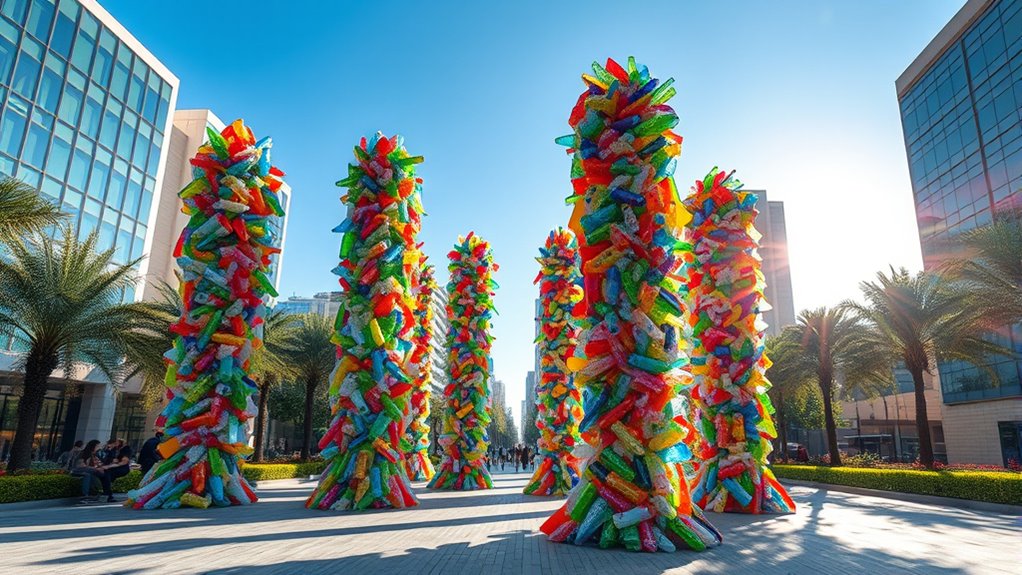

Artists are transforming ocean plastic waste into mesmerizing public sculptures that raise awareness about pollution and showcase innovative reuse strategies. They carefully select and assemble materials like bottles, bags, and fishing nets to create striking shapes that highlight environmental issues. These sculptures serve as symbols of hope and responsibility, inspiring communities to rethink waste and sustainability efforts. Continuing to explore this topic reveals how art can powerfully combat pollution and foster positive change in our environment.
Key Takeaways
- Artists transform discarded plastics like bottles and nets into vibrant public sculptures to raise awareness about pollution.
- The process involves cleaning, cutting, and assembling waste materials to create impactful environmental art.
- These sculptures are placed in public spaces, blending activism with aesthetic appeal to promote sustainability.
- Artistic techniques emphasize organic forms and textured surfaces, highlighting the potential of recycled plastics.
- Such artworks serve as powerful symbols encouraging community action against plastic pollution and environmental responsibility.
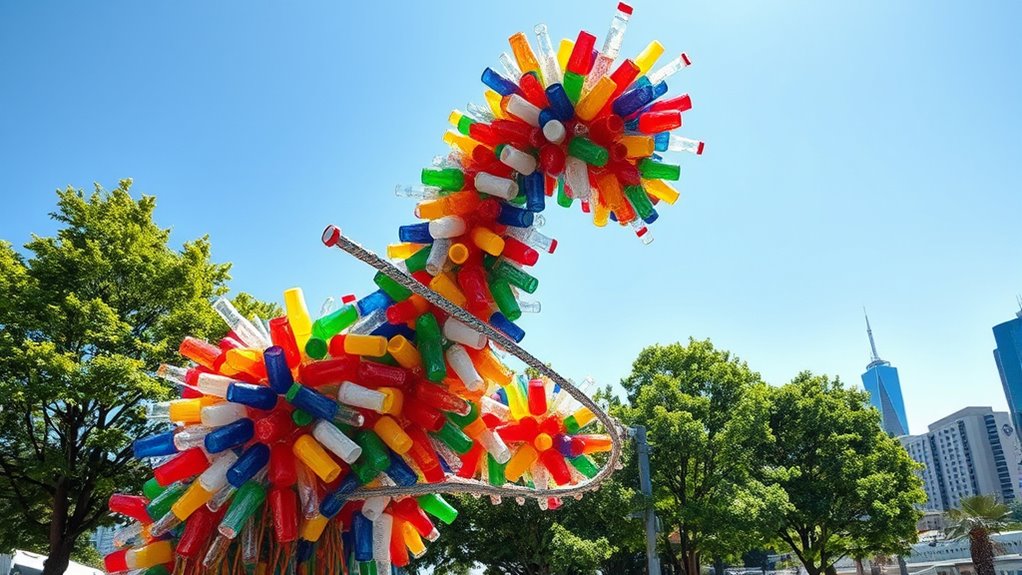
Have you ever wondered how discarded plastics can be transformed into inspiring public art? It’s a fascinating process that takes marine debris, often seen as trash polluting our oceans, and reimagines it as vibrant sculptures that brighten urban aesthetics. When artists choose to work with plastic waste, they’re not just creating visually striking pieces; they’re making a statement about environmental responsibility and the potential for change. These sculptures serve as powerful reminders of the pollution crisis and demonstrate how art can spark conversations on sustainability.
You might notice that these public sculptures often incorporate a variety of plastics—bottles, bags, fishing nets—that would otherwise clutter beaches or end up in landfills. Artists carefully select and assemble these materials, turning what was once seen as worthless into something enthralling and meaningful. By doing so, they challenge the perception of marine debris as mere trash and elevate it to a form of urban aesthetics that invites viewers to reconsider their relationship with waste. The transformation process involves meticulous cleaning, cutting, and curating, ensuring that each piece fits into a larger narrative about environmental stewardship. Recycling plastic also encourages innovative thinking about waste management and resource reuse.
As you walk through a city adorned with these sculptures, you’ll see how they blend art with activism. They often stand as icons of hope, illustrating that pollution can be repurposed and that beauty can be born from chaos. These works not only add visual interest to public spaces but also educate communities about the importance of reducing plastic waste. They encourage passersby to think differently about consumption habits and inspire action toward cleaner oceans and streets. In urban environments, where aesthetics are often dictated by concrete and glass, these sculptures introduce organic forms and textured surfaces, creating a dynamic contrast that enhances the city’s visual landscape.
Frequently Asked Questions
How Do Artists Select Suitable Plastic Materials for Sculptures?
You select suitable plastic materials for sculptures by focusing on plastic sourcing and material durability. You look for recycled plastics that are readily available and environmentally friendly. You also consider how durable the plastic is, ensuring it can withstand weather conditions without breaking down. By balancing these factors, you choose materials that are both sustainable and long-lasting, helping you create impactful, eco-conscious public sculptures that resist the elements.
What Are the Environmental Impacts of Using Recycled Plastics in Art?
Oh, the eco-charm of recycled plastics—who wouldn’t want to turn plastic pollution into art? Using recycled plastics lowers waste and highlights recycling benefits, but it’s not perfect; some materials may leach toxins or degrade over time. Still, it raises awareness and sparks change, making your sculpture a badge of environmental responsibility, even if it’s just a shiny, recycled symbol in a world drowning in plastic.
How Do Public Sculptures Withstand Weather and Environmental Conditions?
You can guarantee public sculptures withstand weather and environmental effects by choosing durable plastics and applying weather-resistant coatings. Regular maintenance helps address issues like fading, cracking, or corrosion caused by environmental effects. Incorporating sturdy design features also enhances weather durability, allowing sculptures to endure rain, sun, and wind. By prioritizing these factors, you create artworks that remain vibrant and structurally sound despite changing weather conditions.
Are There Safety Concerns Related to the Chemicals in Recycled Plastics?
You should be aware that there are safety concerns related to recycled plastics, especially regarding chemical leaching and toxicity. While artists take precautions to select plastics with low-risk chemicals, some materials may still release substances harmful over time. It’s important to observe sculptures regularly and use protective coatings or treatments. Being cautious helps prevent potential health risks and ensures the sculpture remains safe for public interaction.
What Funding Options Are Available for Public Sculpture Projects?
You can explore grant opportunities from local arts councils or environmental organizations, which often support eco-friendly projects like yours. Sponsorship options from businesses interested in sustainability can also provide essential funding. Picture your sculpture standing proudly in the community, funded by these sources, inspiring viewers and raising awareness about pollution. By actively seeking out these funding avenues, you turn your creative vision into a tangible, impactful public artwork.
Conclusion
As you walk through the city, you might stumble upon a striking sculpture made from recycled plastic. It’s no coincidence that these art pieces often appear where pollution is worst, as if artists are responding to a silent call. By transforming waste into beauty, they remind you that pollution’s presence can inspire creativity. So, next time you see one, remember—your trash could be the next masterpiece, turning coincidence into a catalyst for change.