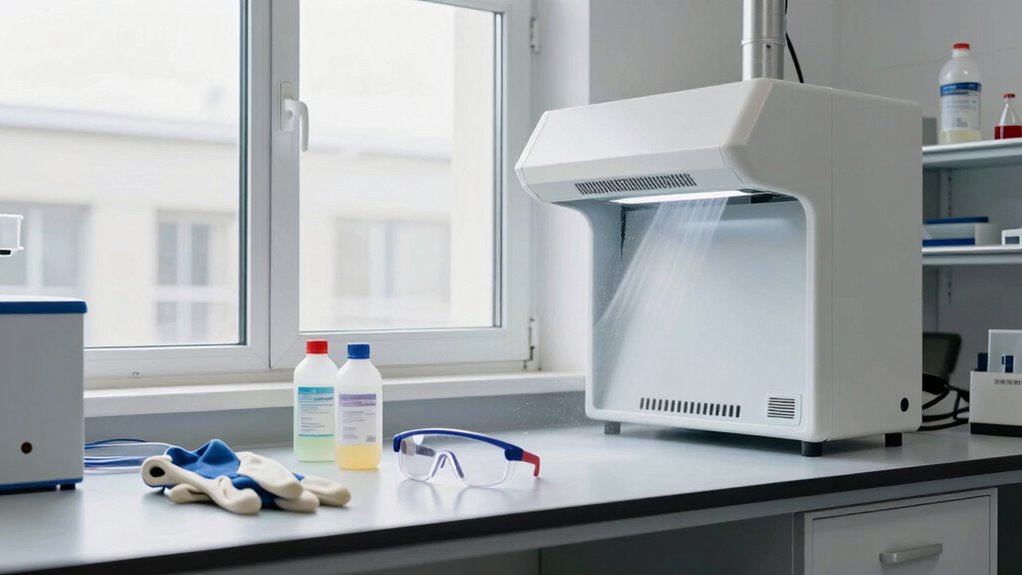

To guarantee safe solvent use without panic, prioritize proper ventilation by setting up local exhaust systems and keeping airflow steady. Always wear appropriate PPE like gloves, goggles, and respirators, and keep containers sealed tightly. Regularly check and maintain your ventilation equipment, and follow safety protocols for spills and emergency situations. Keeping these practices simple and consistent helps create a safe workspace; discover more tips to stay protected with ease as you explore further.
Key Takeaways
- Ensure continuous operation and regular maintenance of local exhaust systems to effectively remove solvent vapors.
- Wear appropriate PPE, including gloves, goggles, and respirators, to prevent skin and inhalation exposures.
- Increase workspace airflow with additional fans or portable extractors, especially in confined or poorly ventilated areas.
- Keep solvent containers tightly sealed when not in use and verify ventilation systems before starting work.
- Familiarize yourself with solvent properties, safety data sheets, and emergency procedures to promote proactive safety.
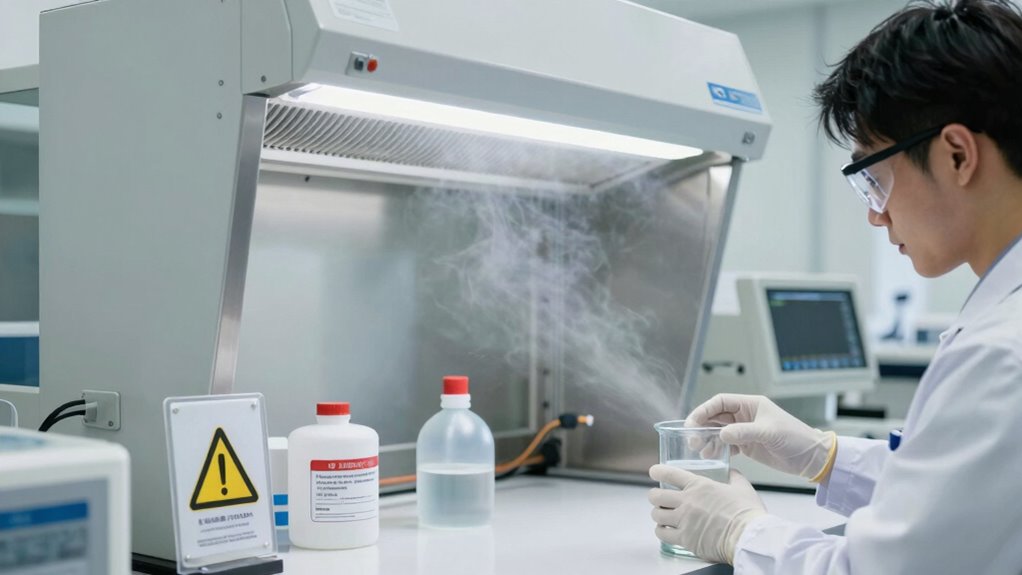
When handling solvents, it’s easy to feel overwhelmed by the potential health risks and safety concerns. But with a clear plan and proper precautions, you can work confidently without panic. The foundation of safe solvent use lies in effective ventilation strategies. You want to guarantee that any fumes are quickly and efficiently removed from your workspace. This means setting up local exhaust systems like fume hoods or portable extractors that target the specific area where you’re working. Keep these systems running whenever you’re handling solvents, and make sure they’re maintained regularly for best performance. Good ventilation not only minimizes inhalation of harmful vapors but also reduces overall airborne concentrations, creating a safer environment.
Alongside ventilation, protective gear plays an essential role in safeguarding your health. Always wear chemical-resistant gloves to prevent skin contact, as some solvents can cause irritation or burns on contact. Safety goggles or a face shield are vital to protect your eyes from splashes or vapors that might escape. A properly fitted respirator with activated charcoal filters offers an added layer of defense against inhaling toxic fumes, especially in situations where ventilation isn’t sufficient or when working with highly volatile solvents. Remember, protective gear isn’t just about compliance — it’s about actively reducing your exposure and preventing health issues before they start.
Establishing a routine for using protective gear and ventilation strategies helps make safety an automatic part of your workflow. Before you start, check that your ventilation systems are functioning correctly and that your protective gear is in good condition. Never compromise on these safety measures, even for quick tasks. If you’re working in a small or poorly ventilated space, consider increasing airflow with additional fans or portable exhaust units. Keep containers tightly sealed when not in use, to prevent vapors from escaping into the environment. Additionally, understanding air exchange rates can help you optimize your workspace’s ventilation for maximum safety.
Training also matters. Familiarize yourself with the specific properties of the solvents you use, and know the proper procedures for handling spills or emergencies. Keep safety data sheets accessible for quick reference and always follow manufacturer guidelines for protective gear and ventilation equipment. Remember, safety isn’t about panic or paranoia — it’s about proactive, consistent practices that keep you healthy. With a thoughtful approach to ventilation strategies and protective gear, you can confidently handle solvents and keep your workspace safe.
Frequently Asked Questions
How Often Should Air Quality Be Monitored in the Studio?
You should monitor air quality daily to guarantee ventilation strategies stay effective and air quality standards are maintained. Regular checks help you identify any buildup of fumes or pollutants early. Use portable detectors or fixed sensors, and adjust your ventilation system as needed. Consistent monitoring keeps your studio safe, allowing you to respond swiftly and maintain a healthy environment for yourself and others.
What Are the Signs of Solvent Exposure Health Issues?
You should watch for symptom recognition such as headaches, dizziness, nausea, or respiratory irritation, which can indicate solvent exposure. Regular health screening helps identify early health issues related to solvents. If you notice any of these signs, it’s vital to improve ventilation immediately and consult a healthcare professional. Staying vigilant with symptom recognition and health screening ensures you catch potential problems early, keeping your studio environment safer.
Can Natural Ventilation Fully Replace Mechanical Ventilation?
Natural ventilation can’t fully replace mechanical ventilation because it often lacks consistent mechanical efficiency. While natural ventilation helps improve airflow and reduce solvent buildup, it depends on weather, outdoor air quality, and building design, making it less reliable. Mechanical systems offer controlled, continuous airflow and filtration, guaranteeing a safer environment. For maximal safety, combine both methods and regularly maintain your ventilation to guarantee effective solvent vapor removal.
Are There Specific Solvents Safer for Prolonged Use?
Yes, certain solvents are safer for prolonged use, especially when considering solvent alternatives with lower toxicity. You should prioritize those with minimal vapor pressure and reduced health risks to limit prolonged exposure. Always check safety data sheets and choose solvents designed for extended handling, ensuring proper ventilation and protective gear. This approach helps you maintain a safer studio environment while working with solvents over longer periods.
How Should Used Solvent Containers Be Safely Disposed Of?
You should never just toss used solvent containers into the trash—they’re like tiny ticking time bombs! Always follow proper disposal procedures by taking them to designated hazardous waste facilities or using container recycling programs. Rinse containers thoroughly if instructed, then seal and label them properly. This way, you prevent leaks or spills, protect the environment, and keep your studio safe. Think of it as giving those containers a responsible send-off they deserve!
Conclusion
By following these simple safety tips, you can keep your studio air safe without unnecessary panic. Remember, over 80% of solvent exposures come from improper handling, not accidents, highlighting the importance of proper ventilation and protective gear. Staying informed and cautious helps you create a healthier workspace, so you can focus on your art without worry. Keep safety a priority, and you’ll enjoy a safer studio environment every day.