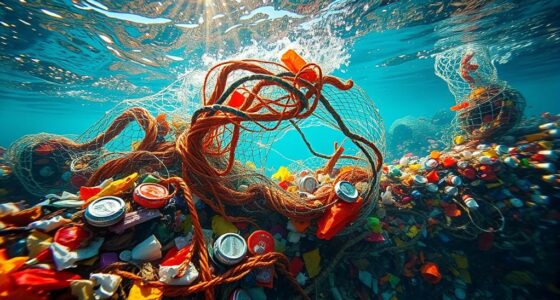

Upcycling in art turns discarded objects into inspiring creations by creatively repurposing waste materials like bottles, electronics, and scrap metal. Using techniques such as cutting, welding, and painting, artists transform trash into impactful sculptures, installations, and wall art that highlight sustainability and challenge perceptions of waste. This approach encourages experimentation with textures and forms, promoting environmental awareness. If you want to explore how artists redefine materials and make beauty from refuse, there’s more to discover ahead.
Key Takeaways
- Upcycling in art involves transforming discarded materials into aesthetic and meaningful artworks, emphasizing sustainability and creativity.
- Artists utilize techniques like cutting, welding, and painting to repurpose waste into innovative art pieces.
- Large-scale installations from recycled materials highlight environmental issues and inspire societal change.
- Upcycling promotes experimentation with textures and forms, redefining waste as a valuable resource.
- The movement fosters environmental awareness, empowering creators to turn waste into beautiful, impactful art.

Have you ever wondered how discarded materials can transform into stunning works of art? It’s a fascinating process that combines creativity with sustainability. When you explore upcycling in art, you see how artists turn waste into beautiful, meaningful pieces that challenge perceptions and inspire change. One of the key elements in this transformation is understanding recycling techniques. These methods enable you to repurpose everyday objects—old bottles, broken electronics, scrap metal—into new forms. By using techniques like cutting, welding, painting, or weaving, you can breathe new life into materials that would otherwise be thrown away. This approach not only reduces waste but also opens up endless possibilities for innovative art projects.
Discover how artists turn waste into meaningful, sustainable art through innovative recycling techniques.
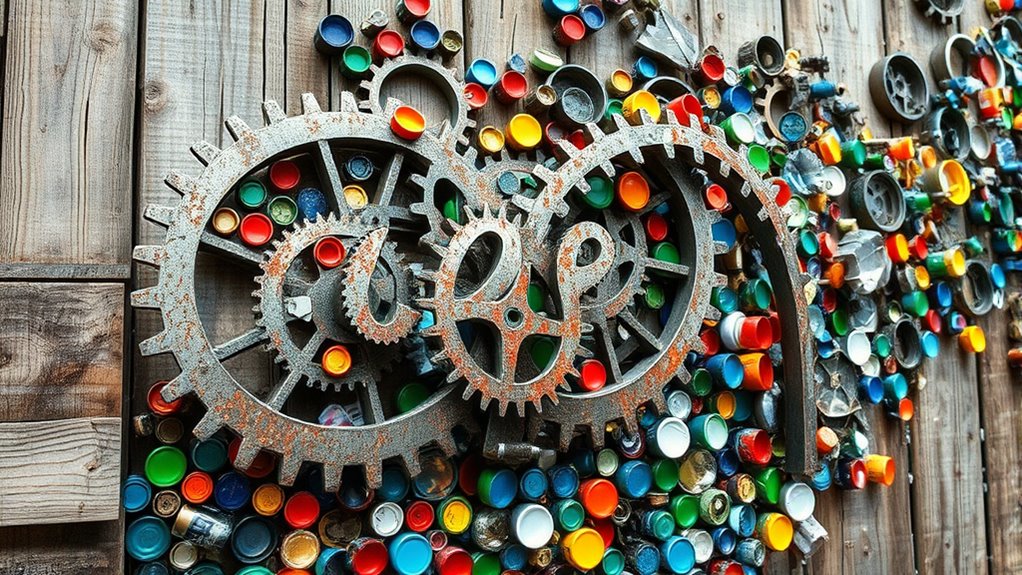
If you’re seeking inspiration, consider art installation ideas that focus on sustainability. Large-scale installations made from recycled materials can serve as powerful statements about environmental issues. For example, creating a sprawling sculpture from discarded plastic bottles can visually emphasize the problem of plastic pollution. Or, assembling a wall of reclaimed wood and metal scraps can highlight the beauty of imperfection and the value of reuse. These art installation ideas push you to think creatively about space, materials, and message, transforming a simple collection of waste into a compelling visual narrative. They invite viewers to reflect on their own consumption habits and the potential for change. Additionally, understanding the recycling techniques involved can help you develop more effective ways to incorporate waste into your artwork.
When you explore upcycling in art, you realize it’s not just about recycling techniques but about redefining what materials are capable of. You can experiment with different textures and forms, combining unlikely elements to produce something entirely new. The process encourages you to look at waste differently—viewing it as a resource rather than trash. By doing so, you become part of a movement that champions sustainability while creating mesmerizing art. Whether it’s a small piece for a gallery or a large public installation, the possibilities are endless once you embrace the concept of transforming waste into beauty.
Ultimately, upcycling in art helps you see the world through a different lens. It’s about more than just recycling; it’s about reimagining and reinventing. With a little ingenuity and a lot of passion, you can turn discarded materials into impactful works of art that inspire change and promote environmental awareness. So, next time you stumble upon something considered trash, think about how it might become part of your next masterpiece. The potential for creativity and sustainability is in your hands.
Frequently Asked Questions
How Can Beginners Start Practicing Upcycling in Art Projects?
To start practicing upcycling in your art projects, you should focus on creative sourcing by collecting everyday waste like bottles, jars, and fabric scraps. Begin with simple beginner techniques such as collage or painting on recycled materials. Experiment with transforming these items into artwork, and don’t be afraid to try different methods. With time, you’ll develop your own style and discover how upcycling can turn waste into beautiful, meaningful art.
What Are the Most Common Types of Waste Used in Upcycled Art?
You’ll find that common waste used in upcycled art includes plastics, glass bottles, cardboard, metal scraps, and fabric remnants. To effectively incorporate these materials, understanding recycling techniques and waste categorization helps you select suitable items. By sorting waste properly, you can transform discarded objects into stunning art pieces, giving new life to materials that might otherwise be thrown away. This approach makes your upcycling projects more sustainable and creative.
How Does Upcycling Impact the Environmental Footprint of Artists?
Upcycling considerably lowers your environmental footprint by promoting recycling benefits and waste reduction. When you choose to create art from waste materials, you help divert items from landfills and reduce the need for new resources. This sustainable approach minimizes pollution and conserves energy. By upcycling, you actively contribute to a greener planet, showing that creativity and environmental responsibility can go hand in hand, making a positive impact through your artistic efforts.
Are There Any Legal Considerations When Using Discarded Items in Art?
When using discarded items in your art, you should consider legal liability and copyright concerns. You might face legal issues if the items are stolen or if the artwork copies protected designs or trademarks. Always verify the origin of materials and avoid using copyrighted images or logos. By doing so, you guarantee your upcycled art remains legally compliant, protecting you from potential legal disputes and liability.
Can Upcycled Art Be Commercially Sold or Exhibited Publicly?
Yes, you can sell or exhibit upcycled art publicly, but you should consider market viability and artistic authenticity. Make sure your work complies with local laws and respects intellectual property rights. Focus on creating authentic pieces that resonate with your audience, boosting marketability. By emphasizing the uniqueness and sustainability of your upcycled art, you increase its appeal, making it more likely to succeed commercially and gain public recognition.
Conclusion
You might think upcycling in art is just a trend, but it’s actually a powerful way to turn waste into stunning pieces. Instead of ignoring trash, you can see its potential to inspire creativity and make a difference. So, next time you see discarded items, imagine their beauty waiting to be uncovered. Embrace upcycling—because transforming waste into art isn’t just sustainable, it’s a way to create something truly unique and meaningful.