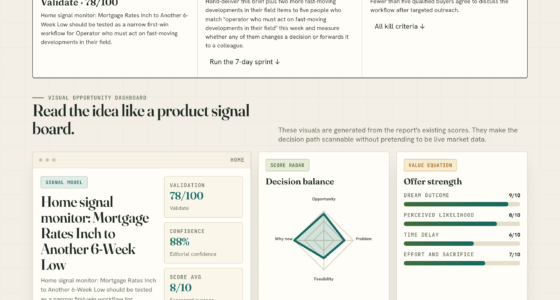

📊 Full opportunity report: Forezai · Polybot: When the AI Disagrees With the Odds on ThorstenMeyerAI.com — validation score, market gap, and execution plan.

Get the latest gadgets delivered free with Prime
- Fast, free delivery on millions of items
- Prime Video, Amazon Music and more included
- Member-only deals all year
TL;DR
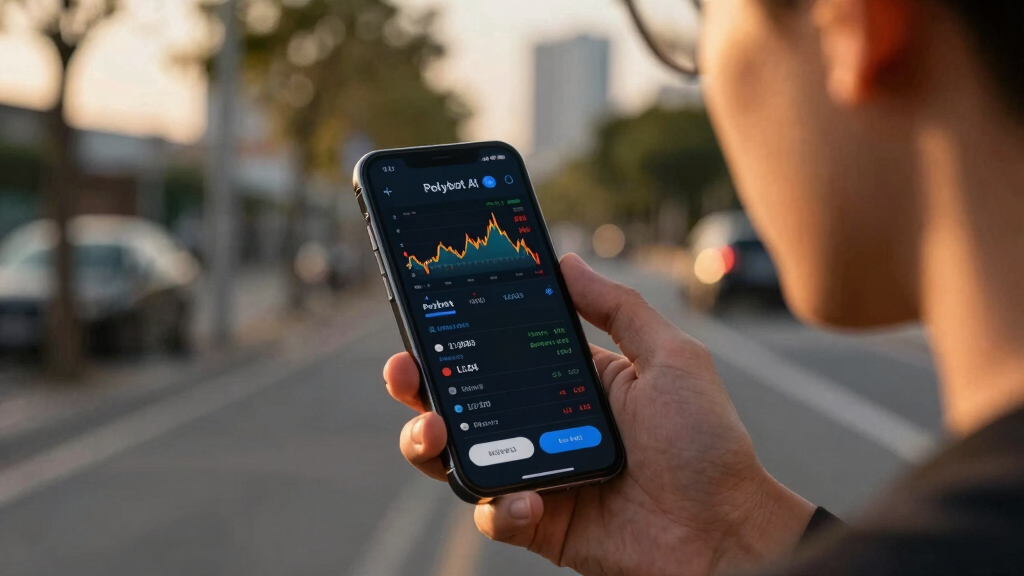
Polybot is an experimental AI designed to assess when its probability estimates differ significantly from market prices on prediction markets. It emphasizes cautious, calibrated trading and transparency, but remains a research tool rather than a money-making system.
Polybot, an AI trading experiment developed privately, is designed to evaluate when its independent probability estimates diverge meaningfully from market prices on prediction markets. This development raises questions about the potential for AI to identify mispricings in crowd-sourced forecasts, emphasizing its role as a research tool rather than a profit generator.
Polybot operates by researching a market question using public information, then forming its own probability estimate. It compares this estimate to the market’s implied probability, and only acts when the discrepancy exceeds a threshold that accounts for trading costs, slippage, and model uncertainty. The system is designed to trade infrequently, prioritizing calibration over short-term gains, and records its reasoning for transparency and post-trade analysis.
Developed by Forezai, Polybot is developed privately and is not publicly available. It aims to test the hypothesis that AI can, under certain conditions, identify market mispricings that humans or aggregate crowd wisdom might overlook. The approach emphasizes cautious, disciplined trading, with most signals resulting in no action, reflecting a risk-averse philosophy suited for research rather than profit.
Polybot — when the AI disagrees with the odds
A prediction market puts a price on the future. Polybot asks: can an AI’s own estimate diverge from that price for real — and should it ever act on the gap?
Not financial, investment, legal or tax advice; not a recommendation or solicitation to trade, invest or use any software. Forezai · Polybot is experimental software developed privately and not publicly available, provided “as is” without warranty of accuracy or profitability. Trading and automated trading carry a substantial risk of loss including total loss of capital; past or backtested performance does not indicate future results. Prediction-market participation is restricted or prohibited in some jurisdictions (including for US persons) — you are solely responsible for compliance with applicable law. Consult a licensed professional before any financial decision. Produced with AI assistance under human editorial oversight; independent commentary, the author’s own views. Product and company names are trademarks of their respective owners; mention does not imply endorsement.
Potential of AI to Detect Market Mispricings
This experiment underscores the possibility that AI systems could someday assist in identifying when market prices deviate from independent probability assessments. While not yet a reliable profit tool, Polybot highlights the importance of transparency, calibration, and disciplined trading. Its development prompts broader discussions about AI’s role in financial markets and the challenges of beating crowd-sourced predictions, especially given market efficiency and adversarial dynamics.
prediction market trading software
As an affiliate, we earn on qualifying purchases.
As an affiliate, we earn on qualifying purchases.
Background of Prediction Markets and AI Challenges
Prediction markets assign prices to future events based on collective intelligence, effectively translating crowd consensus into probability estimates. Historically, beating these markets consistently has proven difficult because prices incorporate extensive information, opinions, and money. Attempts to develop AI systems that outperform markets have often failed in live trading due to costs, market adaptation, and the difficulty of maintaining calibration over time. Polybot builds on this context by offering a transparent, cautious approach to testing whether AI can identify genuine mispricings.
“Polybot is an experiment that asks whether an AI can reliably identify when its independent probability estimate diverges from the market price in a meaningful way.”
— Thorsten Meyer, Forezai
AI trading bot for prediction markets
As an affiliate, we earn on qualifying purchases.
As an affiliate, we earn on qualifying purchases.
Uncertainties About AI Effectiveness and Market Impact
It remains unclear whether AI systems like Polybot can develop reliable, scalable strategies to consistently identify mispricings in prediction markets. The experiment is still in early stages, and real-world performance, especially over long periods and diverse markets, has yet to be demonstrated. Additionally, the influence of such systems on market efficiency and their potential to be exploited or countered by market participants is still uncertain.
market discrepancy detection tools
As an affiliate, we earn on qualifying purchases.
As an affiliate, we earn on qualifying purchases.
Next Steps for Polybot and Market Testing
Further development involves extensive testing across multiple prediction markets to evaluate calibration and decision thresholds. Researchers aim to analyze long-term performance, refine the threshold for acting on disagreements, and assess the system’s transparency and robustness. The project is developed privately and is not publicly available, and future iterations may explore integrating more sophisticated models or adaptive thresholds to improve reliability.
As an affiliate, we earn on qualifying purchases.
Key Questions
Can Polybot reliably beat prediction markets?
Currently, Polybot is an experimental tool focused on research rather than consistent profitability. Its ability to outperform markets remains unproven and is part of ongoing testing.
Is this system safe to use for trading or investing?
No. Polybot is a research project developed privately and is not publicly available. It is not designed for direct trading or investment and carries significant risk if used improperly.
How does Polybot decide when to trade?
It compares its own probability estimate with the market price, and only trades when the discrepancy exceeds a carefully calibrated threshold that accounts for costs and uncertainty.
What makes Polybot different from other trading bots?
Its emphasis on transparency, calibration, and cautious decision-making distinguishes it from typical high-frequency or aggressive trading algorithms.
Will AI eventually beat prediction markets?
Theoretically possible, but current evidence suggests significant challenges remain. Polybot aims to explore these possibilities cautiously and systematically.
Source: ThorstenMeyerAI.com
Fall Picks
fall essentials
As an affiliate, we earn on qualifying purchases.