TL;DR

Get the latest gadgets delivered free with Prime
- Fast, free delivery on millions of items
- Prime Video, Amazon Music and more included
- Member-only deals all year
A hobbyist described using a $10 OpenStick, a small ARM device with 512 MB of RAM, as a low-power Debian homelab. The reported services include DNS filtering, monitoring, RSS and bookmark tools, plus a Telegram-connected AI agent; the account is a personal setup, not an independent performance test.
A hobbyist says he is running a collection of self-hosted services on a $10 OpenStick, a passively cooled device with 512 MB of RAM and a four-core ARM processor. In a post on his blog, Bosscher described using the small Debian-based system for DNS filtering, service monitoring, RSS feeds and other tools, illustrating how modest hardware can support a compact home server when software use is kept low.
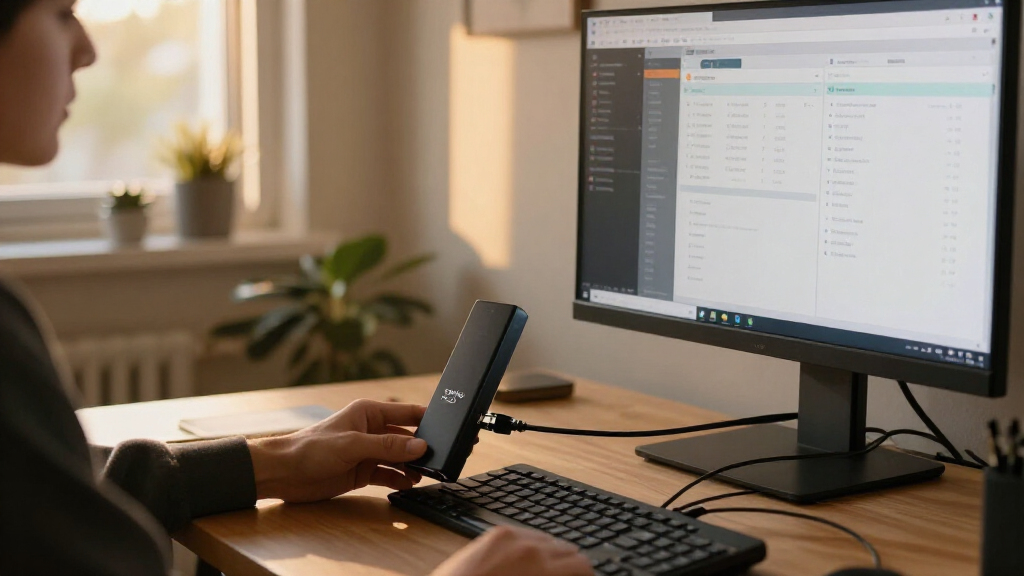
Bosscher said he bought the OpenStick for $10 including shipping. The listed hardware includes four 1 GHz ARM Cortex-A53 cores, 4 GB of eMMC storage, Wi-Fi, a 4G modem and GPS. The device is passively cooled, and the author estimates about 450 MB of usable memory from its 512 MB total. The source does not identify a purchase date or provide independent testing of the hardware or services.
The system runs Debian, which Bosscher uses with systemd and Podman to manage services and containers. His examples include AdGuard Home for DNS-based domain blocking, CastSponsorSkip for Google Cast devices, Beszel for resource monitoring, Gatus for service checks, and Fusion for RSS reading. He also reports running Shiori to manage and archive bookmarks, and Dozzle to inspect container logs. The post gives estimated memory use for several individual applications, but does not provide a complete resource breakdown for the whole setup.
One service is Zeroclaw, an AI agent framework that Bosscher connects to Telegram. He says he uses it to ask about server logs and disk space, and has granted it access to the OpenStick itself, describing that access as effectively a root shell. He says the agent has no access beyond the device. His descriptions of low memory use, security defaults and day-to-day usefulness are personal observations, not controlled comparisons.
Small Hardware, Useful Home Services
The account offers a practical example of a low-cost, low-power home server handling tasks that might otherwise depend on separate cloud services or a larger computer. Its value is less about replacing a general-purpose server than about showing how carefully chosen applications can fit within limited memory. DNS filtering, uptime checks and RSS reading can be useful even when the machine has little spare capacity.
There are also trade-offs. The OpenStick’s 512 MB of RAM and 4 GB of storage limit what can run at once, and the source does not report electricity use, sustained performance, reliability or total setup costs beyond the stated purchase price. The author’s setup therefore serves as a personal example rather than evidence that the device will suit every home network or workload.
The AI-agent configuration also highlights a security decision relevant to self-hosting: Bosscher says Zeroclaw has effectively root-level access to the device. He considers the risk acceptable because the agent is confined to the OpenStick. That is his judgment, not a general security recommendation; access to a server can still carry consequences if the device or account is compromised.
Products Worth Considering

Apple iPad 11-inch with A16 Chip, 512GB, Wi-Fi 6, and Apple Pencil (USB-C) — Blue

DJI Mini 5 Pro Fly More Combo with DJI RC 2

Anker SOLIX C1000 Gen 2 Portable Power Station, 1,024Wh
As an affiliate, we earn on qualifying purchases.
From Novelty Gadget to Debian Server
Bosscher describes buying the OpenStick on a whim because it seemed like an unusual piece of hardware. He acknowledges that its specifications are modest, then explains that a small Debian installation made it possible to run several lightweight services. The post frames the device as an entry point for self-hosting, not as a high-performance server.
His software choices reflect that constraint. He says Zeroclaw uses about 3 MB of memory while idle, Beszel uses about 20 MB across its agent and server components, and Fusion uses about 22 MB. These are figures reported by the author; the post does not specify measurement methods or show whether all services were running simultaneously. For DNS filtering, he says his own AdGuard Home fork uses about 40 MB with large blocklists, while he cautions readers against running binaries from unknown sources and points to the official version as an alternative.
Bosscher contrasts Zeroclaw with an earlier experience running OpenClaw on a Kubernetes cluster. He says that setup used more than 1 GB of memory and that updates disrupted his workflows. He chose Zeroclaw instead, citing its documentation and community activity as reasons for his decision. These comparisons reflect his use and preferences; they are not a broader review of either project.
“After adding a few blocklists, 60% of my queries are now blocked.”
— Bosscher, on AdGuard Home
Performance and Security Limits
The post does not state when the device was bought, how long the services have run, or whether all listed applications operate on the OpenStick at the same time. It also provides no independent measurements of power use, reliability, network performance or total memory pressure. The author’s application figures should be read as estimates from his own setup, not guaranteed requirements.
The reported 60% DNS-blocking figure depends on Bosscher’s network queries and selected blocklists; the post does not provide the measurement period or a comparison baseline. It also does not identify what share of blocked requests was harmful. A DNS blocker can prevent some domain requests, but Bosscher says it cannot block every unwanted connection and is not a substitute for a firewall.
Security and exposure details are also incomplete. Bosscher says Cloudflare Tunnel lets him make services available without opening ports, and acknowledges a privacy trade-off, but the post does not describe the full configuration or threat model. The exact safeguards around the AI agent’s device-level access are not detailed. Readers cannot infer from the account alone that the same arrangement would be safe for other networks.
The Setup’s Next Software Changes
Bosscher says he has contributed a proposed feature for rich Telegram messages in a future Zeroclaw version, and points readers to the pull request to follow its progress. The source does not give a release date or say whether the change has been accepted.
He also notes that Dozzle overlaps with Beszel in some areas: Dozzle is better suited to viewing Podman logs, while Beszel provides more system statistics and alerts. He says he may remove one if he needs to save memory, but does not report making that change. For now, the post presents the OpenStick as an evolving personal setup, with future choices dependent on available resources and software updates.
Key Questions
What is the OpenStick setup?
Bosscher describes a small device running Debian and services managed with tools including Podman. Its listed specifications include 512 MB of RAM, four ARM Cortex-A53 cores and 4 GB of eMMC storage.
Which services does Bosscher run?
Examples include AdGuard Home, Beszel, Gatus, Fusion, Shiori, Dozzle and CastSponsorSkip. He also says he runs Zeroclaw, which he uses through Telegram to check on the server.
Does the post prove that all these applications run at once?
No. The post lists services and gives memory estimates for some of them, but it does not provide a full resource breakdown or confirm that every application runs simultaneously.
What is the reported 60% blocking figure?
Bosscher says 60% of his DNS queries are blocked after he added blocklists. The post does not give the measurement period or comparison baseline, so this is a report about his own setup rather than a general rate.
What remains planned for Zeroclaw?
Bosscher says he has submitted a proposed feature for richer Telegram messages in a future version. The post does not state whether the change has been accepted or when it might be released.
Source: blog.bosscher.ch