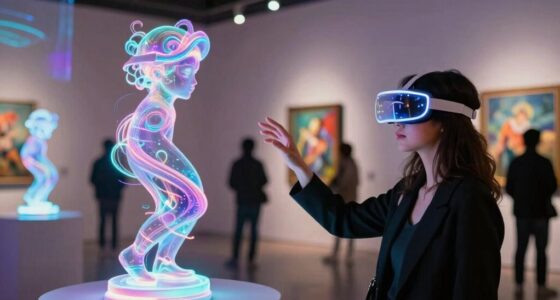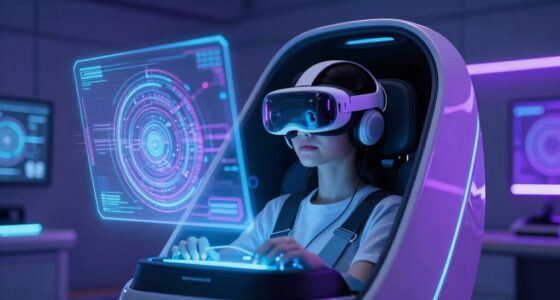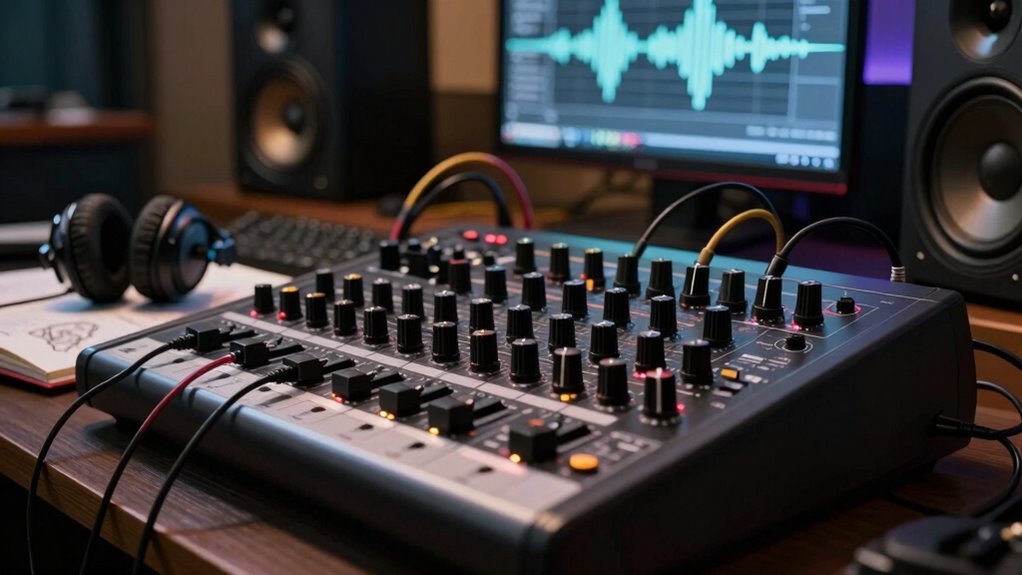

Audio design isn’t just background noise; it’s an essential part of your immersive experience. It shapes how you perceive and interact with a narrative, pulling you into different worlds and evoking strong emotions. Spatial audio enhances this effect, making sounds feel real and alive as you move. Each environment has its own unique sound palette that enriches your journey. Want to understand how to effectively craft these audio moments? There’s more to uncover in this fascinating topic.

Get the latest gadgets delivered free — and shop member deals
- Fast, free delivery on millions of items
- Access to Prime Big Deal Days deals on October 6–7
- Prime Video, Amazon Music and more included
Key Takeaways
- Audio design shapes immersive experiences by enhancing narratives and evoking emotional responses, making scenes feel more authentic.
- Spatial audio creates a three-dimensional sound environment, deepening user immersion and engagement through realistic sound positioning.
- Effective audio-visual interaction reinforces storytelling, with soundscapes complementing visuals to maintain user engagement and emotional connection.
- Diverse auditory cues tailored to specific environments enrich user experiences, adding depth to the narrative and enhancing thematic coherence.
- Principles of sound design ensure cohesive experiences, encouraging experimentation to craft intentional audio moments that elevate immersive work.

As you explore the world of immersive work, understanding audio design becomes imperative. It’s not just background noise; it’s a powerful element that shapes auditory experiences and enhances the narrative. When you think of immersive storytelling, reflect on how soundscapes play an essential role in transporting users into different worlds. The right audio can evoke emotions, making scenes feel more real and engaging.
Imagine walking through a lush forest in a virtual environment. The rustle of leaves, the chirping of birds, and the distant sound of a flowing stream create a rich tapestry of environmental sound. This is where spatial audio comes in. By positioning sounds in a three-dimensional space, you can craft a sense of presence that pulls users deeper into the experience. You’ll notice how the sounds change based on your movements, making the environment feel alive. This kind of design principle isn’t just technical; it taps into our psychological responses, enhancing emotional resonance.
Imagine navigating a vibrant forest, where the sounds of leaves rustling and birds singing immerse you in a living, breathing environment.
When you design your audio, think about how it interacts with the visuals. A well-crafted soundscape should complement what users see, reinforcing the story you’re telling. For instance, if a character is in a tense situation, the subtle increase in background noise can heighten the drama, drawing users in further. Conversely, softer sound can create moments of calm, allowing users to absorb the story. Balancing these elements keeps user engagement high, as they feel more connected to the narrative.
It’s also important to reflect on the variety of sounds you use. Different environments call for different auditory cues. A bustling cityscape will require urban sounds like traffic and chatter, while a serene beach might feature waves and seagulls. By diversifying your sound palette, you enrich the experience, allowing users to explore each environment fully. Remember, every sound can contribute to the overarching theme, enhancing the immersive quality. Incorporating environmental sound effectively can significantly influence how users perceive and connect with the virtual space. Additionally, understanding how sound positioning enhances realism can help you craft more convincing environments.
Incorporating sound design principles into your work can help you create more cohesive and engaging experiences that resonate emotionally with users. Ultimately, audio design is about crafting an experience that resonates emotionally with users. It’s the invisible thread that ties everything together, ensuring that each moment feels intentional. As you explore further into audio design, keep experimenting with spatial audio, soundscapes, and environmental sound. You’ll find that the more you refine your approach, the more compelling your immersive work will become, leaving users with unforgettable auditory experiences that linger long after they’ve stepped away. One key aspect of this is understanding audio design as a vital component that influences how users perceive and interact with virtual environments.
As an affiliate, we earn on qualifying purchases.
Frequently Asked Questions
How Does Audio Design Impact User Experience in Virtual Environments?
Audio design greatly impacts your experience in virtual environments. When you engage with spatial audio, it creates a sense of depth and realism, making you feel like you’re truly part of the space. Interactive sound enhances your actions, providing immediate feedback that reacts to your movements. This combination not only immerses you more deeply but also guides your interactions, making the virtual world feel intuitive and engaging. You won’t want to miss out!
What Tools Are Best for Creating Immersive Audio Experiences?
“You can’t make an omelette without breaking a few eggs.” To create immersive audio experiences, you’ll want to explore tools like Unity or Unreal Engine for spatial audio and soundscapes. Implement interactive sound features with Wwise or FMOD to enhance audio fidelity. Don’t forget to use sound design tools like Reaper for mixing and layering. With these, you can elevate your immersive storytelling and truly engage your audience in virtual environments.
Can Poor Audio Design Affect User Performance?
Yes, poor audio design can greatly affect your performance. If you’re struggling with audio clarity, it can distract you from tasks and lower your focus. Sound distractions, like background noise or muffled effects, can make it hard to engage fully with your work. You might find yourself missing important details, which can lead to frustration and decreased productivity. Prioritizing high-quality audio guarantees a smoother and more immersive experience for you.
How Can I Learn More About Audio Design Techniques?
To learn more about audio design techniques, immerse yourself in sound theory and explore audio perception. Start by taking online courses or reading books that cover the fundamentals. Experiment with sound editing software to practice your skills. Join forums or communities focused on audio design, where you can share ideas and get feedback. Listening to various audio projects critically will also enhance your understanding of how sound influences user experience.
What Role Does Sound Play in Emotional Engagement?
Sound plays an essential role in emotional engagement; studies show that 75% of viewers remember a story better when it includes strong audio elements. You’ll find that soundscapes influence your feelings and perceptions, creating a rich backdrop for auditory storytelling. When you immerse yourself in carefully crafted audio, it heightens tension, evokes nostalgia, or generates excitement, allowing you to connect with the narrative on a deeper level.
As an affiliate, we earn on qualifying purchases.
Conclusion
In immersive work, audio design isn’t just an afterthought; it’s the heartbeat of the experience. It shapes emotions, guides actions, and weaves narratives. Just as visuals captivate your eyes, sound envelops your senses, creating depth and connection. When you embrace the power of sound, you’re not just enhancing an experience; you’re transforming it. So, the next time you plunge into a project, remember: great audio design resonates, elevates, and ultimately, immerses.
As an affiliate, we earn on qualifying purchases.
As an affiliate, we earn on qualifying purchases.
Halloween Picks
halloween
As an affiliate, we earn on qualifying purchases.