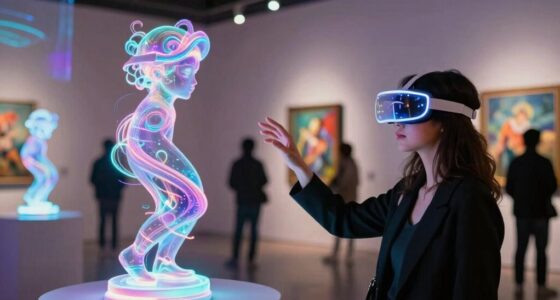
Augmented reality transforms art by overlaying digital narratives onto physical spaces, creating immersive and interactive experiences. It allows you to explore artworks in new ways, making them more engaging and accessible. With AR, you can see sculptures come alive or discover hidden stories behind murals, all while actively participating. This blend of digital and real enhances emotional connection and invites personal exploration. Keep exploring to discover how AR is reshaping the way you experience and interact with art.
Key Takeaways
- AR enhances art by overlaying digital narratives onto physical environments, creating immersive and layered storytelling experiences.
- Interactive AR installations enable viewers to engage actively, revealing stories or transformations through digital layers.
- AR merges physical artworks with digital elements, adding depth, context, and emotional resonance to the narrative.
- Digital overlays in AR foster community participation, collaboration, and real-time adaptation of storytelling.
- AR transforms passive art viewing into dynamic, accessible experiences that deepen understanding and personal connection.
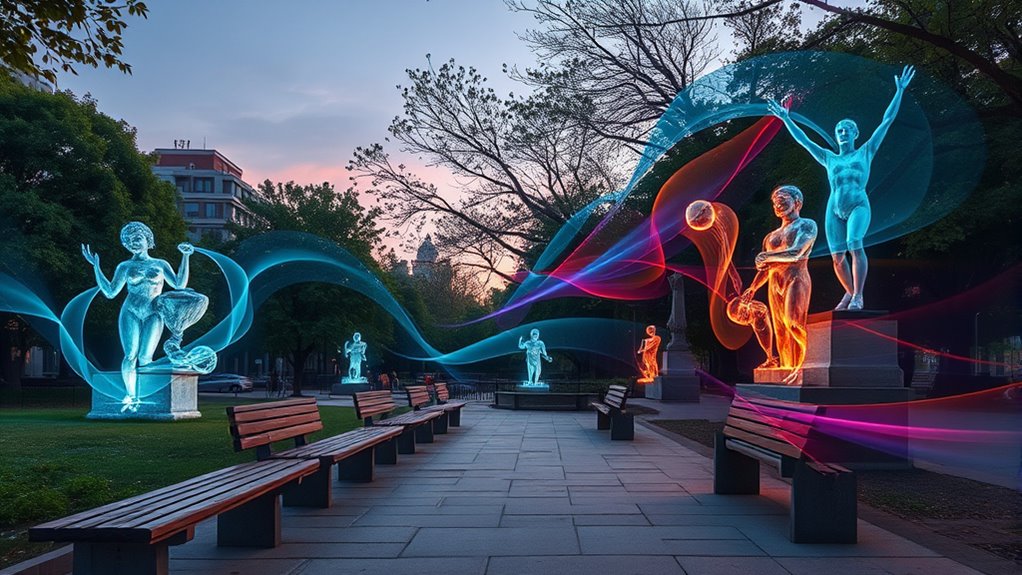
Augmented reality (AR) is transforming the way we experience art by blending digital elements with the physical world. Instead of just observing a painting or sculpture, you become part of an interactive environment where digital layers add depth and meaning. This technology enables artists to craft immersive experiences that engage your senses and challenge traditional notions of art. When you encounter augmented reality art, you’re not limited to static images; instead, you step into dynamic, interactive installations that respond to your presence and actions. These setups often combine physical objects with digital projections, creating a seamless fusion that invites exploration and participation. You might walk through a gallery where sculptures come alive through AR, revealing hidden stories or transforming as you move closer. This interactivity encourages you to engage on a deeper level, making each experience unique and personal.
Experience immersive art through AR, where digital layers transform physical spaces into interactive, personalized storytelling environments.
In immersive experiences, AR serves as a powerful tool for storytelling. You’re transported into worlds that feel tangible yet are layered with digital narratives. For instance, an outdoor sculpture park might feature AR overlays that bring statues to life, showing their history or imagined future scenarios. As you hold up your device, you see digital animations woven into the real environment, adding context and emotional resonance. This blend of physical and virtual elements makes art more accessible and engaging, especially for those who might find traditional galleries intimidating or static. It opens up new possibilities for artists to experiment with scale, movement, and interactivity, giving you a richer, more visceral encounter with their work.
Moreover, augmented reality creates opportunities for collaborative and community-driven projects. You might participate in an augmented reality mural where your interactions influence the evolving digital narrative. These projects foster shared experiences, encouraging dialogue and collective creativity. As you move through a space, AR might even adapt in real-time to your reactions, making each visit uniquely tailored to your interests. This technology also democratizes art, allowing more people to access and contribute to creative expressions without needing formal training or access to traditional galleries. Additionally, understanding financial aspects such as funding, copyright, and resource allocation can be crucial for artists and institutions exploring AR projects.
In essence, augmented reality is reshaping how you engage with art by transforming passive viewing into active participation. Interactive installations and immersive experiences invite you to explore, learn, and connect on a more intimate level. Whether in museums, public spaces, or virtual environments, AR brings art to life in ways that are innovative, accessible, and deeply personal. It’s not just about observing art anymore; it’s about experiencing it, becoming part of its unfolding narrative.
Frequently Asked Questions
How Does Augmented Reality Influence Traditional Art Techniques?
Augmented reality influences traditional art techniques by enhancing digital interaction and increasing viewer engagement. You can now experience art in dynamic ways, blending physical pieces with virtual layers that respond to your movements. This integration encourages you to explore artworks from new perspectives, making the process more immersive and interactive. As a result, traditional art evolves, inviting you to participate actively rather than passively observing, which deepens your connection to the artwork.
What ARe the Best Tools for Creating AR ARt Experiences?
You should explore tools like Spark AR, Unity, and Adobe Aero to create compelling AR art experiences. These platforms enable you to craft interactive storytelling and immersive environments that captivate your audience. With intuitive interfaces and powerful features, you can layer digital narratives seamlessly over real-world settings. Immerse yourself in these tools to bring your artistic vision to life, engaging viewers through innovative, immersive experiences that blend art and technology effortlessly.
How Accessible Is AR ARt for Emerging ARtists?
Ever wondered if AR art is truly accessible for emerging artists? While accessibility barriers exist, the landscape is shifting towards creative democratization. Affordable tools, open-source platforms, and online tutorials make it easier to experiment and showcase your work. You might face challenges, but the growing community and resources empower you to overcome them, turning AR into a viable medium for new artists enthusiastic to push creative boundaries.
What Ethical Considerations ARise in AR ARt Installations?
You should consider privacy concerns and consent issues when creating AR art installations. Guarantee that participants are aware of how their data will be used and obtain clear permission, especially if capturing personal information or images. Respect individuals’ boundaries and avoid intrusive content. By addressing these ethical considerations, you create a respectful environment that values privacy, fosters trust, and upholds ethical standards in your AR art projects.
How Can AR ARt Reach Broader Audiences Beyond Galleries?
Did you know that 78% of people prefer interactive storytelling experiences? To reach broader audiences beyond galleries, you should leverage AR’s immersive potential by creating accessible, engaging projects that blend digital narratives with cultural preservation. Use mobile apps and social media to share your art widely, making it easy for diverse audiences to explore and connect with your stories anytime, anywhere. This approach broadens your impact and fosters cultural appreciation globally.
Conclusion
Think of augmented reality as a magical window, transforming your view of the world into a living canvas. As you explore these layered digital stories, you become both artist and explorer, painting new meanings onto familiar scenes. Just like a masterful painter adds depth with each stroke, AR invites you to see beyond surface appearances. Embrace this artful journey—you hold the brush and the lens, shaping reality into a vibrant tapestry of endless possibilities.