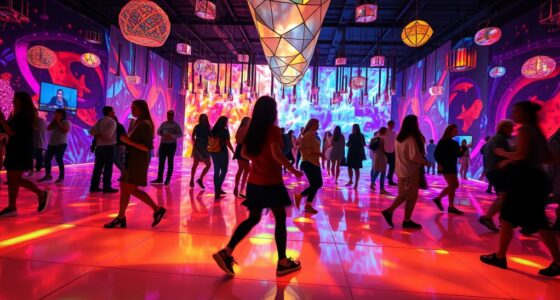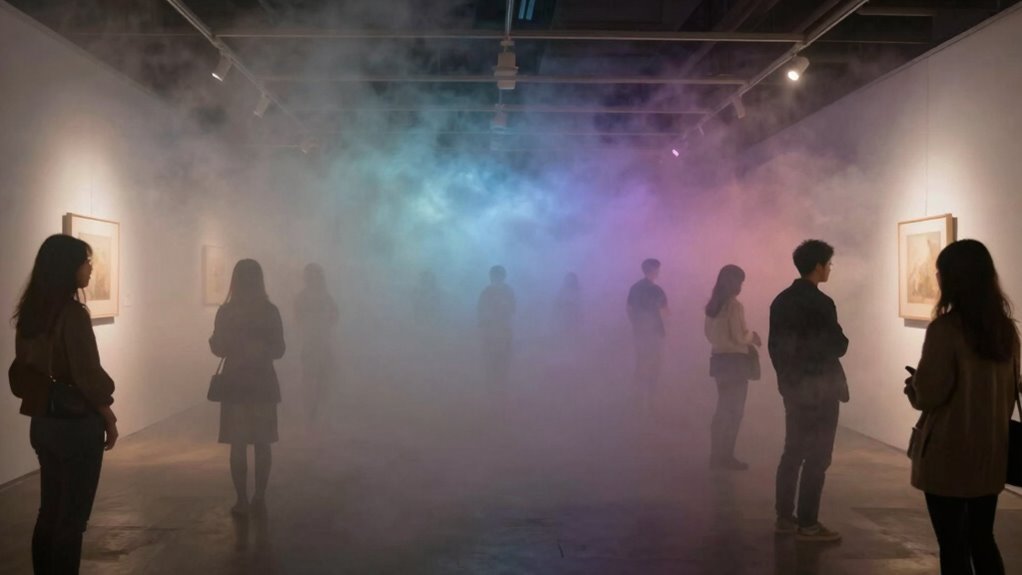

To use haze machines in art spaces without irritating visitors, guarantee proper ventilation and control the haze density with adjustable settings. Place the machine away from high-traffic areas and keep airflow clear to disperse the haze evenly. Regularly maintain and clean the equipment to prevent buildup. Monitoring haze levels helps avoid overwhelming the space. For detailed tips to optimize effects while keeping guests comfortable, continue exploring the best practices.
Key Takeaways
- Adjust haze density to a low, subtle level to enhance visuals without overwhelming visitors.
- Ensure proper ventilation to prevent excessive vapor buildup and maintain comfort.
- Position the machine away from high-traffic areas to minimize disturbance and safety hazards.
- Regularly clean and maintain the equipment for consistent, non-intrusive haze effects.
- Use high-quality fog fluids and follow manufacturer instructions to control dispersion and avoid irritation.
Haze machines have become an innovative tool in art spaces, transforming how artists create immersive experiences. They add depth and atmosphere to performances and installations, making visuals pop and viewers feel more engaged. However, using haze machines responsibly is vital to guarantee everyone’s comfort and safety. Before firing up your haze machine, you should familiarize yourself with safety considerations. Always read the manufacturer’s instructions thoroughly, paying attention to ventilation requirements and recommended usage times. Proper ventilation is essential to prevent the buildup of fog fluid vapors, which can cause respiratory irritation or discomfort for sensitive individuals. Make sure the area is well-ventilated and that there’s enough airflow to disperse the haze evenly. Keep an eye on the haze density; too much can overwhelm attendees, especially those with asthma or allergies, so consider using adjustable settings to control the output. Additionally, never operate a haze machine near open flames or heat sources, as the fog fluid is typically water-based but can pose a fire risk if mishandled. Regular maintenance is just as important as safe operation. Clean your machine frequently to prevent clogging and ensure consistent fog output. This involves emptying and rinsing the fluid reservoir according to the manufacturer’s instructions and checking the nozzles for any buildup or blockages. Use high-quality fog fluid suited for your specific machine—cheap or incompatible fluids can damage components or produce undesirable fumes. Inspect power cords and connections regularly for wear or damage to avoid electrical hazards. If your haze machine has filters or fans, clean or replace them as needed to maintain ideal airflow and efficiency. Proper maintenance not only prolongs your equipment’s lifespan but also guarantees safe, high-quality fog production during your event. It’s a good idea to keep a schedule for routine checks and cleaning, especially if you use the machine frequently. When setting up, position the haze machine on a stable, flat surface to prevent accidents, and ensure it’s placed away from high-traffic areas to avoid tripping hazards or accidental contact. Always turn off and unplug the machine after use and allow it to cool down before cleaning or storing it. This helps prevent overheating and extends the lifespan of your device. Additionally, understanding the power requirements of your haze machine is crucial to avoid electrical overloads or outages. By following these safety considerations and maintenance tips, you can enjoy the atmospheric effects haze machines bring to your art space without risking safety or causing unnecessary discomfort. Proper care and responsible use make sure your immersive experiences remain engaging, not problematic, for everyone involved.
Frequently Asked Questions
Are Haze Machines Safe for Individuals With Respiratory Issues?
Haze machines can pose risks for individuals with respiratory issues, so you should prioritize respiratory safety and allergy concerns. If someone has asthma or allergies, it’s best to inform them beforehand and guarantee proper ventilation. Use low-odor, non-toxic haze fluids, and keep the machine at a safe distance. Monitoring people during the event helps prevent discomfort, making sure everyone can enjoy the art space safely and comfortably.
How Long Does Haze Typically Last in an Art Space?
Haze typically lasts in an art space for about 30 minutes to an hour, depending on haze duration and ambient factors like ventilation and room size. If you control airflow and use a smaller amount of haze fluid, it dissipates faster, reducing lingering effects. Keep an eye on the haze level during your event, and adjust the machine’s output accordingly to maintain the desired atmosphere without overstaying its welcome.
Can Haze Machines Trigger Allergies or Asthma?
If you’re concerned about allergies or asthma, be aware haze machines can sometimes trigger symptoms. For example, in a gallery, visitors with sensitive air quality or allergen exposure might experience coughing or wheezing. Haze particles can irritate respiratory systems, especially for those with pre-existing conditions. To prevent this, guarantee proper ventilation, use low-allergen fog fluid, and inform visitors beforehand. Your awareness helps create a safer, more inclusive environment.
What Maintenance Is Required for Haze Machines?
You should regularly perform haze machine cleaning to keep it in good shape and prevent buildup. Replace the haze fluid as needed, usually after several uses or when the output diminishes. Always follow the manufacturer’s instructions for maintenance, and clean the filters and nozzles periodically to guarantee peak performance. Proper upkeep not only extends your haze machine’s lifespan but also ensures a safe, consistent haze effect for your art space.
Are There Eco-Friendly Haze Options Available?
Did you know that the demand for eco-friendly haze options has grown 30% in the past year? You can find sustainable haze options now, which use biodegradable or water-based fluids. These eco-friendly alternatives reduce environmental impact and are safer for indoor air quality. By choosing sustainable haze options, you help promote greener events while maintaining the atmospheric effects you want, all without compromising your commitment to environmental responsibility.
Conclusion
Using haze machines in art spaces can create stunning, immersive experiences—just be mindful of your neighbors and visitors. If you worry about causing discomfort or triggering allergies, opt for low-odor, low-allergen fog fluids and keep the haze at a gentle level. With these simple steps, you can enhance your art installations without annoying anyone. After all, thoughtful use makes everyone enjoy the atmosphere, turning your space into a mesmerizing, inclusive environment.