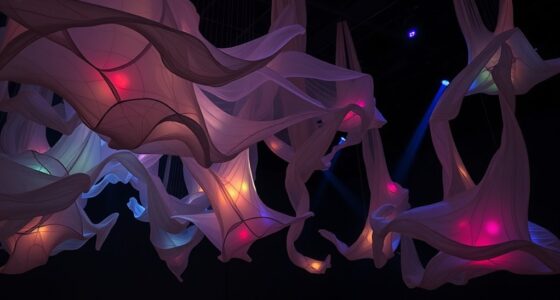

🔍 Read the full analysis: How AI Comet Art Uses A Held-Light Technique on ThorstenMeyerAI.com

Get the latest gadgets delivered free with Prime
- Fast, free delivery on millions of items
- Prime Video, Amazon Music and more included
- Member-only deals all year
TL;DR
OORT: Comet Vigil for P/2043 K1 Vesper is an AI-built exhibition about a fictional comet and a fictional observatory. Its held-light technique uses a seeded star field and saved local elapsed time so trails lengthen as visitors stay, turning duration into part of the artwork.
OORT: Comet Vigil for P/2043 K1 Vesper, an AI-built web exhibition, makes a visitor’s time on the page part of the artwork through a technique its creator calls held light, as described in the original analysis. A seeded field of stars draws longer curved trails as time passes, and the same local sky can resume when a visitor returns, making duration—not just viewing—central to the piece.
The exhibition is framed as an observatory keeping watch on P/2043 K1 Vesper, a fictional comet. Its imagined community has spent decades monitoring it. The site presents that premise through an interface visitors can affect simply by staying on the page, rather than through a conventional sequence of static images or explanatory panels.
In the main canvas, stars arc around a point below the visible frame. Their trails lengthen over time according to a logarithmic curve, which is designed to make early changes visible while allowing the exposure to continue during a longer visit. A repeatable seed keeps the star field consistent on the same device, while local storage retains elapsed time. According to the project description, the animation stops when the page is hidden, and a still version is provided for visitors who have enabled reduced motion.
Other controls extend the idea of time as an input. Scrolling moves a comet through an inline SVG: its ion tail points away from the sun, while its dust tail curves along the imagined orbit. The two paths use the same progress value, keeping the illustration’s geometry, distance and year synchronized. A range control adjusts a defocus view and its associated brightness estimate. Visitors can also hold a control to open a simulated shutter; the site records a timestamp but does not claim that the fictional comet has been observed.
Digital art · Interactive exhibition
How AI Comet Art Uses a Held-Light Technique
OORT: Comet Vigil for P/2043 K1 Vesper turns a visitor’s time on the page into part of an AI-built artwork. A seeded star field grows longer trails as time passes, then can resume on the same device when the visitor returns.
01 / The mechanism
When a Visit Becomes an Exposure
On most websites, waiting happens outside the content. OORT makes elapsed time visible: stay longer and the stars’ curved trails lengthen.
Hold the light
The main canvas draws stars arcing around a point below the visible frame. Trail length follows elapsed time on a logarithmic curve, so early changes appear while the exposure can continue during a longer visit.
Return to the same sky
A repeatable seed keeps the star field consistent. Local storage retains elapsed time, allowing the scene to resume on the same device. The description does not establish cross-device syncing or how long an exposure persists.
02 / Inputs become imagery
One Premise, Several Interactions
The interface makes time and attention part of the fiction while keeping the comet explicitly unseen.
Stay on the page
Elapsed time accumulates as part of the visual exposure.
Scroll the orbit
An inline SVG moves the comet; its ion tail points away from the sun and its dust tail curves along the imagined orbit.
Adjust the view
A range control changes a defocus view and its associated brightness estimate.
Hold the shutter
A simulated shutter records a timestamp as attention, not evidence of observation.
03 / Designed behavior
A Fictional Observatory by Design
OORT’s observatory keeps watch on P/2043 K1 Vesper, a fictional comet. The imagined community has monitored it for decades.
Same local sky
The seeded field and saved local elapsed time connect separate visits on one device.
Responsive, with limits
The description says animation stops when the page is hidden and visitors using reduced motion receive a still version.
Shared orbital progress
One progress value synchronizes the comet’s SVG paths, distance and year within the imagined orbit.
“The page makes duration part of the artwork instead of treating it as time spent before the content.”
OORT project descriptionFrom Attention to a Changing Sky
04 / Evidence boundaries
What the Project Does Not Verify
The available source describes intended behavior and visual design; it does not provide an independent technical assessment.
Known from the description
The project presents an AI-built exhibition with seeded star trails, saved local timing, interactive orbital graphics and a simulated shutter. It says the comet remains unseen and in transit.
Not independently established
- Frame rate, storage limits or technical performance
- How long exposure data persists or whether it can be reset
- Behavior across browsers, devices or synced accounts
- Real-world comet measurements or observing history
05 / Reader guide
Key Questions
The exhibition invites visitors to explore the room, its design guide and the wider collection.
Is P/2043 K1 Vesper a real comet?
No. The project describes both the comet and observatory as fictional settings for an interactive exhibition.
What does “held light” mean?
It describes curved star trails that grow with elapsed time, with local timing saved so the sky can resume on the same device.
Does the shutter show a real comet image?
No. It simulates opening a shutter and records a timestamp as a mark of attention. The comet remains unseen.
What about reduced motion?
The project description says visitors with reduced-motion settings receive a still version. It also says animation stops while the page is hidden.
When a Visit Becomes an Exposure
The project’s main design decision is to make elapsed time visible. On most websites, time spent waiting is outside the content. OORT instead treats a visitor’s presence as a material the interface can accumulate: the longer the stay, the longer the star trails. Returning to the page can continue that visual record on the same device, linking separate visits to one changing scene.
That choice also shapes how the site handles interaction. The shutter control produces a timestamp, but the comet remains unseen and in transit. This avoids turning a fictional observatory into a fake discovery mechanic. The visitor records an act of attention, not evidence of an astronomical event. For readers interested in digital art or interface design, the work offers a concrete example of animation, persistence and user input serving the same artistic premise.
Products Worth Considering

Kindle Paperwhite Signature Edition 32GB E-Reader, 7-Inch Display, Seaglass Green

Amazon Kindle Paperwhite (12th Generation, 2024), 16GB, 7-Inch Display, Raspberry

Samsung Galaxy Tab A11 8.7-Inch Wi-Fi Tablet, 64GB, 4GB RAM, 90Hz, Gray, with 20W Charger
As an affiliate, we earn on qualifying purchases.
A Fictional Observatory by Design
The source presents OORT as one room in a 175-room exhibition and identifies it as an AI-built work. Its astronomical subject is explicitly fictional: neither P/2043 K1 Vesper nor the observatory is offered as a real-world discovery. The project’s description says the exhibition’s prompt is available through a “Prompt” link in the room’s footer, and that a separate design guide explains the build.
The art direction calls for an observatory atmosphere, using deep black, cyan, warm red-orange and pale dust-toned text. Display lettering is used for headings and measurements, while monospaced text presents coordinates and field notes. The supplied brief also specifies a no-framework implementation using HTML, CSS and JavaScript, with visuals made in code rather than image assets. These are project specifications; the source material does not independently document a technical audit or performance test.
“The page makes duration part of the artwork instead of treating it as time spent before the content.”
— The OORT project description
What the Project Does Not Verify
The source describes the intended behavior and visual design, but does not provide independent testing, usage figures or technical measurements such as frame rate and storage limits. It is not clear how long a saved exposure persists, whether it can be reset, or how the experience differs across browsers and devices. The description says the sky resumes on the same device; it does not establish that progress syncs across devices.
The comet’s orbit, measurements and observing history belong to the fiction. Details in the accompanying creative brief—including a claimed last-seen date of 1608—should not be read as verified astronomical records. The source also does not provide a named technical author or independent assessment of the AI-built work.
Explore the Room and Its Guide
The exhibition page invites visitors to open OORT in a browser, spend time with the changing sky and consult the room’s design guide for more about the seeded exposure, SVG orbit, palette and typography. The prompt is also presented as accessible from the room’s footer. Readers can visit the exhibition’s hub to browse the other rooms in the 175-room collection. The source gives no schedule for a later update or additional technical release.
Key Questions
Is P/2043 K1 Vesper a real comet?
No. The project describes the comet and observatory as fictional; the work uses them as the setting for an interactive exhibition.
What does “held light” mean in OORT?
It refers to a star field whose curved trails grow with elapsed time. The site saves local timing information so the sky can resume on the same device when a visitor returns.
Does the shutter interaction show a real comet image?
No. It opens a simulated shutter and records a timestamp as a mark of attention. The project says the comet remains unseen and in transit.
What happens if a visitor prefers reduced motion?
The project description says visitors with reduced-motion settings receive a still version. It also says the animation loop stops while the page is hidden.
Source: ThorstenMeyerAI.com