Immersive art experiences can profoundly boost your mood by engaging your senses and promoting mindfulness, helping you stay present and reduce stress. These environments allow you to explore emotions safely, build resilience, and process feelings like joy or melancholy. Vibrant visuals and sounds influence your emotional state directly, while the immersive nature offers catharsis and emotional clarity. Keep exploring to discover how these experiences can enhance your mental well-being even further.
Key Takeaways
- Immersive art activates senses and promotes mindfulness, helping individuals stay present and reduce stress.
- It provides a safe space to explore and process emotions, enhancing emotional resilience.
- Sensory elements like colors and sounds influence mood, uplifting or calming viewers.
- Experiences facilitate emotional release and catharsis, supporting mental well-being.
- Combining mindfulness with immersive art fosters emotional balance and a positive outlook.
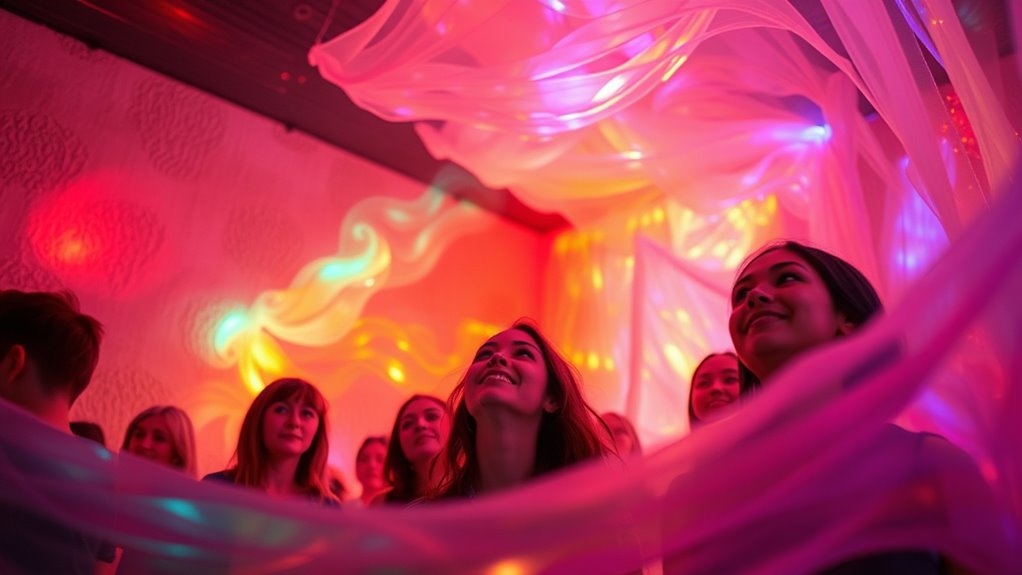
Immersive art experiences are transforming how people connect with creativity and well-being. When you step into these environments, you quickly realize that they offer more than just visual delight; they activate your senses and invite you to engage deeply with your emotions. One of the key ways immersive art impacts your mental state is through fostering mindfulness practices. As you navigate through vibrant projections, interactive installations, or multisensory displays, you become fully present in the moment. Your mind shifts away from worries about the past or future, anchoring you in the here and now. This heightened awareness can reduce stress and promote a sense of calm, making these experiences powerful tools for mental health. Additionally, immersive art can boost your emotional resilience. By immersing yourself in these environments, you’re often encouraged to explore your feelings in a safe, non-judgmental space. Whether it’s confronting feelings of melancholy or experiencing joy, the art acts as a mirror that reflects your emotional landscape. This process helps you develop a greater understanding of your emotional responses, strengthening your ability to adapt and recover from setbacks. Over time, repeated exposure to such expressive environments can build your resilience, making it easier to handle future challenges with a more balanced outlook. The sensory stimulation involved in immersive art also plays a significant role in mood regulation. Colors, sounds, and textures combine to influence your emotional state directly. Bright, lively visuals can energize you, lifting your spirits, while softer, more subdued elements might promote relaxation and introspection. Because these experiences are often personalized or interactive, you’re more engaged and open to experiencing a range of emotions. This engagement not only enhances your mood but also encourages a sense of connection—either with the art itself or with your own inner world. Furthermore, immersive art can serve as a form of emotional release. When you allow yourself to experience intense feelings within a safe environment, it can lead to catharsis and emotional clarity. This process is essential for mental well-being, helping you process unresolved emotions and gain new perspectives. Incorporating mindfulness practices into these artistic experiences can amplify their benefits by deepening your awareness and fostering a sense of calm. As you become more skilled at using these art experiences for mindfulness practices, you’ll likely find it easier to manage daily stressors and maintain a positive outlook. In essence, immersive art offers a dynamic, engaging way to nurture your emotional resilience and overall mental health, making your journey toward well-being both creative and profound.
Frequently Asked Questions
How Do Immersive Art Experiences Compare to Traditional Therapy Methods?
Immersive art experiences often offer more engaging sensory engagement than traditional therapy, helping you process emotions in a vivid, memorable way. While therapy provides structured emotional processing, immersive art encourages spontaneous reflection and self-awareness through sensory stimuli. Both methods can complement each other, but immersive experiences can quickly elevate your mood by immersing you fully, making emotional processing more accessible and impactful in a way that traditional methods might not always achieve.
Can Immersive Art Help With Specific Mental Health Conditions?
Yes, immersive art can help with specific mental health conditions by providing art therapy that promotes sensory stimulation and emotional expression. When you engage in immersive art experiences, you actively process feelings, reduce anxiety, and improve mood. This approach complements traditional treatments, offering a creative outlet that fosters relaxation and self-awareness. So, if you’re seeking alternative support, immersive art could be a beneficial addition to your mental health journey.
What Are the Long-Term Effects of Immersive Art on Mood?
You might discover that immersive art offers sustained mood benefits over time, subtly strengthening your emotional resilience. While the immediate effects are enthralling, the long-term impact can be even more profound, quietly transforming how you respond to stress and adversity. These experiences can build a foundation for lasting well-being, leaving you with a sense of balance and inner strength that continues to evolve long after the art has faded.
Are There Any Risks Associated With Immersive Art Experiences?
Yes, immersive art experiences can pose risks like sensory overload, which might cause discomfort or anxiety. You could also encounter emotional triggers that bring up intense feelings unexpectedly. To stay safe, it’s important to set limits on your exposure, listen to your body, and take breaks if you start feeling overwhelmed. Being mindful of these risks helps you enjoy the benefits without adverse effects.
How Accessible Are Immersive Art Installations for Diverse Populations?
Immersive art installations are as accessible as a mountain peak for some, but for others, cultural barriers and physical accessibility can feel like insurmountable walls. You might find certain installations hard to reach or understand if they don’t consider diverse backgrounds or mobility needs. To truly open these experiences to everyone, creators must actively work to bridge gaps, making art inclusive regardless of culture or physical ability.
Conclusion
Immersive art offers a powerful way to boost your mood and support mental well-being. By engaging your senses and emotions, you can find relief, inspiration, and a sense of connection. Remember, “A picture is worth a thousand words,” and in this case, your experience can speak volumes for your mental health. So, step into these enthralling worlds and let art be your refuge—sometimes, a simple escape can make all the difference.