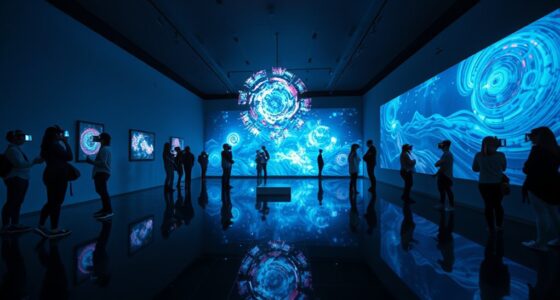
Immersive art in public spaces makes art more accessible by turning everyday environments into interactive experiences. You can actively engage with installations that break down barriers, inviting diverse audiences to participate without needing special knowledge or access to traditional venues. These projects foster community connections, encourage social interaction, and create a sense of ownership. If you continue exploring, you’ll uncover how immersive public art can truly transform community engagement and inclusivity.
Key Takeaways
- Interactive public art transforms spaces into inclusive environments, inviting diverse audiences to participate without requiring specialized knowledge.
- Immersive installations lower barriers to art access, making creative experiences available to all community members regardless of background.
- Public art fosters social engagement and community bonds by encouraging shared participation and collective reflection.
- Incorporating technology in immersive art enhances accessibility, enabling diverse audiences to engage through interactive and multisensory experiences.
- Embedding art in everyday environments promotes ongoing community dialogue, connection, and a sense of ownership among residents.
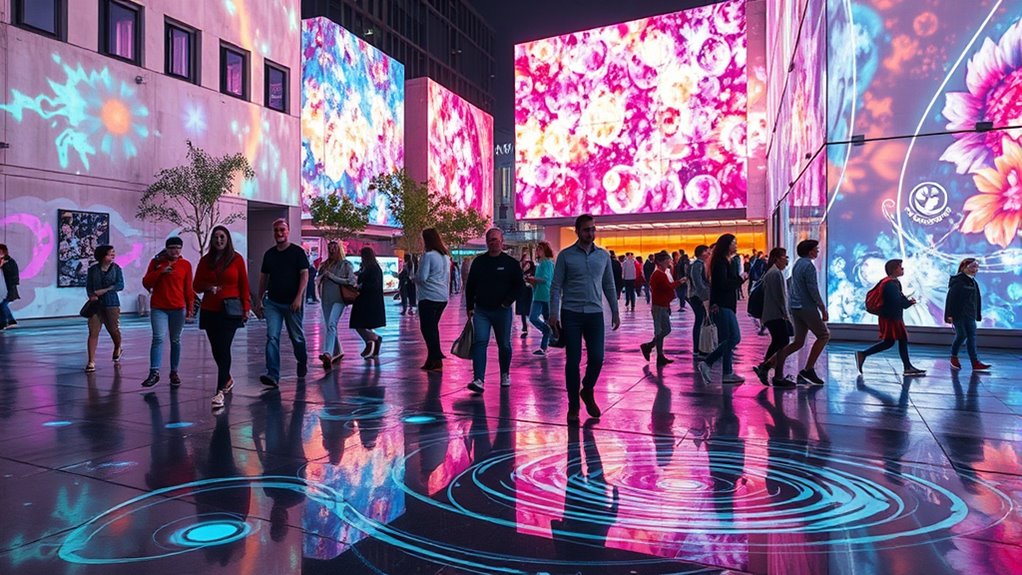
Immersive art in public spaces is transforming the way communities experience creativity, blurring the line between observer and participant. When you step into these environments, you’re not just a passive viewer; you’re encouraged to engage actively through interactive installations. These installations invite you to touch, move, or even manipulate elements within the artwork, turning a simple visit into a dynamic experience. This shift fosters a sense of ownership and connection, making the art feel personal and relevant. As you explore, you become part of a larger conversation—your interactions ripple through the space, encouraging others to join in and deepen community engagement.
By incorporating interactive installations into public art, cities and organizers create opportunities for meaningful participation. Imagine walking through a park where sculptures react to your presence or sound-based pieces that respond to your movements. Such experiences break down barriers that often limit access to art, making it more inclusive for diverse audiences. No longer do you need specialized knowledge or access to exclusive galleries; instead, you can enjoy art that invites you to be an active contributor. This inclusivity enhances community engagement by making everyone feel valued and involved, regardless of background or age.
Interactive public art invites everyone to participate, breaking barriers and fostering inclusive, community-driven experiences.
Furthermore, immersive public art turns ordinary spaces into vibrant hubs of activity. When you encounter an installation that invites interaction, you’re likely to stay longer, engage with others, and share your experience. This not only enriches your personal connection to the artwork but also strengthens community bonds. These projects often encourage collaboration—people working together to uncover hidden features or create new patterns—fostering a sense of collective achievement. As more individuals participate, the art becomes rooted in the community’s identity, promoting pride and a shared sense of ownership.
Cities that prioritize immersive, interactive public art demonstrate a commitment to accessibility and inclusivity. They recognize that art should not be confined within museum walls but should breathe life into everyday environments. When you experience these installations, you see how art can be a catalyst for social interaction and dialogue. They invite passersby to pause, reflect, and contribute, transforming public spaces into open forums for creativity and community building. Additionally, the use of interactive technology in these projects can further enhance accessibility and engagement for diverse audiences. Ultimately, immersive art with interactive installations not only makes art more accessible but also enriches the social fabric, creating spaces where everyone feels welcome to participate and connect.
Frequently Asked Questions
How Do Immersive Public Art Projects Influence Community Engagement?
Immersive public art projects boost your community engagement by inviting you to participate actively through interactive storytelling and sensory experiences. These projects make art accessible and relatable, encouraging you to explore and connect with your surroundings. As you become part of the experience, you foster a sense of belonging and shared understanding, inspiring ongoing conversations and collaborations that strengthen community bonds and make public spaces more vibrant and inclusive.
What Funding Sources Support Accessible Immersive Art Initiatives?
You can secure funding for accessible immersive art initiatives through government grants and philanthropic foundations. These sources often prioritize projects that promote community engagement and inclusivity. To access these funds, you should prepare detailed proposals highlighting the project’s social impact and accessibility features. By demonstrating how your initiative promotes cultural participation for diverse audiences, you increase your chances of obtaining support from these organizations.
How Do Artists Ensure Inclusivity in Immersive Public Art?
Imagine a vibrant tapestry where every thread reflects inclusivity. You guarantee this by integrating multisensory techniques that engage diverse senses and employing adaptive technologies to accommodate different abilities. You actively seek community feedback, collaborate with accessibility experts, and design for universal access, creating an environment where all can participate. By doing so, your immersive public art becomes a shared experience, inviting everyone to feel connected and represented in the creative journey.
What Are the Technical Challenges of Creating Accessible Immersive Installations?
You face technical challenges like ensuring sensor calibration to accurately detect diverse user interactions, which is vital for accessibility standards. You must create installations that adapt seamlessly for people with varying abilities, requiring precise calibration and testing. Balancing advanced technology with user-friendly design demands careful planning. By prioritizing sensor calibration and adhering to accessibility standards, you can develop immersive experiences that are inclusive for all visitors, regardless of their physical or sensory needs.
How Can Public Spaces Be Redesigned to Better Accommodate Immersive Art?
Did you know that integrating immersive art into public spaces can boost local engagement by 35%? To do this effectively, you should consider the historical context of urban planning, ensuring that spaces are flexible and inclusive. Redesign parks, plazas, and streets with wide pathways, accessible entry points, and sensory-friendly zones. This approach not only enhances accessibility but also fosters community connection, making immersive art a crucial part of urban life.
Conclusion
By embracing immersive art in public spaces, you open the door to a world where art becomes a living, breathing part of everyday life. It’s like planting seeds of creativity that grow into shared experiences and connections. When accessibility expands, everyone’s imagination can soar, turning ordinary places into extraordinary landscapes of expression. Together, you can turn public spaces into vibrant canvases—where art isn’t just seen, but felt deep within your soul.