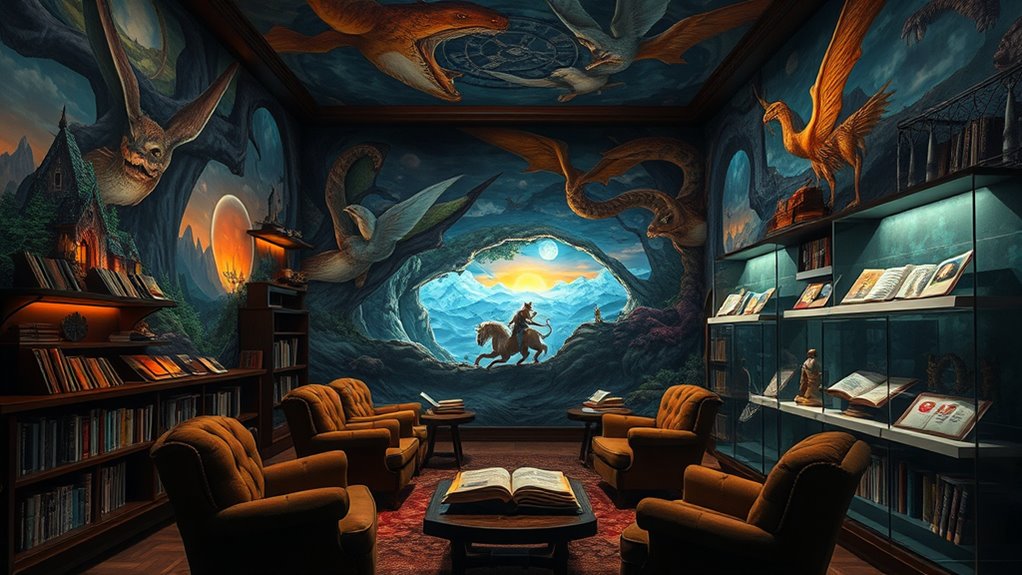

Immersive story rooms combine literature and visual art to fully engage your senses and bring stories to life around you. As you move through these environments, you’ll experience textured objects, dynamic lighting, and ambient sounds that deepen your connection to the narrative. Your actions can change the setting and reveal new clues, making you a part of the story itself. Keep exploring to discover how these multisensory spaces transform storytelling into a personal adventure.
Key Takeaways
- Immersive story rooms blend literature and visual art by integrating narrative elements with dynamic, visually rich environments.
- They use sensory engagement, like lighting and tactile objects, to deepen the connection between storytelling and visual aesthetics.
- Interactive design allows visitors to influence the story through visual interactions, merging literary themes with artistic expression.
- These spaces create personalized experiences where narrative and art coexist, fostering emotional and aesthetic immersion.
- Accessibility and flexible scheduling enable broader audiences to explore the combined power of literature and visual art in immersive settings.
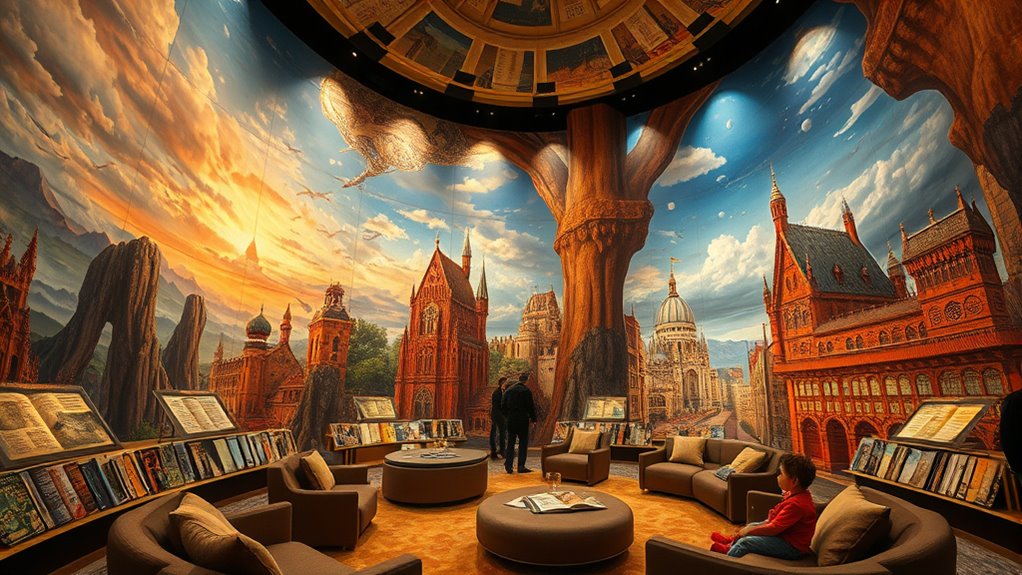
Immersive story rooms are transforming the way you experience narratives by plunging you directly into the heart of the story. Instead of passively consuming a book or watching a film, you become an active participant, engaging all your senses to explore the narrative. This shift relies heavily on innovative interactive design, which creates a seamless environment where your actions influence the storyline and environment. As you step into these spaces, you’re not just observing a story unfold—you’re living it. The environment reacts to your movements, choices, and even your emotions, making the experience uniquely personal.
The core of immersive story rooms lies in sensory engagement. Every detail, from lighting and sound to tactile elements, is crafted to stimulate your senses and deepen your connection to the narrative. Think about walking into a scene where your footsteps echo softly on textured floors, or hearing subtle background noises that change as you move through different areas. You might touch objects that feel authentic to the story’s setting, like rough fabric to evoke a medieval market or cool metal to mimic a science lab. These sensory touches help blur the line between reality and fiction, making the story feel tangible and immediate. Additionally, many venues operate within retail hours, allowing for flexible visits that suit your schedule.
Interactive design is what brings this multisensory environment to life. It’s not just about visual cues or sound effects; it’s about creating a cohesive system that responds dynamically to your actions. For example, if you choose to open a mysterious chest, the story might shift based on what you find inside. If you gesture toward a certain item, it might trigger a change in lighting or sound, heightening suspense or revealing new clues. This responsiveness ensures you’re not just a bystander but a co-creator of the story’s unfolding. Your decisions and interactions shape the narrative’s direction, fostering a sense of agency and immersion that traditional storytelling simply can’t match.
Frequently Asked Questions
How Are Immersive Story Rooms Customized for Individual Visitors?
You’re likely to find immersive story rooms customized through personalization techniques that enhance your experience. By evaluating your interests and preferences, the room adapts visuals, story elements, and interactions to boost visitor engagement. Interactive technology, such as sensors and AI, tailors the environment as you explore, making each visit unique. This dynamic approach ensures you feel connected and immersed, creating a memorable journey that resonates with your individual tastes.
What Safety Measures Are in Place for Participants?
Did you know that over 95% of immersive story rooms prioritize safety? You’ll find clear emergency procedures in place, and staff are trained to respond quickly if needed. Accessibility features, like ramps and sensory accommodations, guarantee everyone can enjoy the experience securely. These measures help you feel secure and included, so you can fully immerse yourself without worries. Your safety is always the top priority.
How Long Does an Immersive Story Experience Typically Last?
An immersive story experience usually lasts about 60 to 90 minutes, depending on the storytelling techniques and sensory engagement involved. You’ll find that these experiences are carefully timed to maximize immersion without overwhelming you. The blend of visual art and storytelling keeps you engaged from start to finish, creating a enthralling journey. Be prepared to immerse yourself fully, as the duration is designed to balance deep engagement with comfort.
Are There Age Restrictions for Visitors?
Yes, visitor age can impact access to immersive story rooms. Most venues set age restrictions to guarantee safety and appropriate content, often limiting entry to children over a specific age or requiring adult supervision for younger visitors. You should check each location’s specific visitor age guidelines beforehand. These age restrictions help create a safe, enjoyable experience for everyone, ensuring the content suits different age groups and safety standards are maintained.
What Technology Is Used to Create the Immersive Environment?
You’ll find that projection mapping and sensory integration are key technologies used to craft the immersive environment. Projection mapping transforms surfaces into dynamic displays, bringing scenes to life around you. Sensory integration engages multiple senses, enhancing your experience through sound, touch, and visuals. These technologies work together to create a mesmerizing, multi-dimensional space that pulls you into the story, making the experience both interactive and unforgettable.
Conclusion
As you step into an immersive story room, it’s like entering a living, breathing painting—where each detail pulls you deeper into the narrative. Imagine Sarah, lost in a forest mural, feeling as if she’s truly wandering among trees. Studies show these experiences boost empathy and creativity. Just like a brushstroke forms part of a masterpiece, your presence transforms the art into an unforgettable adventure, blending literature and visuals into a seamless, mesmerizing world.