To build an interactive exhibit that works smoothly, you need a reliable sensor stack. Start by selecting sensors suited for your environment and interaction goals, then calibrate them regularly to guarantee accuracy and responsiveness. Connect sensors seamlessly to your display systems using reliable communication protocols like USB or wireless connections. Testing interactions will help you identify latency or misfires early. Ensuring proper integration and ongoing adjustments create a dynamic experience—your perfect sensor setup is within reach if you keep exploring further.
Key Takeaways
- Select sensors suited for exhibit environment, ensuring compatibility and reliable data transfer via appropriate interfaces.
- Develop tailored calibration routines for each sensor type, regularly verifying accuracy across different conditions.
- Integrate sensors with display systems using low-latency protocols to ensure real-time, synchronized visual feedback.
- Test interactions thoroughly to identify latency, misfires, or misalignments, making necessary adjustments for smooth responsiveness.
- Maintain ongoing calibration and system optimization to adapt to environmental changes and enhance overall visitor experience.
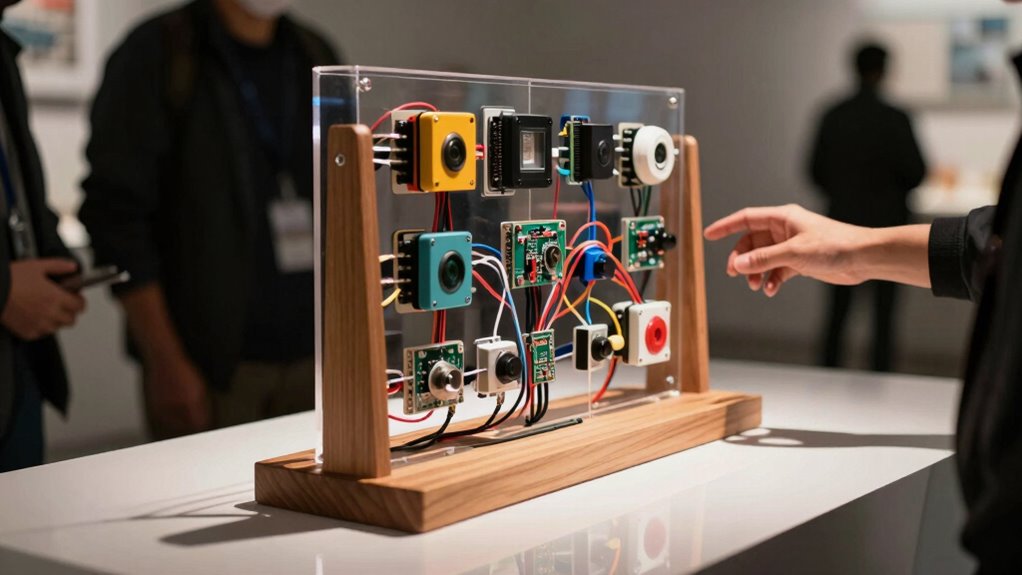
Have you ever wondered how to create an engaging and immersive experience for visitors? The key lies in building a reliable sensor stack that seamlessly integrates with your display systems. When designing an interactive exhibit, your goal is to guarantee that sensors respond accurately and consistently, providing visitors with a smooth and enthralling experience. This begins with proper sensor calibration. You need to fine-tune each sensor to detect the intended inputs precisely, whether it’s motion, touch, proximity, or environmental changes. A well-calibrated sensor stack minimizes errors, reduces false triggers, and guarantees that the exhibit reacts exactly as intended. Calibration isn’t a one-time task; it requires ongoing adjustments to account for environmental shifts or sensor drift over time. Regular calibration routines help maintain the exhibit’s responsiveness, making sure visitors’ interactions are captured accurately. Additionally, implementing simple systems can streamline the calibration process, ensuring consistent performance over time. Display integration plays a pivotal role in translating sensor data into meaningful visual feedback. Once your sensors are calibrated, you must connect them to your display system effectively. This integration involves synchronizing sensor outputs with visual outputs in real-time, creating a cohesive experience. For example, when a visitor approaches or touches a display, the sensor must instantly communicate this input to the display controller, which then updates the visuals accordingly. To achieve this, you’ll need to select compatible hardware and software that support low-latency communication protocols. Proper display integration ensures that the visual elements respond instantly and intuitively, reinforcing the interactive nature of your exhibit. It also helps prevent lag or misalignment between user actions and visual feedback, which can break the immersion. Incorporating robust sensor calibration and seamless display integration requires meticulous planning and testing. Start by selecting sensors suited for your exhibit’s environment and interaction goals. Next, develop calibration procedures tailored to those sensors, verifying their accuracy across different conditions. Once calibrated, focus on establishing reliable communication pathways between sensors and displays, using appropriate interfaces like HDMI, USB, or wireless protocols. Testing is essential—simulate various interactions to identify and correct any latency issues or misfires. The goal is to make the interaction feel natural and intuitive, so visitors remain engaged and curious. Remember, a well-calibrated sensor stack combined with flawless display integration transforms your exhibit from a simple display into a dynamic, interactive experience that visitors will remember.
Frequently Asked Questions
What Types of Sensors Are Best for Interactive Exhibits?
You should choose sensors like infrared, capacitive touch, and motion detectors for interactive exhibits because they promote visitor engagement. Guarantee proper sensor calibration to maintain accuracy and responsiveness, making interactions seamless. Infrared sensors detect presence, capacitive touch sensors respond to contact, and motion detectors track movement. Combining these sensors creates a dynamic, engaging experience, encouraging visitors to interact naturally and stay engaged with your exhibit.
How Do I Ensure Sensor Accuracy Over Time?
Like a steady heartbeat, your sensors need consistent care. To guarantee accuracy over time, regularly perform sensor calibration and monitor environmental stability, including temperature and humidity. Keep your sensors protected from extreme conditions and dust, and schedule routine checks. This proactive approach prevents drift and maintains reliable data, so your interactive exhibit remains engaging and precise, giving visitors a seamless experience they won’t forget.
What Safety Considerations Are There for Visitors?
You prioritize visitor safety by ensuring all sensors and exhibit components are securely installed and regularly maintained. Clearly display emergency protocols and accessible exits. Use non-toxic materials and avoid sharp edges or hazardous parts. Train staff to respond swiftly to emergencies, and regularly test safety features. This proactive approach minimizes risks, protects visitors, and guarantees a safe, enjoyable experience for everyone exploring your interactive exhibit.
How Can I Integrate Sensors With Digital Displays?
Your sensors can seamlessly integrate with digital displays by employing effective calibration techniques to guarantee accuracy. Connect sensors to a microcontroller or computer, then use data visualization tools to turn raw data into engaging visuals. This setup creates an interactive experience that’s as mesmerizing as a fireworks show, enthralling visitors and making complex data easy to understand. Regular calibration keeps the system reliable, ensuring your exhibit remains engaging and accurate.
What Is the Cost Range for a Complete Sensor Stack?
The cost for a complete sensor stack varies from $200 to $2,000, depending on sensor type, calibration needs, and complexity. You’ll need to budget for initial calibration to guarantee accuracy and plan a regular maintenance schedule to keep sensors functioning properly. Higher-end sensors with advanced features cost more, but investing in quality reduces long-term maintenance and calibration expenses, ensuring your exhibit runs smoothly.
Conclusion
Now that you’ve mastered the mechanics of your sensor stack, you’re ready to create engaging, charismatic exhibits. Let your passion propel your project forward, blending brilliance with boldness. Believe in your build, and watch your interactive idea ignite inspiration in every onlooker. With confidence, curiosity, and creativity, you’ll craft a compelling showcase that captivates and connects. Embrace this exciting endeavor—your innovative influence is just a sensor stack away from stunning success.