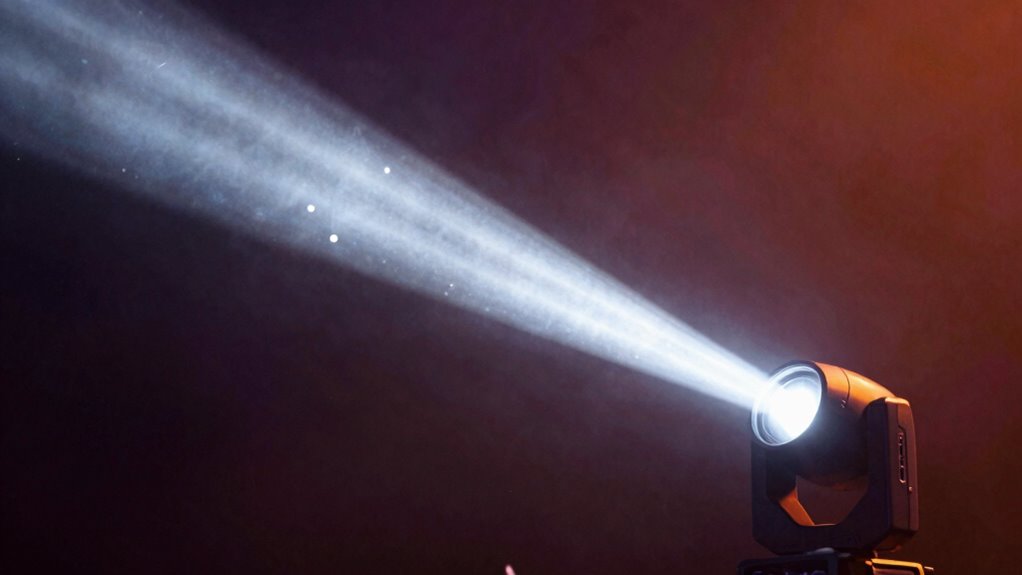

Moving head lights are versatile fixtures that let you control beam angles, gobos, and beam types to create stunning effects. You can adjust their tilt and pan to sweep across your space, switch gobos for patterns or textures, and select from sharp or soft beams to set the mood. These features make them perfect for dynamic lighting displays. Exploring further reveals how combining these elements can elevate any event or performance with impressive visual impact.

Get the latest gadgets delivered free with Prime
- Fast, free delivery on millions of items
- Prime Video, Amazon Music and more included
- Member-only deals all year
Key Takeaways
- Moving head lights combine adjustable pan and tilt angles for dynamic, sweeping illumination across large areas.
- Beam types include sharp, narrow beams for aerial effects and wide washes for ambient lighting control.
- Beam shaping accessories like lenses and gobos modify the light pattern, creating textures and visual effects.
- Mounting options and adjustable fixtures allow precise aiming and positioning for versatile lighting designs.
- Control over angles, beam types, and gobos enables creative lighting effects for events and stage productions.

Moving head lights are versatile lighting fixtures that have revolutionized stage and event lighting. They allow you to create dynamic, eye-catching effects by moving and adjusting their beams in real time. One of their key features is beam shaping, which enables you to control the width, focus, and pattern of the light as it projects onto your stage or venue. Beam shaping is achieved through the use of internal lenses and accessories, giving you the ability to produce tight spots or wide washes depending on your needs. This flexibility makes these fixtures ideal for highlighting performers, creating mood, or accentuating set pieces.
When it comes to fixture mounting, moving head lights are designed to be adaptable and secure. You can mount them on trusses, stands, or specialized rigging points, depending on your setup. Proper fixture mounting is *essential* because it not only *guarantees* safety but also impacts the ease of aiming and operating the fixture. Many moving head lights feature adjustable yokes or brackets that allow you to tilt, pan, and rotate the unit smoothly. This versatility in mounting options means you can position the fixtures precisely to achieve your desired lighting angles and effects. Whether you’re lighting a concert stage, theater production, or corporate event, the right fixture mounting setup helps you maximize the fixture’s capabilities.
Angles are another *critical* aspect of moving head lights. They give you the ability to direct light exactly where it’s needed, creating dramatic effects and precise illumination. Moving heads can pan 540 degrees or more, allowing you to cover large areas with ease. Tilt angles can often reach 270 degrees or more, giving you vertical flexibility. This extensive range lets you create sweeping movements or pinpoint lighting with precision. By combining the angles with beam shaping, you can craft intricate lighting designs that enhance your performance or event ambiance. Additionally, understanding the beam angle helps in selecting the right fixture for different event spaces and effects.
Furthermore, the combination of beam shaping, fixture mounting, and adjustable angles provides a powerful toolkit for lighting designers. You can produce sharp, defined beams for aerial effects or soft washes for mood lighting. The ability to change and control these parameters on the fly makes moving head lights indispensable for creating engaging visual experiences. Whether you’re aiming for subtle accents or bold, sweeping movements, understanding these core features helps you harness the full potential of your moving head fixtures. Their versatility and precision truly elevate your lighting design, making your events more impactful and memorable.
As an affiliate, we earn on qualifying purchases.
Frequently Asked Questions
How Do Moving Head Lights Differ From Traditional Stage Lighting?
Moving head lights differ from traditional stage lighting because they offer dynamic control, allowing you to adjust beam angle and change colors through color mixing. Unlike static fixtures, these lights can pan, tilt, and change focus instantly, giving you more creative flexibility. This makes your shows more engaging, as you can easily modify lighting effects on the fly, creating a vibrant and versatile atmosphere that traditional fixtures can’t match.
What Are the Maintenance Requirements for Moving Head Lights?
You’ll need to stay vigilant with your moving head lights—think of them as high-maintenance pets. Regularly replace bulbs to keep your show bright, and don’t forget lens cleaning, or your beam might turn into a foggy mess. Check for loose connections and clean fans to prevent overheating. Proper maintenance guarantees longevity, flawless performance, and keeps your lighting rig from turning into a DIY disaster.
Can Moving Head Lights Be Synchronized With Music?
Yes, you can synchronize moving head lights with music through music synchronization features. By using dedicated software or DMX controllers, you can align light movements and effects with the beat, creating dynamic shows. Light programming allows you to set patterns that respond to music, making performances more engaging. Just guarantee your lights support sound activation or music-triggered modes to achieve seamless synchronization with your audio.
What Safety Precautions Are Necessary When Operating Moving Head Lights?
Think of operating moving head lights like steering a ship through a storm—you need careful navigation. Always wear safety gear like gloves and eye protection, and double-check electrical safety protocols. Keep your workspace clear of clutter, verify proper grounding, and avoid overloading circuits. Regularly inspect the equipment for damage. These precautions help prevent accidents and keep your show running smoothly, so you stay in control even when the spotlight’s on you.
How Do Digital Control Systems Enhance Moving Head Light Performance?
Digital control systems enhance your moving head light performance by offering precise, seamless control through digital DMX protocols. With software integration, you can easily program complex lighting scenes, automate movements, and synchronize effects, making your shows more dynamic. These systems simplify adjustments, reduce errors, and give you real-time feedback, ensuring your lighting design is both flexible and professional, ultimately elevating the overall visual impact of your event.
DMX moving head lighting fixture
As an affiliate, we earn on qualifying purchases.
As an affiliate, we earn on qualifying purchases.
Conclusion
Now that you understand the basics of moving head lights, you’re ready to elevate your lighting design. Remember, these versatile fixtures can create over 95% of the visual effects seen in concerts and events today. Whether adjusting angles, choosing gobos, or selecting beam types, you have the power to transform any space. So go ahead, experiment, and bring your creative vision to life with confidence—your audience will be amazed at what you can achieve!
professional stage lighting gobos
As an affiliate, we earn on qualifying purchases.
As an affiliate, we earn on qualifying purchases.
adjustable beam moving head light
As an affiliate, we earn on qualifying purchases.
As an affiliate, we earn on qualifying purchases.
Halloween Picks
halloween
As an affiliate, we earn on qualifying purchases.