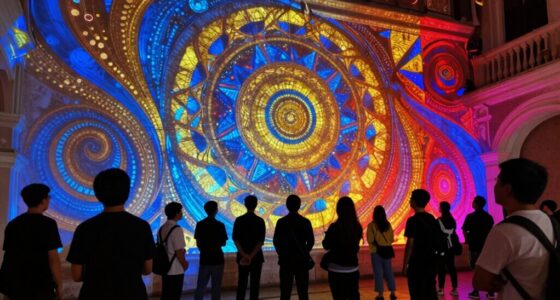
By incorporating theater techniques into art installations, you can turn ordinary spaces into immersive experiences that actively engage visitors. Use lighting, sound, and interactive elements to evoke emotions and tell a story, making viewers feel like they’re part of the narrative. Design flexible, layered environments that encourage exploration and discovery. As you continue exploring, you’ll find innovative ways to deepen audience involvement and create unforgettable, participatory art moments.
Key Takeaways
- Incorporate theatrical elements like lighting, sound, and performer interactions to create immersive, multisensory art experiences.
- Design flexible spaces that guide exploration and encourage active visitor participation.
- Use storytelling and thematic framing to deepen emotional engagement and foster a sense of journey.
- Employ space manipulation to facilitate dialogue between the artwork and audience, enhancing emotional resonance.
- Transform static displays into dynamic environments through theatrical techniques, promoting personal and memorable encounters.

Have you ever wondered how theater techniques can transform a static art installation into a dynamic, immersive experience? The secret lies in harnessing methods that foster audience engagement and optimize space utilization. When you apply theatrical principles to art, you turn passive observation into active participation. Instead of viewers simply looking at a piece, they become part of the narrative, moving through the space and interacting with elements in meaningful ways. This approach breaks down the traditional barriers between art and observer, creating a personal, memorable encounter.
To achieve this, you might design the installation with flexible, fluid spaces that guide visitors along specific paths or allow free exploration. This strategic space utilization ensures that every corner or section of your installation serves a purpose—whether it’s to evoke emotion, provoke thought, or encourage interaction. By controlling movement and sightlines, you direct attention precisely where you want it, creating a layered experience that unfolds as visitors navigate the environment. This method keeps engagement high because viewers are not just passively observing but actively discovering new details with each step.
Design flexible spaces that guide exploration and create layered, purposeful engagement throughout the installation.
Incorporating theatrical techniques—such as scene setting, lighting, sound, and performer interactions—can also heighten audience engagement. For example, you might use dramatic lighting to highlight specific objects or sections, creating mood and focus. Soundscapes can evoke a sense of place or emotion, drawing visitors deeper into the narrative. Live performers or interactive elements encourage visitors to respond, making the experience personal and immediate. These methods transform the installation from a static display into a living, breathing environment where visitors feel involved rather than just observed.
Furthermore, using theatrical storytelling techniques allows you to craft a storyline or theme that visitors can follow, making the experience more coherent and compelling. By framing the installation as a journey—whether literal or metaphorical—you invite visitors to become explorers of your creative universe. Their choices and interactions influence how the story unfolds, increasing their sense of agency and investment.
Ultimately, applying theater techniques in art installations is about creating a dialogue between the artwork and the audience. When you master space utilization and audience engagement, you craft an environment that is not only visually stimulating but also emotionally resonant. Visitors leave with a sense of participation and discovery, transforming their experience from a simple viewing into an active, immersive adventure. This blend of performance and art invites everyone to step inside and become part of the story you’re telling.
Adding audience engagement strategies can further enhance the effectiveness of your installation by fostering deeper connections.
Frequently Asked Questions
How Do Audience Interactions Influence Installation Dynamics?
Audience interactions profoundly influence installation dynamics by encouraging active participation and shaping the experience. When you engage in audience participation, you become part of the storytelling, making the installation more immersive and personal. Your responses and actions can alter the flow of the piece, fostering a unique experience for everyone involved. This interactive storytelling transforms passive observation into an energetic, collaborative event, deepening emotional connections and enhancing the overall impact of the installation.
What Are Potential Safety Concerns With Immersive Theatre Setups?
You should prioritize hazard identification in your immersive theatre setup to spot potential safety risks like tripping hazards or unstable structures. Implement strict safety protocols, including clear emergency exits and staff training, to prevent accidents. Regularly inspect the environment and inform your audience about safety guidelines. By proactively addressing these concerns, you guarantee a safe, engaging experience where everyone can enjoy the immersive art without unnecessary risks.
How Do Artists Measure Success in Immersive Experiences?
Ever wondered how you know an immersive experience hits the mark? You measure success through audience engagement and sensory stimulation. When visitors feel deeply involved and their senses are actively engaged, it’s a clear sign you’ve created something impactful. You can also gather feedback, observe emotional reactions, and note how long people stay immersed. These indicators show whether your art installation truly resonates and leaves a lasting impression on your audience.
Can Traditional Theatre Techniques Be Adapted for Outdoor Installations?
Yes, you can adapt traditional theatre techniques for outdoor installations by focusing on innovative stage design and audience engagement. Use natural elements to enhance the setting, creating a seamless environment. Incorporate dynamic lighting and sound to direct attention and evoke emotions. Engage your audience through interactive elements and movement, making the experience more immersive. These adaptations help bridge the gap between conventional theatre and outdoor art, enriching the audience’s overall experience.
What Funding Options Are Available for Immersive Art Projects?
You can explore grant opportunities from arts councils, cultural foundations, and local government programs to fund your immersive art project. Additionally, crowdfunding campaigns on platforms like Kickstarter or Indiegogo offer a great way to engage your community and raise funds directly. Combining these options increases your chances of securing the necessary resources, allowing you to bring your vision to life without relying solely on traditional funding sources.
Conclusion
By integrating theatre techniques, you make art installations more immersive and engaging. Did you know that installations employing live performance elements see a 40% increase in audience interaction? This statistic highlights how theatre methods can transform static art into dynamic experiences. When you incorporate these techniques, you don’t just showcase art—you invite viewers to become part of it, creating deeper emotional connections. Embrace theatre in your installations, and watch your audience’s engagement soar.