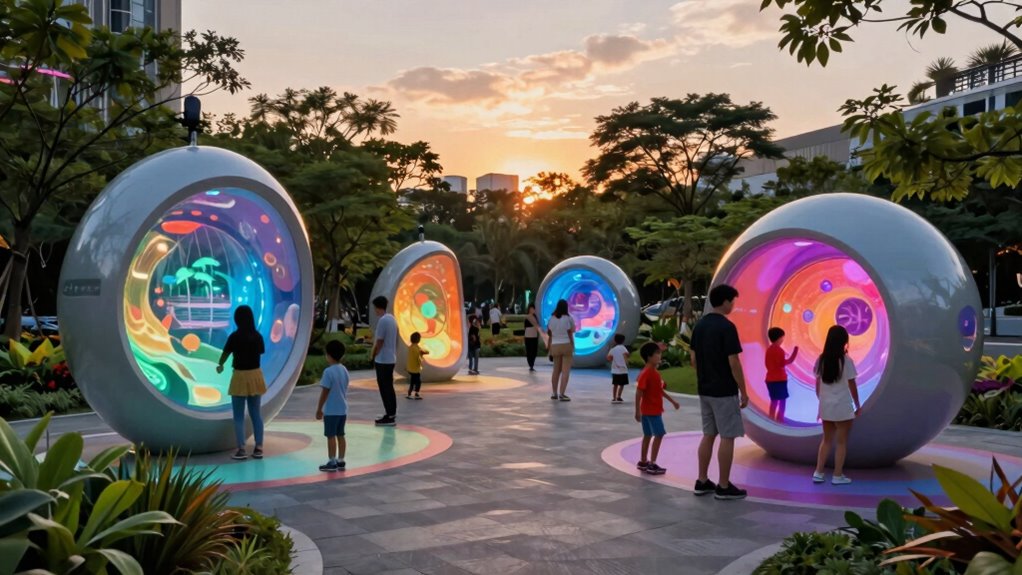

Responsive environments create stronger viewer engagement by transforming spaces into active, immersive experiences that adapt to your actions in real-time. As these environments react through sensory cues like light, sound, and touch, they make you feel more connected and involved. This dynamic interaction boosts curiosity, encourages exploration, and makes each experience unique. The seamless integration of technology guarantees intuitive responses, heightening emotional bonds. Keep exploring to discover how these innovative environments deepen your connection with the space around you.
Key Takeaways
- Responsive environments transform passive observation into active participation, fostering deeper emotional and cognitive connections.
- Sensory stimulation through environmental reactions enhances engagement and creates memorable experiences.
- Seamless technology-driven interactions increase user sense of agency and personal involvement.
- Unpredictable and dynamic responses encourage exploration, curiosity, and ongoing engagement.
- Environments that mimic natural ecosystems promote ecological awareness and emotional bonds with users.

Responsive environments are transforming how viewers interact with their surroundings, creating immersive experiences that adapt in real-time. When you step into a space designed with responsiveness in mind, you don’t just observe—you become part of the environment. This integration hinges on interactive design, which allows the environment to respond dynamically to your movements, gestures, or even emotional cues. As a result, the environment becomes more engaging because it feels personalized, intuitive, and alive. It’s no longer a passive backdrop; it’s an active participant in your experience.
Responsive environments turn passive spaces into active, personalized experiences that adapt seamlessly to your presence and interactions.
The power of responsiveness lies in its ability to heighten your sensory experience. When a space reacts to your presence, your senses are stimulated more deeply. Lights might brighten or dim based on your position, sounds could shift to match your movements, or textures might change to evoke different feelings. This sensory feedback draws you in, making the experience feel more tangible and immediate. Instead of just observing, you’re immersed, which naturally boosts your emotional connection to the environment. The more your senses are engaged, the stronger your attachment becomes, encouraging you to explore further and stay longer. Additionally, responsive environments often incorporate principles of biodiversity, creating spaces that reflect natural ecosystems and promote ecological awareness. This connection to nature can enhance the overall sense of well-being and foster a greater appreciation for ecological sustainability. Incorporating natural elements further deepens this connection, making the environment more relatable and soothing.
Interactive design plays a pivotal role in creating these responsive environments. It involves crafting systems that interpret your actions and translate them into meaningful responses. Whether it’s motion sensors, touch interfaces, or biometric feedback, the goal is to make interactions seamless and intuitive. When these systems work smoothly, you don’t have to think about how to interact—they become second nature. This ease of interaction fosters a sense of agency, making you feel like you’re influencing the environment rather than just being affected by it. That feeling of control is vital for deepening engagement, as it turns passive observation into active participation. The integration of smart technology further enhances this experience by allowing environments to adapt more precisely and effortlessly to individual preferences.
Moreover, the unpredictability of responsive environments keeps you curious. As you move through space, you discover new reactions and interactions, which sustain your interest. This ongoing engagement is what makes responsive environments particularly powerful—they adapt to you, creating a unique experience every time. The blend of interactive design and sensory stimulation builds an emotional bond, encouraging you to return and explore more. Essentially, these environments don’t just display information—they invite you to become part of a living, breathing ecosystem that reacts to your presence, making your experience more memorable and meaningful. Recognizing interactive design as a key element helps us understand how technology creates these dynamic spaces that foster stronger viewer engagement.
interactive responsive environment lighting system
As an affiliate, we earn on qualifying purchases.
As an affiliate, we earn on qualifying purchases.
Frequently Asked Questions
How Do Responsive Environments Adapt to Different Viewer Preferences?
You adapt responsive environments to different viewer preferences through personalization strategies that tailor content and interactions based on user behavior. By analyzing data like viewing patterns and feedback, you improve the user experience, making it more engaging and relevant. This dynamic adjustment guarantees viewers feel connected and valued, encouraging longer engagement and stronger emotional responses. Ultimately, your ability to customize experiences keeps viewers invested and coming back for more.
What Technologies Are Essential for Creating Responsive Environments?
You need technologies like sensors, AI, and projection systems to create responsive environments. These tools enable interactive storytelling, allowing viewers to influence the experience in real-time. Sensory integration technologies, such as haptic feedback and sound systems, enhance immersion. By combining these technologies, you craft environments that adapt seamlessly to viewer movements and preferences, making the experience more engaging and memorable.
Can Responsive Environments Be Used in Educational Settings Effectively?
Yes, responsive environments work well in education. Think of them as a bridge where interactive storytelling captures students’ imaginations, making learning lively and memorable. You can use sensory integration to tailor lessons, engaging multiple senses for deeper understanding. By creating an environment that responds to students’ actions, you foster active participation, curiosity, and engagement—turning a traditional classroom into a dynamic space where learning feels like an adventure rather than a chore.
How Do Responsive Environments Impact Emotional Responses?
Responsive environments heighten your emotional responses by fostering a deep emotional connection and offering rich sensory stimulation. As you interact with these spaces, they adapt to your presence, making you feel more engaged and understood. This dynamic feedback creates a sense of intimacy and curiosity, encouraging you to explore further. Ultimately, these environments make emotional experiences more vivid, memorable, and meaningful by actively responding to your actions and emotions.
What Challenges Are Faced in Designing Responsive Environments?
Designing responsive environments is like walking a tightrope—you balance innovation with practicality. You face challenges integrating sensory inputs seamlessly with interactive storytelling, ensuring technology adapts without overwhelming users. Achieving real-time responsiveness while maintaining user comfort demands careful planning, advanced sensors, and intuitive programming. You also need to take into account accessibility and scalability, making sure your environment remains engaging for diverse audiences without losing its core emotional impact.
sensory stimulation smart home devices
As an affiliate, we earn on qualifying purchases.
As an affiliate, we earn on qualifying purchases.
Conclusion
Responsive environments markedly boost your engagement by adapting to your actions and preferences. When spaces respond to you, you’re more likely to feel connected and invested. Did you know that 70% of visitors report higher satisfaction when environments are interactive and tailored? By creating spaces that respond to your presence, you’ll not only enjoy a richer experience but also deepen your connection with the environment. Embrace responsive environments to make your interactions more meaningful and memorable.
biometric feedback interaction system
As an affiliate, we earn on qualifying purchases.
As an affiliate, we earn on qualifying purchases.
immersive environmental control technology
As an affiliate, we earn on qualifying purchases.
As an affiliate, we earn on qualifying purchases.