
Responsive environments are immersive art experiences that react instantly to your movements and gestures. As you move through the space, sensors detect your presence, triggering visual, auditory, or tactile responses that create a seamless dialogue between you and the installation. These dynamic environments transform passive observation into active participation, making each journey unique and personal. By continuing your exploration, you’ll uncover how technology and creativity combine to turn spaces into living, responsive artworks.
Key Takeaways
- Responsive environments adapt in real-time to user movements, creating dynamic and immersive artistic experiences.
- They utilize sensors and AI technology to detect gestures and proximity, triggering visual or auditory responses.
- These installations foster active participation, transforming viewers into co-creators of the environment.
- Interactions stimulate multiple senses simultaneously, enhancing emotional and sensory engagement.
- Each encounter is unique, encouraging exploration and personalized connections with the artwork.
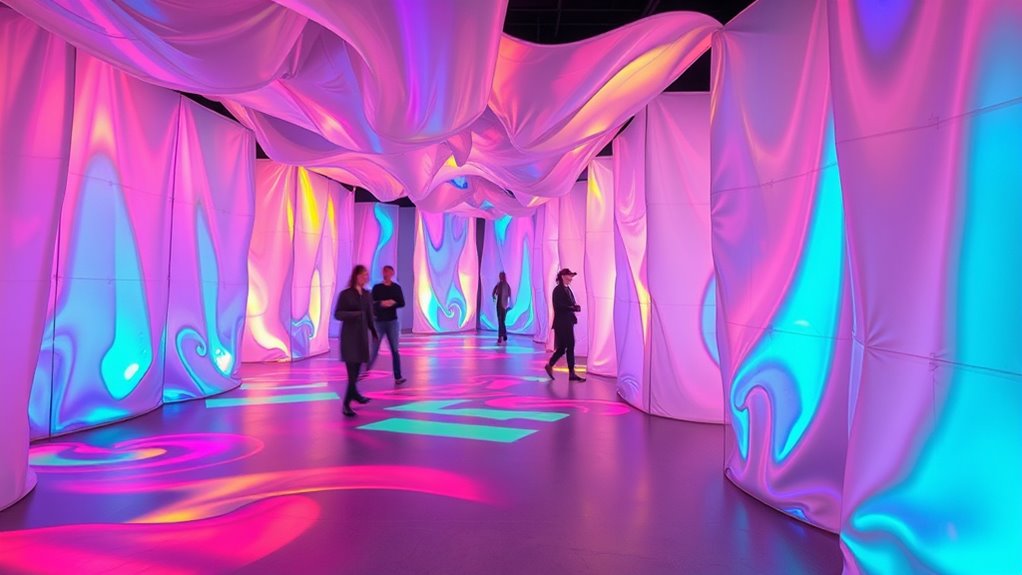
Responsive environments are designed to adapt dynamically to the needs and behaviors of their users. When you step into such a space, you’re not just observing; you’re actively shaping the environment around you. This is especially true with interactive installations, where your movements and gestures directly influence what happens next. These installations are crafted to respond in real-time, creating a seamless dialogue between you and the artwork. As you move through the space, lights may shift, sounds may change, or visual elements might morph to reflect your presence. This ongoing interaction transforms a passive experience into an engaging, immersive journey.
Step into a space where your actions shape lights, sounds, and visuals in real-time.
One of the most compelling aspects of responsive environments is the sensory experience they provide. They stimulate multiple senses simultaneously, making you more aware of your surroundings and your own actions. For example, a sensor might detect your proximity and trigger a gentle vibration or a burst of color. When you reach out or gesture, the environment responds with visual patterns or sounds that sync perfectly with your movements. This feedback loop enhances your perception, blurring the line between observer and participant. The environment becomes a living entity that reacts to your energy, making every encounter unique and personal.
In designing these environments, creators often utilize sophisticated technology like motion sensors, cameras, and AI algorithms to capture your actions and interpret them instantly. This technological backbone allows the environment to adapt continuously, ensuring that each interaction feels natural and intuitive. The sensory experience is heightened because the environment isn’t static; it’s a dynamic partner that invites you to explore and experiment. The integration of interactive technology plays a crucial role in facilitating this responsiveness, enabling environments to respond more accurately and fluidly to user input. As you navigate through the space, you might notice how your presence influences the atmosphere, creating a sense of agency and involvement. The environment doesn’t just respond randomly—it’s calibrated to your specific movements, making the experience feel authentic and meaningful.
In practice, this means that every visitor’s journey through a responsive environment will be different. You might find yourself immersed in a glowing forest that reacts to your footsteps or a room where your gestures generate swirling patterns of light and sound. The beauty of this setup lies in its ability to make you feel like an active participant rather than a distant spectator. By engaging your senses through visual, auditory, and tactile feedback, these environments foster a deeper connection to the artwork and to the space itself. Ultimately, they turn passive observation into a vibrant, sensory-rich dialogue that’s as unique as you are.
Frequently Asked Questions
How Do Responsive Environments Influence Audience Emotions?
Responsive environments influence your emotions by creating a sense of emotional engagement that draws you into the artwork. As the environment reacts to your movement, your perception shifts, making you feel more connected and involved. This dynamic interaction heightens your emotional response, making the experience memorable. You start to see the art as alive and responsive, which deepens your overall perception and emotional connection to the environment.
What Are the Main Technologies Used in Reactive Art Installations?
You’ll find sensor integration and data visualization are key technologies in reactive art installations. Sensors detect your movements and gestures, translating physical actions into digital data. This data is then visualized in real-time, allowing the artwork to respond dynamically. By combining these technologies, artists create immersive experiences that adapt to your presence, making each interaction unique and engaging. This innovative approach bridges technology and creativity seamlessly.
How Do Artists Ensure Accessibility in Responsive Environments?
You know what they say, “The proof of the pudding is in the eating,” and in accessible responsive art, you must prioritize inclusivity. You guarantee accessibility by calibrating sensors accurately and following established accessibility standards. This approach helps you create environments that respond to diverse audiences, including those with disabilities. By testing thoroughly and consulting with accessibility experts, you make sure everyone can enjoy and interact with your art comfortably.
Can Responsive Environments Adapt to Multiple Users Simultaneously?
Yes, responsive environments can adapt to multiple users simultaneously. By designing for multi-user interaction, you create a space where everyone can engage together. Collaborative design ensures the environment responds to overlapping movements and inputs, making the experience seamless for all. You should incorporate sensors and algorithms that detect and process multiple signals at once, allowing the environment to react dynamically and inclusively, fostering shared experiences in real-time.
What Are the Ethical Considerations in Creating Reactive Art?
You need to take into account that reactive art can raise ethical issues like privacy concerns and cultural sensitivities. You’re walking a tightrope, balancing innovation with respect for users’ rights. Make sure you obtain consent before collecting data, and be aware of diverse cultural contexts to avoid unintended offense. By doing so, you ensure your art respects boundaries while engaging audiences meaningfully, turning a potential minefield into a masterpiece.
Conclusion
So, next time you step into a responsive environment, remember—you’re not just an observer. Your every move becomes part of the art, shaping it as much as it shapes you. Ironically, in trying to escape the passive, you become the active creator. It’s a reminder that even in the most high-tech, reactive spaces, it’s your presence and movement that truly bring them alive—proving perhaps that art, after all, is just a reflection of you.