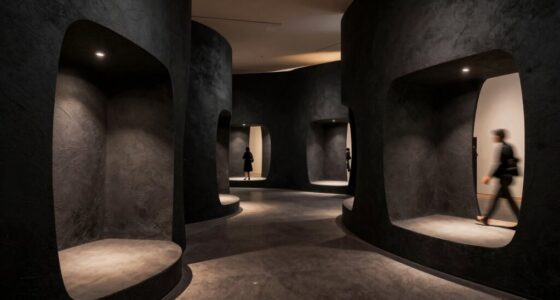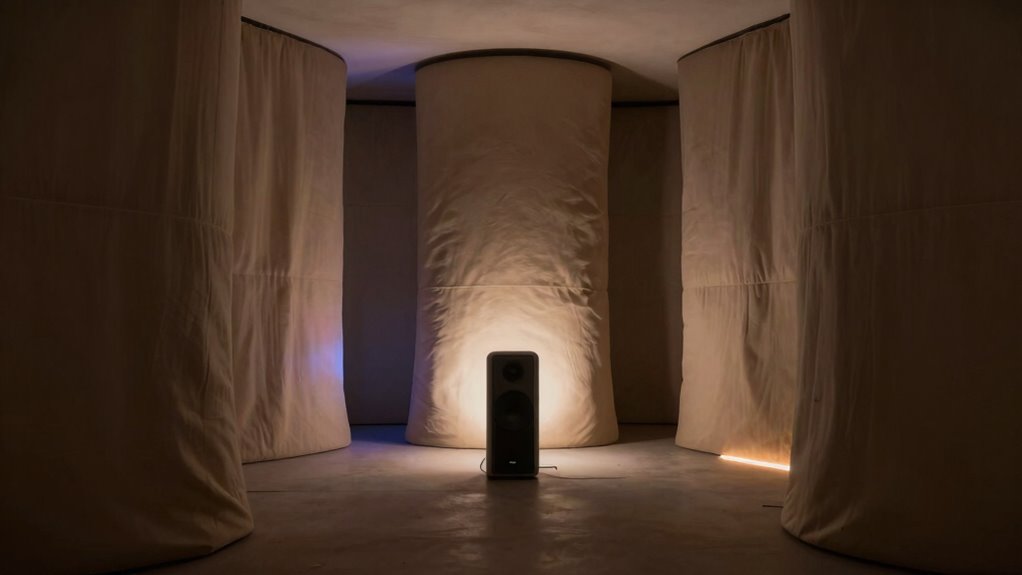

You might overlook sound because designing immersive audio feels complex and often gets less focus compared to visuals or interaction. Many creators underestimate how essential sound is for emotional depth and realism. Poorly integrated audio can make environments feel disconnected or less believable. When you prioritize sound design, you add a layer of authenticity and emotional resonance that elevates the entire experience. Keep exploring, and you’ll discover how mastering sound transforms your installations into truly mesmerizing worlds.

Get the latest gadgets delivered free with Prime
- Fast, free delivery on millions of items
- Prime Video, Amazon Music and more included
- Member-only deals all year
Key Takeaways
- Creators often prioritize visuals and interactivity, neglecting the critical role of sound in emotional engagement.
- Technical challenges and lack of expertise hinder seamless integration of sound with other sensory elements.
- Designing effective soundscapes requires specialized skills, which are frequently overlooked or undervalued.
- The complexity of sound travel and environmental interactions makes sound design more difficult to execute properly.
- Without deliberate focus, sound is perceived as background noise rather than a vital storytelling component.
Sound plays an essential role in immersive installations, transforming static environments into dynamic, multi-sensory experiences. When you step into an immersive space, your auditory perception becomes a key element in shaping your emotional response and sense of presence. Despite its power, sound is often overlooked or underutilized, leaving installations feeling incomplete or less impactful. The reason for this oversight often lies in the complexity of soundscapes design and the challenge of seamlessly integrating audio with visual and tactile elements.
Sound can evoke feelings, create atmospheres, and guide your attention, but only if it’s crafted thoughtfully. If the soundscapes aren’t carefully designed, they can feel disjointed or distracting, pulling you out of the experience rather than drawing you deeper into it. When designing sound for an immersive installation, you need to contemplate how auditory perception interacts with the environment. This involves understanding how sound travels in space, how it interacts with surfaces, and how your brain interprets different audio cues. The best soundscapes don’t just add background noise—they serve as an integral part of the narrative, enriching the environment and making it feel more real.
Thoughtfully crafted soundscapes deepen immersion, making environments feel real and emotionally resonant.
Achieving this level of integration requires a strategic approach. Instead of simply playing ambient sounds, you should think about layering audio elements that respond to your movement or the installation’s narrative. Spatial audio technologies can place sounds precisely where they should be, making you feel surrounded or even inside the environment. This creates a sense of immersion that visual elements alone often can’t achieve. When you experience a well-designed soundscape, it feels natural and effortless, yet profoundly immersive. Additionally, advancements in soundscapes design enable creators to craft more nuanced and engaging auditory environments, elevating the overall experience. Understanding the complexity of sound design is crucial for creating truly impactful immersive environments. Mastering auditory perception is also vital, as it influences how listeners interpret and respond to the soundscape. Recognizing the importance of multisensory integration can help creators develop more cohesive and compelling experiences.
However, many creators underestimate the importance of sound or lack the technical expertise to implement it effectively. They may focus on stunning visuals or interactive features, neglecting how sound can amplify or even define the experience. This oversight results in installations that look impressive but lack the emotional depth or realism that sound can provide. If you want your installation to resonate, you must prioritize sound design as much as visuals, understanding that auditory perception is a powerful tool for storytelling and engagement.
In the end, sound isn’t just an afterthought; it’s a crucial ingredient that completes the immersive puzzle. When you harness the potential of soundscapes design properly, you turn a static environment into a living, breathing world that captivates and moves your audience on a deeper level.
immersive spatial audio headphones
As an affiliate, we earn on qualifying purchases.
As an affiliate, we earn on qualifying purchases.
Frequently Asked Questions
How Does Sound Influence Visitor Emotions in Immersive Spaces?
Sound greatly influences your emotions in immersive spaces by creating emotional resonance and enhancing sensory engagement. It guides your mood, amplifies feelings, and deepens your connection to the environment. When carefully designed, sound can evoke calm, excitement, or nostalgia, making your experience more impactful. You’ll find that well-crafted audio complements visuals, making the space feel more real and emotionally compelling, drawing you further into the immersive environment.
What Are Common Technical Challenges in Integrating Sound?
You may face subtle hurdles like ensuring adequate acoustic insulation, which prevents sound leaks and maintains immersion. Sound calibration can be tricky, requiring precise adjustments to achieve balanced audio that complements the visuals without overwhelming the senses. These technical challenges demand careful planning and equipment, but overcoming them enriches the space’s emotional depth. When managed well, your installation becomes a mesmerizing experience, drawing visitors deeper into its immersive world.
How Is Sound Quality Maintained Across Different Installation Environments?
To maintain sound quality across different environments, you focus on proper acoustic treatment to minimize reflections and unwanted noise. You also use advanced signal processing to adapt audio signals to each space’s specific acoustics, ensuring clarity and consistency. By calibrating speakers and employing equalization, you optimize sound delivery, creating an immersive experience that remains high-quality regardless of the installation setting.
What Role Does Spatial Audio Play in Immersion?
Spatial audio transforms your experience by immersing you in a three-dimensional soundscape, where acoustic ecology shapes the environment and binaural perception mimics real-world hearing. Unlike flat stereo, it places sounds around you, making scenes feel alive and authentic. You feel like you’re part of the story, not just observing it. This layered sound complexity heightens immersion, turning static installations into dynamic, enveloping worlds you can truly lose yourself in.
How Do Artists Select Appropriate Soundscapes for Installations?
You select appropriate soundscapes by considering sound symbolism, ensuring sounds evoke specific ideas or emotions aligned with your theme. You also analyze the cultural context of your audience, choosing sounds that resonate meaningfully and avoid misinterpretation. By blending these elements, you create an immersive experience that feels authentic and engaging. You test different soundscapes, gather feedback, and refine your choices to enhance emotional impact and cultural relevance.
As an affiliate, we earn on qualifying purchases.
Conclusion
You see, sound acts like the unseen thread weaving through the tapestry of immersive installations, pulling everything into a vivid, cohesive world. When missing, it’s as if the colors fade and the music quiets, leaving a hollow shell. By embracing sound, you breathe life into the space, transforming static visuals into a symphony of sensation. Without it, your creation remains a silent ghost—powerful yet incomplete, yearning for the heartbeat only sound can provide.
As an affiliate, we earn on qualifying purchases.
As an affiliate, we earn on qualifying purchases.
Halloween Picks
halloween
As an affiliate, we earn on qualifying purchases.