
🔍 Read the full analysis: What An AI Twilight Dial Adds To An NLC Watch At 83 Km on ThorstenMeyerAI.com

Get the latest gadgets delivered free with Prime
- Fast, free delivery on millions of items
- Prime Video, Amazon Music and more included
- Member-only deals all year
TL;DR
ThorstenMeyerAI.com describes “Noctilucent — NLC Watch at 83 km,” an AI-built fictional exhibition about real noctilucent clouds. Its central feature is a solar-depression dial that changes the page’s simulated sky and cloud lighting; it does not provide live observations or scientific measurements.
ThorstenMeyerAI.com has described “Noctilucent — NLC Watch at 83 km,” an AI-built fictional exhibition that uses an interactive solar-depression dial to show how noctilucent clouds can remain illuminated after the ground is dark, as detailed in the original analysis. The clouds are a real atmospheric phenomenon, but the exhibition’s observing project and field journal are invented; the page is not a live scientific service.
The dial represents the sun’s position from 6 to 16 degrees below the horizon. As visitors change the setting, the page adjusts its simulated sky light, shadows, cloud glow, ambient color, grain and horizon flare. The source describes the most expressive point as near 11 degrees below the horizon. These are elements of the website’s visual model, not measurements from a current observation.
The experience follows a path from the luminous horizon through cloud forms and ice crystals to seasonal viewing and a fictional field log. Its graphics are generated in the browser: Canvas renders the sky and cloud forms, while inline SVG supplies diagrams and an altitude illustration. The source says the page uses no image assets. It also describes a hold-to-reveal interaction in which ground-level haze fades while the cloud band at 83 kilometres becomes clearer; the effect fades if the visitor releases the control early.
The presentation distinguishes three cloud forms through their motion: billows have tighter repeating crests, whirls bend into polar distortions, and bands move in broader waves. A cyan-and-violet palette sets the clouds against a dark sky, before the page shifts to a cream-colored field-log section. The source also says the experience pauses animation when the document is hidden and offers a still state for people who prefer reduced motion.
What an AI Twilight Dial Adds to an NLC Watch at 83 km
A fictional web exhibition uses one solar-depression control to shift its simulated sky, shadows and cloud glow. The clouds are real; the watch project and field journal are invented.
One dial makes the whole sky respond
The interface turns solar depression—the Sun’s angle below the horizon—into a coordinated visual change. As the setting moves, the page adjusts its simulated light rather than reporting measured atmospheric conditions.
From glowing horizon to invented field log
The exhibition guides visitors through visual ideas associated with noctilucent clouds, then frames them with fictional seasonal notes and station records.
Real clouds. Fictional watch.
Noctilucent clouds are a real atmospheric phenomenon: high-altitude ice clouds can remain illuminated after the observer’s location has entered darkness. The exhibition uses that contrast as its central idea.
Real phenomenon
High-altitude ice clouds can catch sunlight after the ground below is dark.
Invented network
The observing project, station names and field journal are presented as fictional.
Simulated lighting
The 83 km framing and dial explain an idea visually; they are not event measurements.
Procedural graphics, shaped for motion
According to the project description, the visuals are rendered in the browser with Canvas, inline SVG and CSS, without image assets. The account also describes a hold-to-reveal interaction and a reduced-motion still state.
| Element | Described behavior | What it communicates |
|---|---|---|
| Hold to reveal | Ground haze fades while the 83 km cloud band becomes clearer; releasing early lets the effect fade. | Patience as an artistic observing gesture. |
| Cloud motion | Billows repeat tighter crests; whirls bend into polar distortions; bands move in broader waves. | Different visual identities for cloud forms. |
| Reduced motion | The page offers a still state and pauses animation when the document is hidden. | More controlled viewing, as described by the source. |
| Rendering | Canvas for sky and cloud forms; inline SVG for diagrams and altitude illustration. | A browser-made scene without a described live image feed. |
What the page does not verify
The supplied account does not establish a live atmospheric data feed, a scientific institution, a real observing network, calibration against measured conditions, visitor numbers, or a launch date. It also reports no independent accessibility or performance evaluation. Implementation and review details remain claims attributed to the project description.
“A fictional field journal for a fictional observing project, not a real company or live scientific service.”
ThorstenMeyerAI.com · Exhibition description
Key questions
Is NLC Watch a real monitoring service?
No. The project description calls it a fictional exhibition and field journal, not a live service or observing network.
What does the dial change?
It changes simulated sky brightness, shadows, cloud glow, ambient color, grain and horizon flare across 6–16° of solar depression.
Are noctilucent clouds real?
Yes. The clouds are real; the fictional status applies to the exhibition’s watch project and records.
Does it show live cloud images?
The source describes browser-generated Canvas and SVG visuals, with no image assets or live image feed described.
A Dial That Drives the Sky
The exhibition’s main design idea is that a single setting should affect more than one decorative element. By linking the dial to the sky, shadows and cloud lighting, the page turns a visual control into a simplified illustration of twilight geometry: sunlight can reach high-altitude ice clouds even while the lower atmosphere and ground are in darkness.
That makes the piece an example of using an interactive interface to communicate a scientific concept, rather than presenting it only as explanatory text. Its value for readers is educational and design-focused, not operational: the source describes a simulated experience, not a tool for planning observations or reporting cloud sightings. The distinction matters because the fictional field logs and station names could otherwise be mistaken for real research records.
The adaptation exercise also makes the visitor’s action part of the explanation. Holding the control gradually reveals the high cloud band through a receding haze, while releasing it lets the image fade. That mechanic presents patience as part of the experience, but it remains an artistic interpretation of observing—not evidence that the site detects clouds or reproduces atmospheric conditions scientifically.
As an affiliate, we earn on qualifying purchases.
Real Clouds, Fictional Watch
Noctilucent clouds are real, high-altitude ice clouds. As described in the source, they can remain sunlit after the observer’s location has entered darkness. The exhibition centers that contrast in its title, “NLC Watch at 83 km.” The supplied material presents 83 kilometres as the concept’s featured altitude; it does not provide measurements from a particular cloud event or explain a live data feed.
The brief behind the project frames the watch as a fictional network informed by real mesospheric science. It proposes seasonal observation material, including a solstice-centered window and latitudes around 55–65 degrees, alongside invented station logs. Those details are part of the creative brief, not confirmation that a real network, station or observing campaign exists.
The source describes a three-pass design process: building the working page and critiquing it, carrying out an external critique and fixes, then completing an art-director review. It also points to a separate construction guide on the lighting model and procedural graphics. The material provided here does not include independent evaluation of those process claims or performance results.
““Noctilucent — NLC Watch at 83 km” is an AI-built exhibition piece: a fictional field journal for a fictional observing project, not a real company or live scientific service.”
— ThorstenMeyerAI.com, describing the exhibition
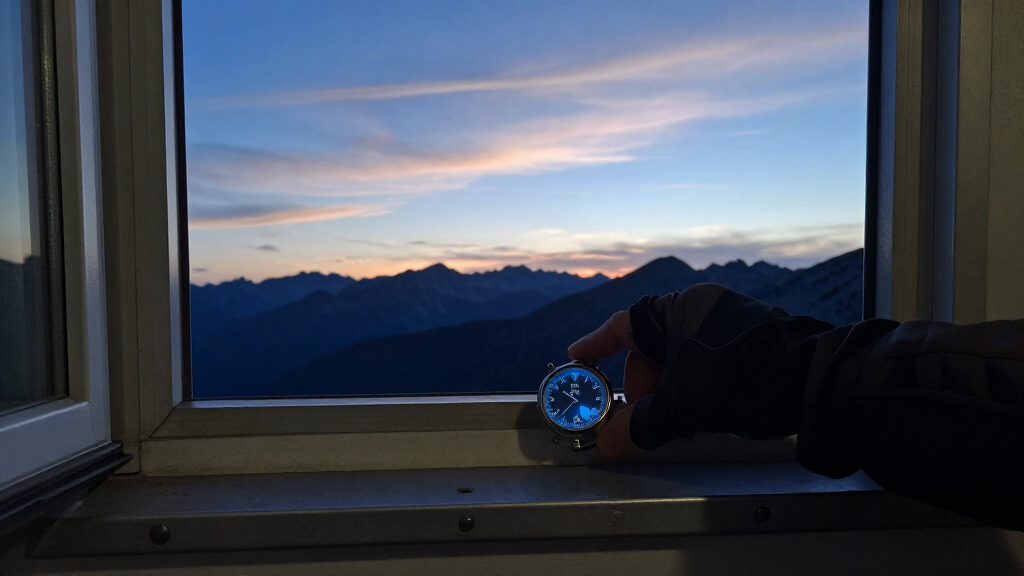
astronomy watch with twilight dial
As an affiliate, we earn on qualifying purchases.
As an affiliate, we earn on qualifying purchases.
What the Page Does Not Verify
The source does not establish that the exhibition uses live atmospheric data, nor does it identify a scientific institution or real observing network behind it. Its description explicitly calls the project fictional. The dial’s lighting changes are described as a visual model; the material does not give a scientific validation method, calibration data or comparison with measured atmospheric conditions.
The supplied account also does not state when the page first went live, provide a publication date, or report visitor numbers. While it describes responsive controls and reduced-motion behavior, it does not include independent accessibility or performance testing. Claims about the implementation and its design reviews are therefore attributable to the project description, not independently verified findings.
As an affiliate, we earn on qualifying purchases.
Where to Find the Build Notes
ThorstenMeyerAI.com directs readers to the exhibition’s live page and a separate design guide covering its lighting model, procedural graphics and animation behavior. The source material does not announce a launch date, scientific partnership, data integration or future observing schedule. Any next step should therefore be understood as further exploration of the design and construction notes, unless the site later publishes a distinct update about its status.
As an affiliate, we earn on qualifying purchases.
Key Questions
Is NLC Watch at 83 km a real cloud-monitoring service?
No. The project description calls it a fictional field journal and exhibition, not a live scientific service or real observing network.
What does the twilight dial change?
It changes the page’s simulated lighting across a range of 6 to 16 degrees of solar depression, including sky brightness, shadows and cloud glow. The source describes this as an interactive visual model, not a live measurement.
Are noctilucent clouds real?
Yes. The source describes them as high-altitude ice clouds that can remain sunlit after the ground below has become dark. The fictional status applies to the exhibition’s field journal and observing project, not to the clouds themselves.
Does the project use photographs or live cloud images?
The source says the visuals are generated in the browser with Canvas, inline SVG and CSS, and that the page has no image assets. It does not describe a live image feed.
What is known about the project’s next steps?
The source points readers to the live exhibition and a design guide. It gives no announced schedule for a scientific partnership, data feed or future observation campaign.
Source: ThorstenMeyerAI.com
Halloween Picks
halloween
As an affiliate, we earn on qualifying purchases.