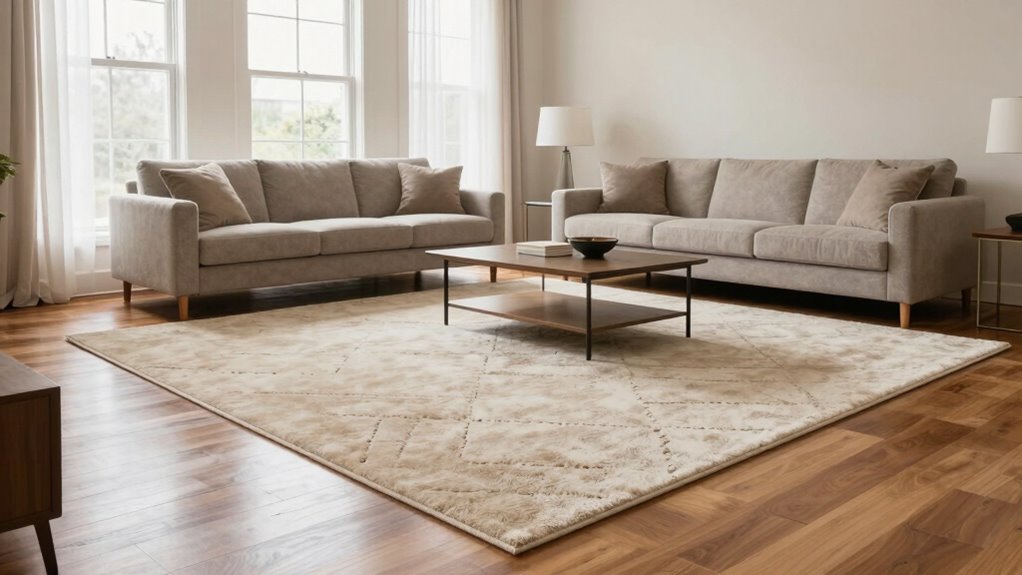

The key rug rule designers use to make a room look bigger is choosing the right size and color for your space. Opt for a rug that fits your room’s dimensions, with enough border to create a framed look, and guarantee the furniture’s front legs rest on it to unify the area. Neutral tones or light colors help reflect more light, opening up the space. If you want to master this trick, you’ll discover more tips that can transform your room.
Key Takeaways
- Use larger rugs that extend beyond furniture to create a sense of spaciousness.
- Ensure the rug size frames the furniture, with front legs on the rug to define zones.
- Coordinate rug colors with walls and furniture to maintain visual flow and avoid clutter.
- Opt for light, neutral tones to reflect more light and make the room appear larger.
- Properly measure and select rug dimensions that proportionally fit the room to enhance openness.

Have you ever wondered how to choose the perfect rug size for a room? The key lies in understanding that a well-sized rug can dramatically influence the perception of space, making your room appear larger and more inviting. When selecting the right rug, start by considering furniture placement. Your furniture should be arranged in a way that creates a cohesive look, and the rug should complement this setup. For example, in a living room, you want the front legs of your sofa and chairs to rest on the rug, anchoring the seating area. This not only pulls the furniture together but also defines the space, giving it a more spacious feel. If you have a more open floor plan, choose a larger rug that unifies different zones, preventing the room from feeling disjointed or cramped.
Color coordination plays an equally vital role in making your room look bigger. A rug with colors that match or subtly complement your existing decor will create a seamless flow, avoiding visual clutter. Light, neutral tones tend to reflect more light, opening up the space and giving it an airy feel. On the other hand, darker hues can add warmth but might make a small room feel more enclosed if not balanced properly with lighter surrounding elements. The trick is to select a rug that harmonizes with your wall colors, furniture, and accessories. If your furniture features bold patterns or vibrant colors, opt for a neutral rug to balance the visual weight. Conversely, if your furniture and walls are neutral, a patterned or colorful rug can add visual interest without overwhelming the space.
Another aspect to keep in mind is the overall size of your room. For smaller rooms, go for a rug that is proportionate—generally, it should leave a border of at least 18 to 24 inches around the edges. This framing effect creates an illusion of more space. In larger rooms, a bigger rug can serve as a focal point and help define different areas, making the whole space feel more cohesive. Before purchasing, measure your room carefully, visualize how the rug will fit with your furniture, and think about how the colors will interact with your existing decor. Additionally, considering the correct rug size can make a significant difference in how spacious your room feels. When furniture is placed thoughtfully on a suitably sized rug with coordinated colors, your room instantly looks more open, balanced, and inviting. It’s a simple rule that transforms any room into a more spacious, harmonious environment.
Frequently Asked Questions
Can the Rug Rule Be Applied to Outdoor Spaces?
Yes, you can apply the rug rule to outdoor spaces. Focus on outdoor rug placement by choosing weather-resistant materials that withstand the elements. Make sure the rug extends beyond furniture edges to create a cohesive look and visually enlarge the area. Properly selecting and positioning the rug enhances your outdoor space, making it feel bigger and more inviting, just like an interior room.
How Do Rug Sizes Vary for Small Versus Large Rooms?
Think of your space as a canvas: small rooms need rugs for entryways that fit snugly, like a tailored jacket, while large rooms call for expansive area rug layering to create balance. For small rooms, opt for smaller rugs to keep it cozy, but in bigger spaces, go bigger to anchor the furniture. This approach guarantees your rug size amplifies the room’s size, making it feel open and inviting.
What Materials Are Best for Making a Room Appear Larger?
You should choose area rugs with lightweight, smooth textures like wool or silk to make a room appear larger. These materials reflect light better and create a sense of openness. Avoid heavy, shaggy textures that add bulk and make the space feel smaller. Opt for rugs that extend under furniture and use neutral or light colors, which enhance the room’s brightness and give an airy, spacious feel.
Does Rug Shape Influence the Perceived Size of a Room?
You notice how a long, narrow rug stretches across your room like a pathway, making the space feel elongated. The shape of your rugs influences perceived size—rectangular or runner rugs create the illusion of more length, while round rugs soften corners and add intimacy. By carefully placing these rugs beneath your furniture and aligning them with your space, you enhance the room’s openness and flow.
Are There Specific Colors That Enhance the Rug Rule’s Effectiveness?
Bright, light colors like beige or soft pastels enhance the rug rule’s effectiveness by creating a sense of openness through color psychology. You should focus on rug color coordination that complements your room’s walls and furniture, making the space appear larger. Avoid dark, heavy hues, as they can make the room feel cramped. Instead, opt for subtle, harmonious shades to maximize the visual impact of your rug and room size.
Conclusion
Imagine your room is a canvas and the rug is the frame that pulls everything together. When you choose the right rug size, it’s like giving your space a visual gust of fresh air—making it feel bigger and more inviting. I once added a large rug to a cramped living room, and suddenly, it felt twice as spacious. Follow the rug rule, and watch your room transform into a stylish, open haven you’ll love spending time in.