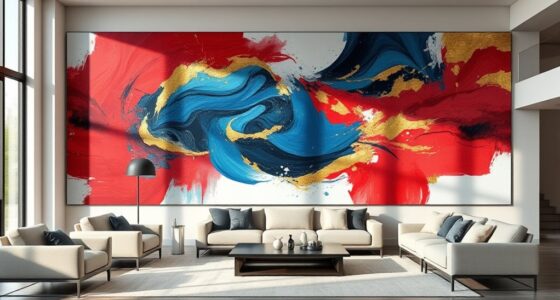
To create a relaxing wellness space at home, choose a quiet corner and furnish it with comfortable cushions or a chair. Use soft lighting, calming artwork, plants, and natural textures like wood to foster tranquility. Incorporate aromatherapy with essential oils like lavender or eucalyptus to enhance relaxation. Keep the space clutter-free and update it regularly to maintain freshness. With some thoughtful touches, you’ll turn any area into your personal retreat—stay tuned for more tips on perfecting your space.
Key Takeaways
- Design a dedicated, clutter-free area with soft lighting, calming artwork, and natural elements to foster relaxation.
- Incorporate aromatherapy with essential oils or candles to enhance mood and promote tranquility during use.
- Use comfortable, natural fabrics for cushions and throws to create an inviting, cozy environment.
- Keep the space simple and quiet, adding water features or plants to deepen feelings of calm.
- Establish a routine of regular updates, scents, and practices to support ongoing mental and emotional well-being.

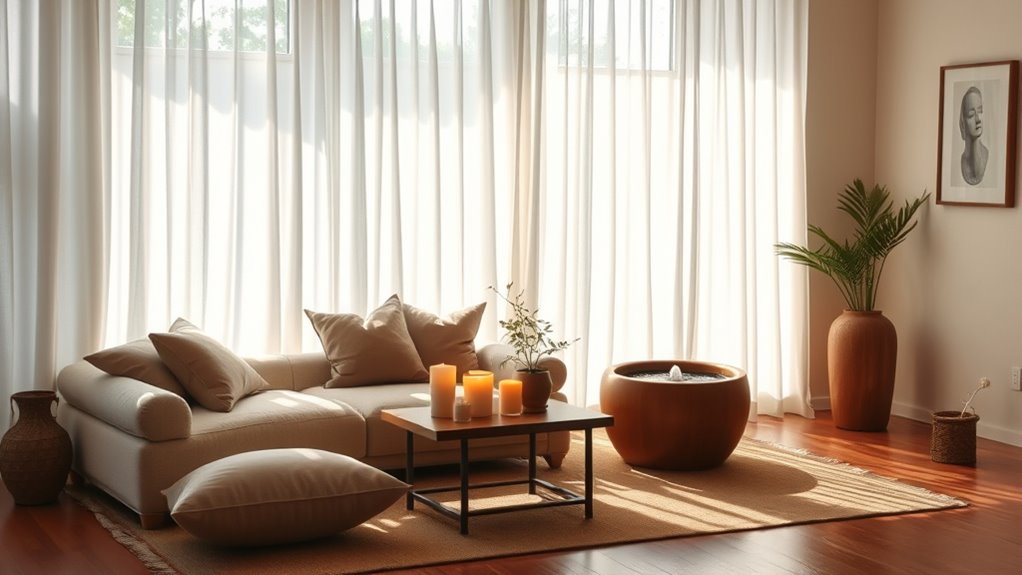
In today’s busy world, creating dedicated wellness spaces at home can considerably enhance your overall well-being. When you carve out a specific area for relaxation, you give yourself permission to unwind and recharge amidst daily chaos. One effective way to do this is by setting up meditation zones that invite calm and focus. These zones don’t require much space—just a quiet corner with a comfortable cushion or chair, soft lighting, and minimal distractions. The goal is to create an environment where you feel safe and centered, making it easier to meditate regularly. Incorporate elements like calming artwork, a small water fountain, or plants to deepen the tranquility. The key is to make the space inviting enough that you look forward to spending time there, whether it’s for a few minutes of mindfulness or a longer session.
Creating a cozy, clutter-free corner with soft lighting fosters daily mindfulness and relaxation.
Alongside meditation zones, aromatherapy setups play an essential role in transforming your wellness space into a sanctuary. Scent has a powerful influence on mood and relaxation, so adding essential oils or diffusers can elevate your experience. Place a diffuser nearby, filling the room with soothing aromas like lavender, chamomile, or eucalyptus. These scents not only help reduce stress but also improve sleep quality and mental clarity. You can further personalize your aromatherapy setup with small bottles of your favorite oils or even scented candles, provided they’re used safely. When combined with your meditation zone, the aroma creates an immersive environment that signals your brain to unwind and release tension. Additionally, understanding the importance of Gold IRA Rollovers can help diversify your financial security, ensuring peace of mind that complements your physical well-being.
Design your space with comfort and simplicity in mind. Use soft, natural fabrics for cushions and throws, and keep clutter to a minimum to promote mental clarity. Lighting should be gentle—think dimmable lamps or candlelight—to foster a peaceful atmosphere. Incorporate natural elements like wood, stone, or greenery to connect with nature and enhance your sense of calm. Remember, the goal is to create a space that feels uniquely yours—a retreat where your mind can relax and your body can rejuvenate.
Finally, maintain your wellness space consistently. Regularly update your meditation zones and aromatherapy setups to keep them fresh and inviting. Incorporate new scents, rearrange furniture, or add meaningful decor that inspires tranquility. By making this a routine part of your life, you’ll find it easier to prioritize self-care and find moments of peace amidst your busy schedule. Creating these dedicated wellness spaces is a simple yet powerful step toward nurturing your mental, emotional, and physical health every day.
Frequently Asked Questions
How Can I Personalize My Relaxation Room Effectively?
To personalize your relaxation room effectively, add personal decor that reflects your style and brings comfort. Incorporate sensory elements like soft lighting, calming scents, or soothing sounds to enhance relaxation. Use items that evoke positive memories or feelings, such as photos or favorite textiles. Keep the space clutter-free and tailored to your preferences, creating a sanctuary where you feel truly at ease and inspired to unwind.
What Are Budget-Friendly Ways to Create a Wellness Space?
Think of your budget-friendly wellness space as a blank canvas waiting for your touch. You can DIY decor using inexpensive materials like candles, fairy lights, or painted signs to add personality. Incorporate aromatherapy options like essential oil diffusers or scented candles to create a calming atmosphere without breaking the bank. These simple, affordable touches turn your space into a peaceful retreat, making relaxation both accessible and enjoyable.
How Do I Choose the Right Lighting for Relaxation?
You should choose ambient lighting with a warm color temperature, around 2700K to 3000K, to create a soothing atmosphere. Opt for soft, diffused lights instead of harsh or direct ones, and consider dimmable options to adjust the brightness as needed. This helps you relax more easily and enhances the calming vibe of your wellness space, making it perfect for unwinding after a busy day.
What Are Common Mistakes to Avoid When Designing a Relaxation Room?
Like a garden left untended, a cluttered relaxation room blocks positive energy. Avoid neglecting feng shui principles; they guide harmony and balance. Don’t overcrowd the space — it hampers tranquility. Neglecting natural light or poor layout choices can disrupt your calm. Keep clutter to a minimum, and arrange furniture mindfully. These mistakes turn serenity into chaos, but with careful design, your space will become a true sanctuary.
How Can I Maintain Privacy in a Shared Home?
To maintain privacy in a shared home, use soundproofing techniques like adding rugs, curtains, and door seals to reduce noise. Invest in privacy window solutions such as frosted or tinted glass, or install blinds and shades to block visibility. You can also create physical barriers or designate specific areas for your relaxation space. These methods help you enjoy your wellness sanctuary without feeling exposed or disturbed.
Conclusion
Remember, your home wellness space is your sanctuary—an oasis of calm amidst daily chaos. While it might seem small or simple, its impact is vast. Just as a tiny candle can brighten a dark room, a thoughtfully designed relaxation corner can transform your entire day. Creating this space isn’t about perfection but intention. Embrace the contrast: in your busiest moments, your peaceful retreat becomes your greatest strength, grounding you with serenity.