
To write an engaging cover letter for an interior design job, start with a clear structure. Include your contact info, date, and the hiring manager's details at the top. Open with a strong introduction that highlights your design skills and relevant experience. In the body, detail your notable achievements, using quantifiable metrics to showcase your impact. Tailor your letter to the specific job by aligning your experiences with the company's values. Conclude with a strong closing statement that expresses enthusiasm for the role. Stay tuned to learn more tips that could elevate your application! If you’re looking to stand out, consider showcasing your knowledge of current interior design trends and technologies in your cover letter. Additionally, highlight any relevant certifications or continued education. By following these tips, you will set yourself apart from other candidates and increase your chances of securing the job. Remember, the right cover letter can open up a world of exciting interior design career options for you.
Key Takeaways
- Start with a clear header that includes your contact information and the hiring manager's details for a professional look.
- Craft an engaging introduction that emphasizes your relevant experience and unique design skills to grab attention.
- Highlight notable achievements in the body, such as project completions and budget management, using quantifiable metrics for impact.
- Personalize the cover letter by researching the company and aligning your skills with their values and projects to show genuine interest.
- Conclude with a strong closing statement that reiterates your enthusiasm for the role and invites further discussion about your fit for the position.
Cover Letter Structure
A well-organized cover letter is key to making a strong impression in your interior design job application. The cover letter structure should begin with a header that includes your contact information, the date, and the hiring manager's details. This showcases your professionalism and attention to detail.
Make sure to address the hiring manager by name if you know it; if not, a general salutation like "Dear Hiring Manager" will do.
In the introduction, you want to create a compelling opening that highlights your relevant experience and unique design skills. Use specific examples of your design work to capture attention.
The body of your letter should detail notable achievements, such as successful project completions or effective budget management, while aligning your communication skills with the company's values.
Length and Readability
Typically, an effective cover letter for an interior design job should be one page long. This length helps you maintain a concise presentation of your qualifications while keeping the hiring manager engaged. Aim for around 250-400 words to guarantee you include enough detail to highlight your key accomplishments without overwhelming the reader.
To enhance readability, use short paragraphs and bullet points. This approach breaks up the text, making it easier for the hiring manager to skim through your cover letter and quickly grasp your qualifications. A well-structured letter should flow logically from the introduction to the body and conclude strongly, ensuring smooth changes between sections.
Don't forget about the visual aspects of your cover letter. Maintain a professional font size between 10.5 and 12 points, and set your margins between 1 and 1.5 inches. This creates a visually appealing layout that's easy to read.
Tailoring for Experience Levels
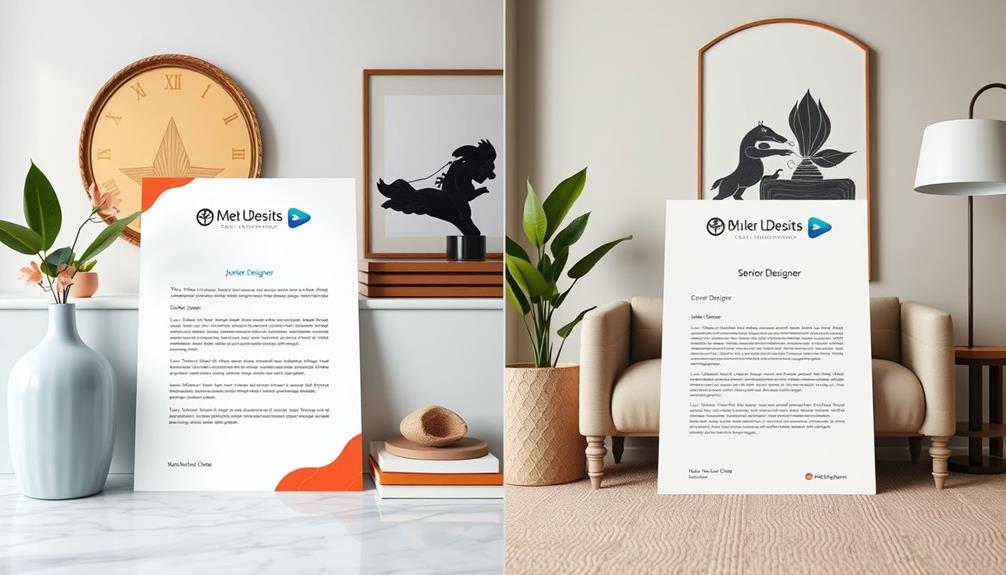
When crafting a cover letter for an interior design position, it is crucial to tailor your approach based on your experience level. The way you present your skills and accomplishments can make your cover letter stand out to potential employers.
| Experience Level | Key Points to Highlight |
|---|---|
| Experienced | Emphasize project management, leading teams, and quantifiable achievements like budgets over $1 million. Mention specific design solutions that increased client satisfaction. |
| Entry-Level | Highlight relevant coursework, internships, or volunteer experiences. Focus on design skills like space planning and color theory to demonstrate potential. |
| Both | Personalization is key; research the company's projects and values to align your skills with their mission. |
| Tone | Seasoned professionals can adopt a more authoritative tone, while entry-level applicants should express enthusiasm and a willingness to learn. |
| Metrics | Include metrics, such as percentage increases in client satisfaction ratings or revenue growth attributed to your designs. |
Importance of the Portfolio

An impressive portfolio is essential for any interior designer looking to make a mark in the industry. It serves as a visual representation of your skills and style, showcasing completed projects and your design versatility.
Here are three key elements to include in your portfolio:
- Diverse Projects: Feature a range of projects that highlight your unique design approach. This differentiation is vital in a competitive job market.
- High-Quality Presentation: Use high-quality images and detailed project descriptions. Including awards or recognitions enhances your credibility and professionalism.
- Impact Metrics: Demonstrate your effectiveness by including specific metrics, like improved space utilization or client satisfaction rates. This illustrates your impact on previous projects, showing hiring managers what you can achieve.
Additionally, always provide an online link to your portfolio in your cover letter. This makes it easier for hiring managers to access your work, increasing your chances of securing an interview.
Effective Cover Letter Strategies

To make your cover letter stand out, you need to tailor it to the specific interior design job you're applying for.
Highlight your unique achievements that align with the job description, such as successful projects or design awards.
This targeted approach not only showcases your skills but also demonstrates your genuine interest in the position.
Tailoring to Job Description
Tailoring your cover letter is essential for making a strong impression on potential employers in the competitive field of interior design. By aligning your skills and experience with the job description, you can effectively showcase your unique qualifications.
Here are three key strategies to take into account:
- Match Your Skills: Highlight specific skills and experiences that directly relate to the Interior Designer position. Use keywords from the job description to guarantee your cover letter resonates with the hiring manager.
- Showcase Relevant Projects: Include details about relevant projects you've completed, emphasizing quantifiable metrics. For example, mention how you increased project efficiency by 20% or managed a budget effectively, which provides concrete evidence of your capabilities.
- Research Company Values: Understand the company's design style and values. Incorporate insights into your tailored cover letter to demonstrate your enthusiasm and how you can contribute to their projects.
Highlighting Unique Achievements
Highlighting your unique achievements in your cover letter can set you apart from other candidates in the interior design field. Focus on specific projects that demonstrate your skills and the quantifiable results you've achieved. For instance, mention how you led a team on a high-profile design project that boosted client satisfaction by 30%.
Include details about effective project management, like successfully managing a $500,000 budget while delivering a commercial space that improved operational efficiency by 25%. This not only showcases your financial acumen but also your ability to enhance client experiences.
Don't forget to highlight awards for innovative design, such as a regional award for a sustainable residential project using eco-friendly materials. This emphasizes your commitment to cutting-edge solutions.
Showcase versatility by detailing a range of completed projects, from luxury apartment renovations to small business interiors, which demonstrates your adaptability to various client needs.
Importance of Specificity
Specificity is a powerful tool when crafting your cover letter for an interior design job. It not only showcases your attention to detail but also sets you apart from other candidates. By incorporating precise metrics and examples, you can effectively demonstrate your design philosophy and unique achievements.
Here are three key areas to focus on:
- Quantifiable Results: Mention achievements like a 30% increase in client satisfaction due to specific design strategies. This shows your impact and effectiveness.
- Project Management Skills: Highlight your experience managing project budgets, such as overseeing a $500,000 renovation. This showcases your financial acumen and ability to handle complex projects.
- Sustainable Practices: Clearly define your commitment to sustainable practices. For example, if you reduced material costs by 20%, it aligns your expertise with potential employer values.
Using specificity not only highlights your skills but also illustrates your capacity to deliver results.
When you articulate your accomplishments clearly, you're not just telling employers what you can do; you're showing them the value you bring to their team.
Salary Insights for Designers

Understanding salary insights is essential for interior designers as they navigate their career paths. The national average salary for interior designers is approximately $60,203 annually, but this figure can vary greatly based on experience and geographic location.
If you're just starting out as an entry-level designer with less than one year of experience, you can expect to earn around $50,516 per year. However, as your design experience grows, so does your earning potential.
Experienced designers with over ten years in the field can command an impressive average salary of about $78,259 annually. Your salary can also depend on whether you specialize in residential or commercial design, as specialized skills often attract higher pay.
Salary ranges for interior designers typically fall between $50,000 to $80,000 per year, influenced by factors like job growth and location. According to industry projections, there's an expected job growth of 4% for interior designers from 2022 to 2032, aligning with the average growth rate for all occupations.
Understanding these factors will help you make informed decisions throughout your career in interior design.
Resources for Interior Designers
As an interior designer, you'll want to explore various resources that can help you succeed in your career.
From essential design tools to networking opportunities and continuing education programs, these resources can elevate your skills and connections in the industry.
Let's look at some key options that can support your journey.
Essential Design Tools
The right design tools can make all the difference in your interior design projects. Utilizing the right software not only streamlines your workflow but also enhances your design concepts and space planning.
Here are three crucial tools every interior designer should consider:
- AutoCAD: This software is essential for drafting precise layouts and creating detailed floor plans, ensuring your projects are accurate and professional.
- Adobe Creative Suite: Programs like Photoshop and Illustrator help you craft visually stunning presentations and marketing materials, showcasing your designs effectively to clients.
- Revit: As a Building Information Modeling (BIM) tool, Revit fosters collaboration among design teams, making project management smoother and more efficient.
In addition to software, don't overlook the importance of color selection tools like Pantone Color Finder and Sherwin-Williams ColorSnap. These resources help you make informed aesthetic decisions that align with your sustainable design goals.
Finally, online platforms like Houzz and Pinterest are invaluable for inspiration and staying updated on industry trends.
Embrace these essential design tools, and you'll elevate your interior design projects to new heights!
Networking Opportunities Available
Networking is key to advancing your career in interior design, offering numerous opportunities to connect with industry professionals and potential employers. One effective way to expand your network is by attending design expos like the International Contemporary Furniture Fair (ICFF), where you can meet fellow designers and potential employers.
Joining professional associations, such as the American Society of Interior Designers (ASID) or the International Interior Design Association (IIDA), provides access to exclusive job boards, mentorship programs, and networking events that can enhance your career.
Participating in local design meetups or workshops allows you to engage with other professionals and share insights, further broadening your connections. Online platforms like LinkedIn are also invaluable; they enable you to connect with industry experts, join relevant groups, and participate in discussions that can elevate your visibility.
Additionally, consider engaging in community service projects or volunteering for local nonprofit organizations. These efforts not only showcase your design skills but also create networking opportunities while demonstrating your commitment to improving your community.
Continuing Education Resources
Continuing education is essential for interior designers looking to elevate their skills and stay competitive in the industry. By engaging in ongoing learning, you can keep your interior design qualifications up to date and adapt to ever-changing design trends.
Here are some valuable resources to take into account:
- Professional Associations: Organizations like the American Society of Interior Designers (ASID) and the International Interior Design Association (IIDA) offer continuing education courses that cover best practices and industry updates.
- Online Platforms: Websites such as Coursera and LinkedIn Learning provide a range of courses, including software training and sustainable design practices, often led by industry experts.
- Local Community Colleges: Many community colleges and universities offer continuing education programs tailored to specific skills, like color theory or space planning, helping you expand your knowledge base.
Pursuing certifications such as the National Council for Interior Design Qualification (NCIDQ) can further enhance your credentials, while attending workshops and trade shows like NeoCon presents valuable networking opportunities.
Embrace these resources and watch your career flourish!
Personalization Techniques
To make your cover letter stand out, personalization is key. Start by personalizing the greeting—address the hiring manager by name. Research recent projects or values of the company, and use specific references to demonstrate your genuine interest. Tailor your skills and experiences to match the job description, highlighting relevant design projects that align with their goals.
Here's a quick reference table to guide you:
| Personalization Technique | Description | Example |
|---|---|---|
| Personal Greeting | Address the hiring manager by name | "Dear [Hiring Manager's Name]," |
| Unique Opening Sentence | Reflect your passion for interior design | "As a lifelong enthusiast of design…" |
| Mutual Connections | Mention referrals or shared contacts | "I was referred by [Mutual Connection]." |
Using a unique opening sentence sets a personalized tone, showcasing your enthusiasm for the role. By incorporating these techniques, you not only address the hiring manager directly but also establish credibility and align your skills with the company's vision. This approach will help you demonstrate your genuine interest effectively.
Tips for Crafting Your Letter

Crafting a compelling cover letter requires a focused approach that highlights your unique qualifications. As a job seeker in the competitive field of interior design, you need to guarantee your Interior Designer Cover Letter stands out.
Here are some tips to help you create an impactful letter:
- Tailor Your Content: Align your cover letter body with the specific job requirements. Highlight relevant skills and experience that resonate with the company's projects and values.
- Showcase Specific Achievements: Include proven skills by detailing specific accomplishments, such as leading successful projects or implementing sustainable design solutions. Use metrics to quantify your impact, like client satisfaction scores or revenue increases.
- End Strong: Conclude with a strong closing statement that reiterates your enthusiasm for the role. Align your skills with the company's needs and include a call to action for further discussion.
Conclusion
As you pen your cover letter, remember that it's your chance to showcase your unique vision, much like a painter reveals their masterpiece. Tailor your message, highlight your portfolio, and let your passion for design shine through. Just as every great design tells a story, your cover letter should narrate your journey and aspirations. Embrace this opportunity—your words could be the key that opens the door to your dream job in the world of interior design.