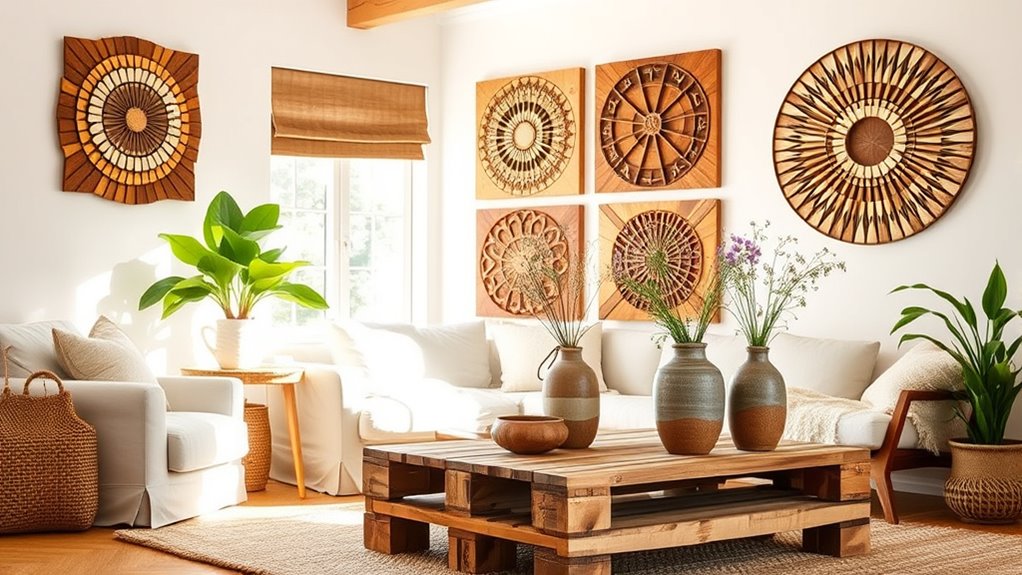

To incorporate art into sustainable interior design, consider using reclaimed materials like repurposed wood, glass, or metal for unique sculptures and wall art. Add natural elements such as stones, driftwood, and pressed plants for a calming vibe. Upcycle old furniture and craft DIY decor with eco-friendly paints and dyes. Supporting local artists ensures authentic pieces that align with your eco-conscious goals. Continue exploring creative ideas to make your space both beautiful and environmentally friendly.
Key Takeaways
- Incorporate reclaimed materials like recycled clay, wood, and glass into sculptures, wall art, and decor for sustainability and unique aesthetics.
- Use natural elements such as driftwood, stones, and pressed flowers to create organic, eco-friendly art displays that enhance interior environments.
- Support local artists and collaborate on botanical illustrations or custom pieces made with eco-friendly materials and dyes.
- Employ upcycling and DIY techniques to transform discarded items into personalized, sustainable decor pieces.
- Utilize eco-conscious art materials like non-toxic paints, natural dyes, and digital art methods to reduce environmental impact.
Incorporating Reclaimed Materials Into Artistic Pieces

Using reclaimed materials in your interior decor not only adds a unique, rustic charm but also supports sustainability. You can create stunning ceramic sculptures from recycled clay or repurposed pottery shards, giving new life to old ceramics. Metal wall art is another excellent option; consider upcycling scrap metal into intricate designs or abstract pieces that serve as focal points. These artistic accents showcase your commitment to eco-friendly practices while adding texture and visual interest to your space. Incorporating reclaimed materials allows you to personalize your decor, blending history with modern aesthetics. Whether it’s a handcrafted ceramic sculpture or a bold piece of metal wall art, these recycled items reflect your environmentally conscious choices and create a warm, inviting atmosphere. The aesthetic appeal of reclaimed materials can be enhanced by selecting pieces with unique textures and finishes that complement your overall design. Quality assessment plays a crucial role in selecting the best reclaimed materials to ensure durability and aesthetic appeal. Additionally, understanding vetted sources for reclaimed items can help ensure your decor is both beautiful and sustainable.
Using Natural Elements for Unique Art Displays

Using natural elements in your art displays adds a fresh, organic touch to your space. You can incorporate organic materials like driftwood or stones to create striking focal points. Showcasing botanical art, such as pressed flowers or plant-inspired sculptures, further emphasizes your connection to nature. Incorporating self watering plant pots can also help maintain healthy plants that enhance your natural decor. Additionally, selecting eco-friendly materials for displays ensures sustainability and reduces environmental impact. Incorporating solar-powered lighting can illuminate your displays sustainably and highlight their natural beauty. Choosing durable and eco-conscious display materials ensures your art pieces remain beautiful while supporting environmental sustainability. Moreover, visiting stores like Costco or Kroger during their extended hours can provide convenient options for sourcing eco-friendly supplies and decor items.
Incorporating Organic Materials
Incorporating organic materials into your interior design brings a natural, calming aesthetic that enhances any space. You can achieve this by choosing organic fibers like jute, hemp, or cotton for wall hangings, rugs, and cushions, adding texture and warmth. These fibers are sustainable and biodegradable, reducing environmental impact. Additionally, opt for biodegradable finishes on furniture and decor, such as natural oils or waxes, which are free from harmful chemicals and eco-friendly. Using these materials not only supports sustainability but also creates a unique, authentic look that reflects nature’s simplicity. Moreover, employing eco-friendly materials and AI-driven design tools can assist in selecting eco-friendly materials that best suit your aesthetic and sustainability goals. Incorporating organic fibers and biodegradable finishes helps support environmental preservation and creates a serene, nature-inspired environment. By thoughtfully integrating these materials, you bring a touch of the outdoors inside, fostering a serene environment that aligns with eco-conscious living. Incorporating these sustainable practices can further enhance the eco-friendliness of your interior.
Showcasing Botanical Art
Showcasing botanical art offers a vibrant and authentic way to bring nature into your home. By displaying botanical illustration or plant-inspired decor, you create a lively atmosphere that celebrates natural beauty. To effectively showcase this style:
- Frame botanical illustrations in eco-friendly materials and hang them as focal points.
- Incorporate living plant-inspired decor, like pressed flowers or leaf prints, into your wall art.
- Use natural materials, such as reclaimed wood or recycled glass, for display shelves to enhance the organic feel.
- Regularly checking your credit card statements can help detect fraudulent activity and protect your financial security.
These methods highlight the artistry of nature while supporting sustainable practices. Botanical art not only adds color and texture but also encourages a deeper connection to the environment, making your space more eco-friendly and aesthetically pleasing.
Upcycling and Repurposing for Creative Decor

When you transform old furniture or discarded items into new decorative pieces, you breathe new life into materials that might otherwise end up in the trash. Upcycling offers a creative way to enhance your space sustainably. For example, you could paint an old chair with vibrant urban murals, turning it into a statement piece. Repurposing items like glass jars into planters or turning vintage suitcases into storage adds character without new resources. Digital art techniques can help you customize surfaces, creating unique patterns or murals on furniture or walls. This approach not only reduces waste but also makes your decor truly one-of-a-kind. Incorporate unique and wicked planters or repurpose eco-friendly containers to elevate your interior aesthetics. Embrace your creativity, and find innovative ways to give old objects a sustainable purpose in your interior design. Additionally, incorporating reclaimed materials can further enhance the eco-friendly aspect of your decor. Understanding regulatory compliance can ensure your upcycling projects adhere to safety standards and building codes.
Choosing Eco-Friendly Art Materials and Techniques

When selecting art for your space, focus on sustainable mediums like natural dyes and recycled materials to reduce environmental impact. Using natural dye techniques can add unique textures and colors while avoiding synthetic chemicals. Recycled materials not only give new life to old items but also support eco-friendly decorating choices. Incorporating vetting processes ensures that the art materials meet safety and environmental standards for a truly sustainable interior design. Additionally, choosing eco-friendly art materials that are certified can further guarantee their sustainability and safety for your living space.
Sustainable Art Mediums
Choosing eco-friendly art materials and techniques is essential for creating sustainable interior decor. You can explore various art mediums that minimize environmental impact. Digital art is a great option, as it eliminates waste and reduces the need for physical materials. Industrial mediums, like recycled metal or reclaimed wood, give new life to discarded materials, adding a unique touch to your space. Consider these sustainable art mediums: 1. Digital art, which uses software instead of physical supplies, reducing waste and energy consumption. 2. Recycled or reclaimed industrial materials, such as metal or wood, that promote reuse. 3. Non-toxic, plant-based paints and inks, which are safer for indoor air quality and the environment. Incorporating contrast ratio considerations into your artwork display can further enhance the visual impact while maintaining sustainability.
Natural Dye Techniques
Natural dye techniques offer an eco-friendly way to add color and personality to your interior decor without relying on synthetic chemicals. By practicing natural dyeing, you can create vibrant hues using plant-based pigments, which are sustainable and biodegradable. This method involves harvesting materials like indigo, madder, or turmeric, then extracting their colors through traditional processes. Natural dyeing not only reduces environmental impact but also produces unique, earthy tones that enhance your space’s organic aesthetic. When incorporating these dyes into textiles, wall art, or upholstery, you support eco-conscious craftsmanship. Plus, natural dyes tend to age beautifully, gaining character over time. Embracing plant-based pigments allows you to craft personalized, sustainable decor that aligns with your eco-friendly interior design goals.
Recycled Material Use
Opting for recycled materials in your interior art projects helps reduce waste and minimizes environmental impact. Using recycled material use in your decor aligns with eco friendly decor ideas, making your space both stylish and sustainable. To incorporate recycled materials effectively, consider these options:
- Transform old newspapers or magazines into colorful wall art or collage pieces.
- Use reclaimed wood for framing, sculptures, or decorative panels.
- Repurpose glass bottles and jars as vases or lighting fixtures.
Supporting Local and Sustainable Artists

Supporting local and sustainable artists not only enriches your space with unique, authentic pieces but also helps strengthen the community and promote environmentally conscious practices. You can foster these connections through art gallery partnerships that showcase local talent and align with eco-friendly values. Collaborating directly with local artists allows you to acquire one-of-a-kind artwork while supporting their sustainable practices. These partnerships often lead to custom pieces that perfectly fit your interior aesthetic and sustainability goals. By choosing art from local creators committed to eco-friendly methods, you ensure your decor reflects both cultural authenticity and environmental responsibility. This approach not only adds character to your space but also promotes a more sustainable art economy rooted in local talent and greener practices.
DIY Eco-Conscious Art Projects for Your Home

Creating your own eco-conscious art projects is a rewarding way to personalize your space while reducing environmental impact. By exploring eco friendly art techniques and DIY sustainable decor, you can craft unique pieces that reflect your values. Here are some ideas to get started:
- Use natural materials like reclaimed wood, stones, or pressed flowers to create wall art or sculptures.
- Repurpose old jars, bottles, or fabric scraps into colorful mosaics or textile art.
- Incorporate non-toxic, plant-based paints or dyes for painting projects that are safe for the environment and your home.
These projects not only enhance your decor but also promote sustainability, making your interior truly eco-friendly.
Frequently Asked Questions
How Can I Verify an Artist’s Sustainability Credentials?
You can verify an artist’s sustainability credentials by checking their certification standards, such as eco-friendly certifications or materials they use. Research their reputation in the eco-conscious community and ask for documentation or proof of sustainable practices. Don’t hesitate to contact the artist directly for details about their sourcing and production methods. A reputable artist will openly share their commitment to sustainability and hold valid certification standards.
What Are the Best Sustainable Art Mediums for Beginners?
Think of your artistic journey as planting a seed that grows into a vibrant tree. For beginners, sustainable art mediums like using recycled materials and natural pigments are ideal, offering a foundation rooted in eco-friendliness. Recycled paper, glass, or fabric can be transformed into unique creations, while natural pigments derived from earth, plants, or minerals provide beautiful, non-toxic colors. These mediums make your art both beautiful and kind to the planet.
How Does Eco-Friendly Art Impact Indoor Air Quality?
Eco-friendly art improves indoor air quality by promoting air purification and toxin reduction. When you choose artworks made with natural, non-toxic materials, you reduce harmful emissions that can linger indoors. This not only creates a healthier environment for you but also supports sustainable practices. By incorporating eco-friendly art, you actively contribute to better air quality, making your space safer and more inviting without sacrificing style or eco-consciousness.
Can Sustainable Art Be Cost-Effective for Large Projects?
Yes, sustainable art can be cost-effective for large projects. You can prioritize cost-effective sourcing by buying eco-friendly art in bulk, reducing per-unit costs. Additionally, partnering with local artists or choosing versatile pieces minimizes transportation expenses and supports community initiatives. This approach not only makes sustainable art affordable but also enhances the project’s overall eco-conscious appeal, ensuring you maximize your budget without sacrificing quality or environmental responsibility.
What Are Some Innovative Eco-Friendly Art Display Ideas?
You can showcase innovative eco-friendly art by using reclaimed materials for wall displays, creating a rustic, sustainable vibe. Incorporate living art installations like vertical gardens or moss walls that bring nature indoors and improve air quality. Think outside the box with kinetic sculptures made from recycled parts or interactive art that responds to touch or light, making your space both visually stunning and environmentally conscious.
Conclusion
By embracing eco-friendly art in your home, you turn your space into a living canvas that breathes sustainability. Like a garden blooming with mindful choices, each piece you select or create nurtures the planet while reflecting your unique style. When you incorporate reclaimed materials, natural elements, and support local artists, you’re not just decorating—you’re planting seeds for a greener future. Let your home be a masterpiece that inspires change and blossoms with eco-conscious beauty.