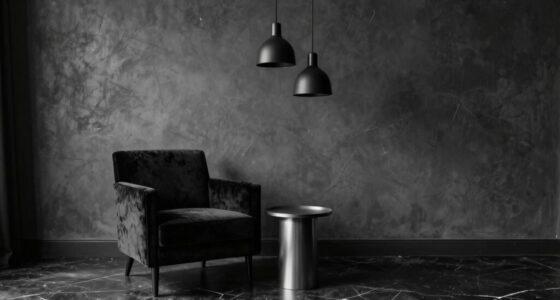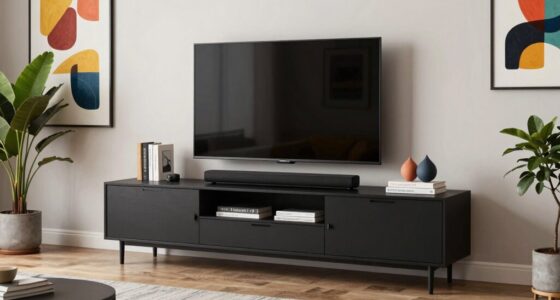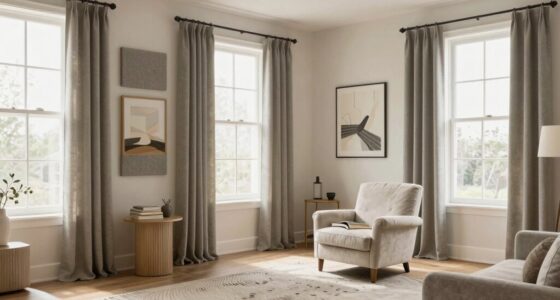
How you place art in your space greatly affects how it’s perceived and felt. Proper positioning makes your artwork a focal point, enhancing the room’s overall vibe, while poor placement can make it seem out of place or overlooked. Thoughtful arrangement, considering color harmony and lighting, creates visual balance and harmony that invites engagement. If you keep exploring, you’ll discover how strategic art placement can truly elevate your environment and reflect your personal style.

Get the latest gadgets delivered free — and shop member deals
- Fast, free delivery on millions of items
- Access to Prime Big Deal Days deals on October 6–7
- Prime Video, Amazon Music and more included
Key Takeaways
- Proper placement enhances artwork’s visual impact and makes it a focal point in the space.
- Strategic positioning creates harmony with colors, lighting, and furniture, elevating overall aesthetics.
- Thoughtful placement guides the viewer’s eye, fostering engagement and emotional connection.
- Balanced arrangement ensures stability and avoids visual clutter, making spaces more pleasing.
- Intentional art placement transforms rooms into curated galleries that reflect taste and design purpose.
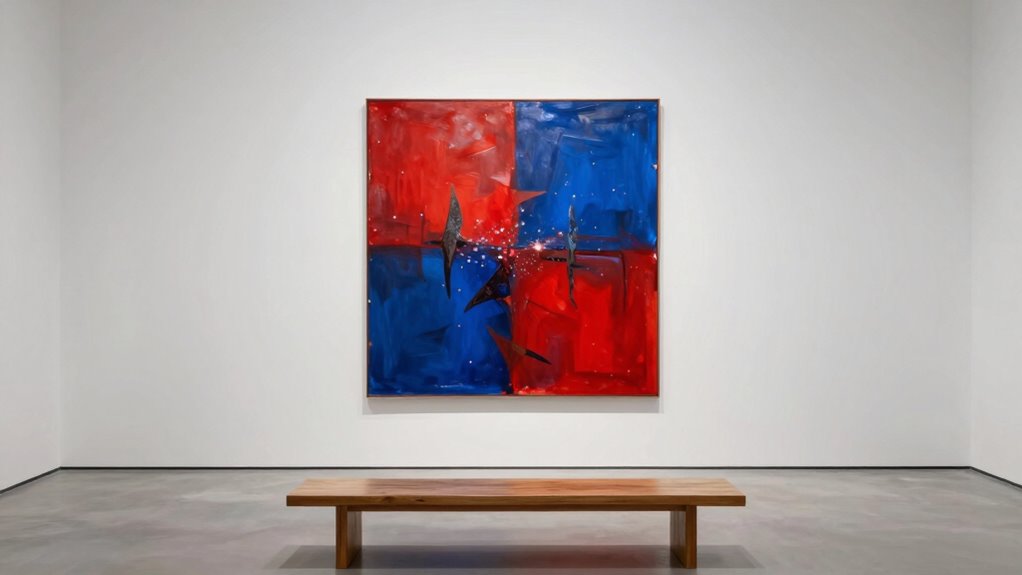
The placement of artwork within a space can dramatically influence how it’s perceived and appreciated. When you choose the right spot, artwork can become a focal point that draws attention and elevates the entire room. Conversely, poor placement can diminish its impact, making it seem out of place or overlooked. One key aspect of effective art placement is understanding color harmony. When you position artwork with complementary or harmonious colors at eye level or in well-lit areas, the colors seem to resonate more vividly. This creates a sense of unity within the room, making the space feel more cohesive and inviting. On the other hand, if you place a piece with bold, contrasting colors in a cluttered corner or where it’s not highlighted by proper lighting, the visual harmony gets disrupted. This imbalance can cause the artwork to clash with its surroundings, reducing its visual appeal and disrupting the overall aesthetic. Additionally, paying attention to visual balance — ensuring equal distribution of visual weight — is essential for creating a harmonious environment. You want to distribute visual weight evenly across your space so that no single element feels out of place or causes imbalance. Imagine hanging a large, vibrant piece on one wall; balancing that with smaller, subtler artworks on the opposite side can create harmony and stability. When you neglect this balance, your room may feel awkward or disjointed, even if the individual pieces are beautiful. Proper placement considers not only the size and color but also how the artwork interacts with other elements like furniture, lighting, and architectural features. Achieving visual balance ensures that your eye moves naturally from one element to another, creating a pleasing rhythm that guides your attention effortlessly. Recognizing art placement principles — including color harmony and visual balance — can significantly elevate your interior design. Understanding the importance of visual harmony helps you create more comfortable and engaging spaces. An awareness of spatial relationships allows you to curate your environment thoughtfully, ensuring each piece contributes to the overall aesthetic. Furthermore, considering how lighting affects artwork can dramatically enhance its appearance and emotional effect, emphasizing the importance of thoughtful illumination in your placement strategy. Ultimately, understanding how to position artwork involves more than just hanging it on a wall. It’s about orchestrating a visual dialogue that enhances your space’s overall harmony. When you pay attention to color harmony and visual balance, you maximize the emotional and aesthetic impact of your art. Good placement invites viewers to engage with the pieces, making the space feel intentional and thoughtfully curated. It’s a subtle art in itself—one that transforms a simple wall into a compelling gallery. So, when you’re selecting where to hang your artwork, think about these principles. The right placement doesn’t just showcase your art; it elevates your entire environment, making it more vibrant, balanced, and truly reflective of your taste.
As an affiliate, we earn on qualifying purchases.
Frequently Asked Questions
How Does Lighting Affect Artwork Visibility and Impact?
Lighting greatly influences your artwork’s visibility and impact. Ambient illumination creates a soft, even glow that enhances details without glare, while spotlight effects draw attention to specific pieces, emphasizing textures and colors. You should consider both types of lighting to make certain your art is seen clearly and appreciated fully. Proper lighting not only highlights your artwork’s best features but also influences the mood and overall viewer experience.
What Role Does Wall Color Play in Art Display?
You might think wall color is just background, but in reality, it’s the hero of your art display. It influences color harmony, making your artwork pop or blend in seamlessly. Don’t forget wall texture — a smooth wall can highlight fine details, while a textured surface adds depth. Carefully choosing wall color enhances visual impact, transforming your space into a curated gallery where each piece truly shines.
How Can Furniture Placement Influence Artwork Perception?
Furniture placement greatly influences how you perceive artwork by creating gallery harmony and emphasizing focal point placement. When you position furniture to frame or complement a piece, it draws attention and enhances its impact. Avoid cluttering the space, and instead, arrange pieces to guide your eye naturally toward the artwork. This thoughtful setup fosters a cohesive environment where the art and furniture work together, elevating the entire room’s aesthetic.
Is Scale Important When Selecting Art for a Space?
Like a puzzle piece fitting perfectly, scale is essential when selecting art for a space. You want your artwork to create proportional harmony and achieve visual balance. Too small or too large, and it’ll feel out of place, disrupting the room’s flow. Choosing appropriately scaled art guarantees it complements your furnishings and walls, making the entire space feel cohesive and inviting.
How Does Room Function Affect Artwork Choice?
Your room’s function directly influences your artwork choice, fostering artistic harmony and visual balance. For a cozy living room, opt for larger, inviting pieces that encourage relaxation. In a home office, select inspiring, focused artwork that boosts concentration. In a dining area, choose pieces that complement social interactions. Considering your room’s purpose helps you select art that enhances the space’s intent, creating a cohesive, balanced environment.
As an affiliate, we earn on qualifying purchases.
Conclusion
Think of art placement as the secret compass guiding your space’s story. When you position artwork thoughtfully, you’re not just decorating—you’re orchestrating a symphony that resonates deeply with anyone who enters. It’s the subtle choreography that turns a bland room into a vibrant canvas of emotion and personality. So, don’t leave your art to chance; master its placement, and watch how it transforms your environment into a masterpiece that speaks volumes without saying a word.
As an affiliate, we earn on qualifying purchases.
As an affiliate, we earn on qualifying purchases.
Fall Picks
fall essentials
As an affiliate, we earn on qualifying purchases.