
🔍 Read the full analysis: The Hidden Questions About Power And Water At OpenAI’s Compute Campuses on ThorstenMeyerAI.com

Get the latest gadgets delivered free with Prime
- Fast, free delivery on millions of items
- Prime Video, Amazon Music and more included
- Member-only deals all year
TL;DR
OpenAI confirmed a proposed new name, “compute campuses,” for its AI infrastructure, but the broader public relations campaign reportedly planned after the U.S. midterms has not been launched. Evidence from the PJM power auction, alongside voluntary industry pledges and outstanding water-use questions at a planned Ohio site, leaves open how costs will be allocated and whether communities will be protected.
OpenAI has confirmed it is considering calling its data centers “compute campuses,” a change the company says better describes infrastructure built for artificial intelligence. The name change comes as questions about electricity bills, grid upgrades and water use remain unsettled, and as a broader public relations campaign reportedly planned for after the U.S. midterm elections has yet to be publicly launched.
OpenAI confirmed the proposed terminology to Business Insider, saying it “better describes the scale and role of the infrastructure we’re building for AI.” The company also described the facilities as long-term investments in computing, energy infrastructure and skilled work, and said host communities should help shape projects and share in their opportunities. The company’s statements confirm the terminology, but do not establish that it has formally adopted a new name across its communications.
The broader campaign remains a reported plan, not a confirmed launch. On November 1, TechCrunch reported, citing Axios, that OpenAI was preparing a public relations push for after the midterms and that the terminology was among ideas discussed by chief global affairs officer Chris Lehane. The underlying Axios article was not available to the source author, who relied on TechCrunch’s account. No official OpenAI publication announcing a campaign was identified as of November 3.
In a separate development, the July 2026 PJM capacity auction for the 2028–29 delivery year cleared at its regulator-approved price cap of $325 per megawatt-day, down from $333.44 the previous year. The auction also fell 6,831 megawatts short of the capacity target, according to the source material. PJM serves more than 67 million people across 13 states and the District of Columbia. The shortfall and price are confirmed auction results; they do not, by themselves, establish the amount any particular household’s bill rose because of data centers.
Who Pays for AI’s Power Demand
The terminology debate matters because the physical and financial footprint of large computing facilities does not change with their name. New facilities need electricity and grid connections, and the costs of new generation and delivery infrastructure can affect data-center operators, utilities and other ratepayers. Who ultimately pays depends on utility rules, contracts and state policy, not on the wording a company uses to describe a site.
The PJM auction illustrates the pressure on power supply, but attributing household price changes to data centers is contested. The source material reports that residential electricity prices rose 11.3% in Virginia and 10.4% in Ohio over a year. It also notes that the International Energy Agency found no simple relationship between data-center activity and electricity prices at the state level, while the U.S. Energy Information Administration attributed a 41% rise in PJM wholesale prices to weather. Those figures refer to different measures and causes; they should not be treated as proof that data centers alone drove consumer bills.
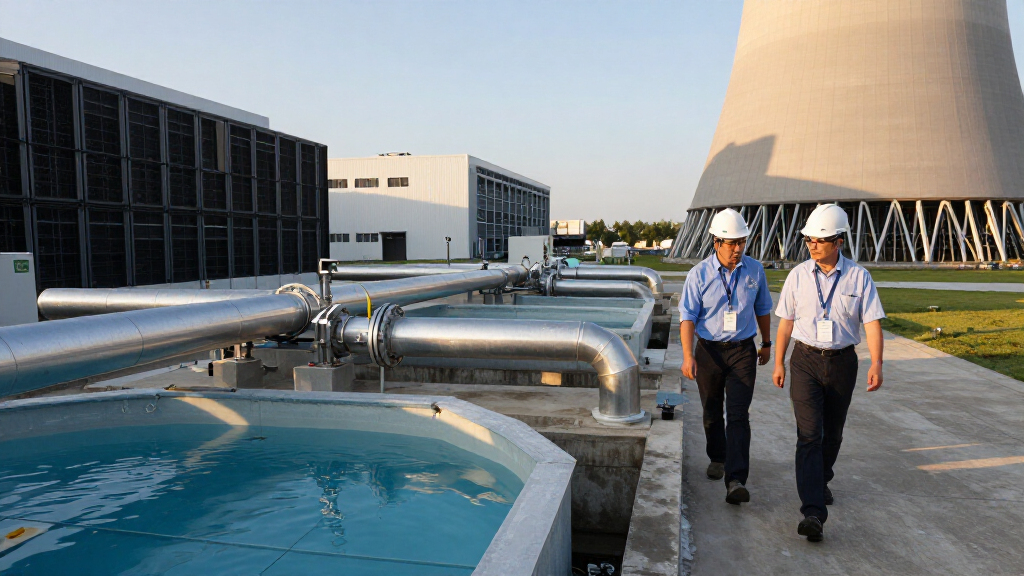
Water is another local concern. A large site can raise questions about demand on municipal supplies, but OpenAI has not yet published water-use projections for its planned Pike County, Ohio, project. Without the final design and figures, nearby residents and local officials cannot compare projected use with available supplies or other local needs.
Products Worth Considering

Anker SOLIX C300 Portable Power Station, 288Wh

Anker SOLIX C1000 Gen 2 Portable Power Station with 200W Solar Panel

Bose Home Speaker 500 Smart Bluetooth Speaker with Alexa, Black
As an affiliate, we earn on qualifying purchases.
Pledges Meet Local Infrastructure
OpenAI’s January 2026 “Stargate Community” plan said the company would be “paying our own way on energy” so operations would not increase electricity prices, according to a quotation reported by Bisnow. On March 4, the White House announced a Ratepayer Protection Pledge signed by Amazon, Google, Meta, Microsoft, OpenAI, Oracle and xAI. Its fact sheet says signatories will build, bring or buy new power generation, cover required power-delivery infrastructure upgrades and pay negotiated rates even if they do not use the electricity.
These commitments are relevant, but the source material describes the pledge as lacking a named penalty, enforcement body, monitoring process or reporting requirement. The IEA’s April 2026 report, “Key Questions on Energy and AI,” similarly said recent measures could shift some financial risk away from utilities, while the extent of consumer protection remains unclear. It noted few examples of U.S. states legislating full cost recovery from data-center operators.
The source material also says OpenAI owns no data centers and relies on partners that carry project debt. It mentions a reported reduction in OpenAI’s funding target, but says OpenAI has not confirmed that change. Those financing details are separate from the confirmed name proposal and underline how much of the buildout depends on arrangements with other companies.
Unanswered Questions on Costs and Water
Several key details are not yet public. OpenAI has not published final water-use projections for the planned Pike County, Ohio, site; it has said it expects use to be comparable to an office building and will provide projections once the design is final. That comparison is the company’s expectation, not a published site-specific estimate. The project’s eventual demand, timing and effect on local water supplies remain unclear.
It is also not clear how the White House pledge will be enforced or measured. The source material identifies no reporting schedule, independent oversight body or penalties for a signatory that fails to meet its commitments. Nor do the auction results alone show what share of power-system costs should be assigned to data centers or how those costs flow into individual bills.
Finally, the reported post-election public relations push and a reported change in OpenAI’s funding target remain unconfirmed by the company in the source material. The company’s confirmed statement about terminology should not be taken as confirmation of either report.
Final Designs and Public Commitments
The next concrete information on water use is expected when OpenAI’s Pike County project design is final and the company publishes projections. Those figures would allow local residents and officials to assess the company’s office-building comparison against site-specific demand. The source material does not give a publication date.
For power costs, the practical test will be whether companies’ pledges translate into documented payments for generation and grid upgrades, and whether utilities or regulators provide public accounting. State policies and utility arrangements will shape how costs are divided; the pledge’s fact sheet alone does not answer that question.
OpenAI may also clarify whether it will formally adopt “compute campuses” or launch the reported post-midterm campaign. As of November 3, the name proposal is confirmed, but a public campaign launch is not.
Key Questions
Has OpenAI officially renamed its data centers?
OpenAI confirmed it is considering the term “compute campuses” and said it better describes the infrastructure’s scale and role. The source material does not establish that the company has formally adopted the term across its communications.
Has OpenAI launched the reported public relations campaign?
No launch was confirmed as of November 3. The plan was reported by TechCrunch, citing Axios; the source material says OpenAI had not published an official announcement.
Does the PJM auction prove data centers caused higher household bills?
No. The auction cleared at $325 per megawatt-day and was 6,831 megawatts short of its target, but those results do not establish the cause of individual bill increases. The source material says the IEA found no simple state-level relationship and the EIA attributed a 41% PJM wholesale-price rise to weather.
What is known about water use at OpenAI’s Ohio project?
OpenAI expects the planned Pike County site to use water at a level comparable to an office building, but final projections have not been published. The company says it will release them once the design is final.
Are companies legally required to meet the White House power pledge?
The source material describes the pledge as a commitment signed by seven companies, including OpenAI, but identifies no penalty, enforcement body, monitoring process or reporting requirement in the fact sheet. Its enforceability is not established there.
Source: ThorstenMeyerAI.com