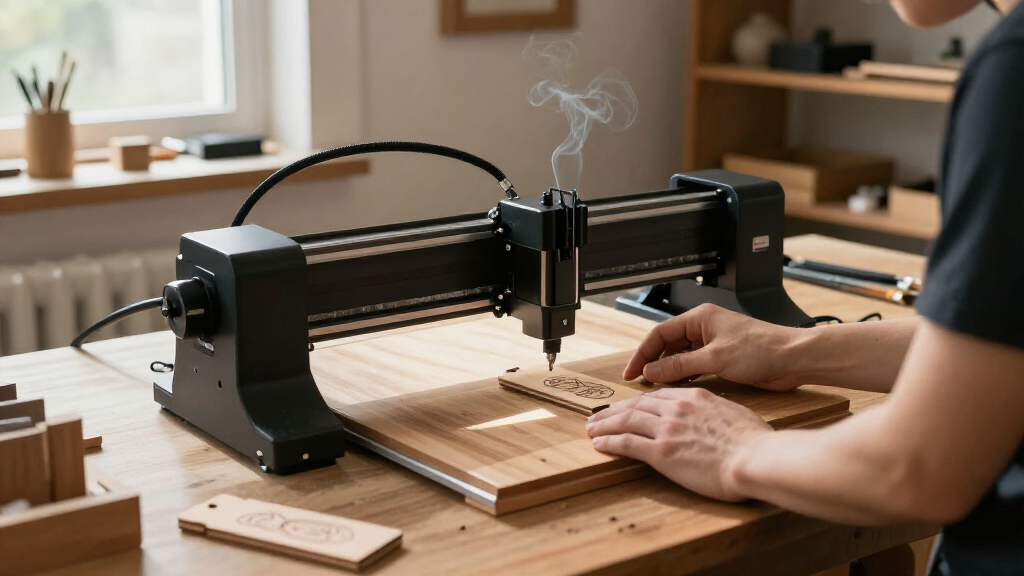
The Creality Falcon A1 Pro stands out as the best overall laser engraver for most users in 2027, offering a rare balance of 20W cutting power, a fully enclosed safety design, and intuitive software. For those prioritizing material versatility, the xTool F2 is the superior choice due to its dual-laser system that handles both plastics and metals, while the ACMER S2 remains the best value option for hobbyists needing raw power without the premium price tag. The primary tradeoffs in this market revolve around safety versus portability and power versus precision; enclosed machines offer better protection and air assist but lack the open-bed flexibility of traditional diode lasers. Continue reading for a detailed breakdown of all 14 models, including specific recommendations for beginners, professionals, and budget-conscious makers.

Get the latest gadgets delivered free with Prime
- Fast, free delivery on millions of items
- Prime Video, Amazon Music and more included
- Member-only deals all year
Complete the kit


Key Takeaways
- Enclosed diode lasers like the Creality Falcon series are rapidly replacing open-frame models as the standard for home workshops due to mandatory safety and fume management features.
- Dual-laser systems (combining diode and IR) are the only viable path for engraving metals and dark plastics without expensive coatings, making them a worthwhile investment for multi-material creators.
- Software integration is now a bigger differentiator than raw wattage; brands with robust, user-friendly ecosystems (like xTool and Creality) offer a smoother workflow than generic controllers.
- 10W diode lasers have reached a performance ceiling for hobbyists, with 20W models offering the best return on investment for cutting thicker woods and acrylics.
- Air assist and honeycomb beds are no longer optional accessories for serious work; models lacking these features struggle significantly with edge burn and material stability.
| Creality Falcon A1 10W Enclosed Laser Engraver |  | Best Enclosed Pick for Larger Projects | Laser: 10W diode | Engraving speed: Up to 600 mm/s | Work area: 15 × 12 inches | VIEW LATEST PRICE | See Our Full Breakdown |
| ACMER S2 12W Laser Engraver and Cutter |  | Best for Detailed Open-Frame Work | Laser power: 12W (12000mW) | Working area: 300 × 300 mm (11.8 × 11.8 inches) | Laser spot size: 0.08 × 0.08 mm | VIEW LATEST PRICE | See Our Full Breakdown |
| LASERGRACE X2 Laser Engraver and Cutter, 200 × 200 mm Workspace |  | Best Compact Workspace Pick | Workspace: 200 × 200 mm | Laser power: Inconsistent listing: 7000 mW in title; 12 W in description | Stated precision: 0.01 mm | VIEW LATEST PRICE | See Our Full Breakdown |
| Twotrees TTS-10 Pro 10W Laser Engraver |  | Best for Flexible File Transfer | Optical power: 10W | Laser wavelength: 450 nm | Work area: 300 × 300 mm (approximately 11.8 × 11.8 inches) | VIEW LATEST PRICE | See Our Full Breakdown |
| BlazeX M3 10W Laser Engraver and Cutter with Enclosure and Honeycomb Bed |  | Best Starter Bundle | Laser power: 10W | Stated accuracy: 0.01 mm | Dimensions: 14.28 × 11.28 × 8.6 inches | VIEW LATEST PRICE | See Our Full Breakdown |
| xTool M2 10W Enclosed Laser Engraver with Dual Cameras |  | Best for Beginners | Laser power: 10W diode laser | Safety class: Class 1 | Cameras: Built-in dual cameras | VIEW LATEST PRICE | See Our Full Breakdown |
| LASER TREE 20W Laser Engraver and Cutter with 15.75 x 31.5 in Work Area |  | Best for Oversized Projects | Optical power: 20W | Work area: 400 × 800 mm (15.75 × 31.5 in) | Maximum engraving speed: 10,000 mm/min | VIEW LATEST PRICE | See Our Full Breakdown |
| xTool F2 Dual Laser Engraver with 5W IR and 15W Diode Lasers |  | Best for Material Versatility | Laser types: 5W infrared and 15W diode | Maximum speed: 6000 mm/s | Camera: Built-in 50MP | VIEW LATEST PRICE | See Our Full Breakdown |
| Longer RAY5 20W Laser Engraver and Cutter |  | Best for Flexible Operation | Laser power: 20W | Beam spot size: 0.08 × 0.1 mm | Maximum processing speed: 10,000 mm/min | VIEW LATEST PRICE | See Our Full Breakdown |
| Creality Falcon A1 Pro 20W Enclosed Laser Engraver |  | Best Enclosed 20W Pick | Laser power: 20W blue laser | Maximum speed: 600 mm/s | Cutting capacity: Up to 10 mm basswood and 8 mm black acrylic | VIEW LATEST PRICE | See Our Full Breakdown |
| Carverall K15 Pro 10W Laser Engraver and Cutter |  | Best Compact Pick | Laser power: 10W | Work area: 11.8 × 7.9 inches | Engraving precision: 0.01 mm | VIEW LATEST PRICE | See Our Full Breakdown |
| AlgoLaser DIY Kit MK3 8W Laser Engraver with 3.5-Inch Touchscreen |  | Best for Beginners | Laser power: 8W | Work area: 400 × 400 mm (15.75 × 15.75 inches) | Maximum speed: 15,000 mm/min | VIEW LATEST PRICE | See Our Full Breakdown |
| ORTUR Laser Master 2 S2 LU2-10A 10W Laser Engraver and Cutter |  | Best for Repairability | Laser power: 10W (10,000mW) | Laser class: Class 4 | Engraving area: 390 × 410 mm | VIEW LATEST PRICE | See Our Full Breakdown |
| Creality Falcon 10W Laser Engraver and Cutter |  | Best for Larger Engraving Projects | Optical power: 10W | Working area: 15.7 × 16.3 inches | Maximum engraving speed: 10,000 mm/min | VIEW LATEST PRICE | See Our Full Breakdown |
| laser engraver | Laser power |
|---|---|
| Creality Falcon A1 10W Enclose | — |
| ACMER S2 12W Laser Engraver an | 12W (12000mW) |
| LASERGRACE X2 Laser Engraver a | Inconsistent listing: 7000 mW in title; 12 W in description |
| Twotrees TTS-10 Pro 10W Laser | — |
| BlazeX M3 10W Laser Engraver a | 10W |
| xTool M2 10W Enclosed Laser En | 10W diode laser |
| LASER TREE 20W Laser Engraver | — |
| xTool F2 Dual Laser Engraver w | — |
| Longer RAY5 20W Laser Engraver | 20W |
| Creality Falcon A1 Pro 20W Enc | 20W blue laser |
| Carverall K15 Pro 10W Laser En | 10W |
| AlgoLaser DIY Kit MK3 8W Laser | 8W |
| ORTUR Laser Master 2 S2 LU2-10 | 10W (10,000mW) |
| Creality Falcon 10W Laser Engr | — |
More Details on Our Top Picks
Creality Falcon A1 10W Enclosed Laser Engraver
The Falcon A1 is the strongest fit here for buyers who want a ready-to-run, enclosed machine without giving up a generous work area. Its 15 × 12-inch bed is larger than the ACMER S2 and Twotrees TTS-10 Pro work areas, giving you more room for a sign or a batch of smaller items. A built-in camera helps place designs, while the enclosed Class 1 design, lid-opening pause, and emergency stop add safeguards absent from the open-frame alternatives in this group. CoreXY motion is rated up to 600 mm/s, but its 10W diode still sets limits on cutting tougher materials. The tradeoff is a sizable 30 × 25 × 15-inch footprint and a specific honeycomb-panel fit. Skip it if you need a compact machine or plan to process reflective surfaces.
Pros:- Pre-assembled design reduces setup work.
- Built-in camera aids positioning designs on the material.
- Enclosed Class 1 design includes an emergency stop and lid-opening pause.
- 15 × 12-inch work area is larger than the ACMER S2 and Twotrees TTS-10 Pro beds.
Cons:- The 30 × 25 × 15-inch body needs substantial bench space.
- Compatible honeycomb panel size is limited to 18.11 × 13.62 inches.
- Not suitable for highly reflective materials such as mirror-finished metals or mirrored acrylic.
Best for: Makers who want an enclosed, pre-assembled engraver with camera-assisted placement and enough bed space for larger signs or batches.
Not ideal for: Buyers with limited bench space, those needing a broad choice of honeycomb panels, or anyone engraving mirror-finished metal or mirrored acrylic.
- Laser:10W diode
- Engraving speed:Up to 600 mm/s
- Work area:15 × 12 inches
- Laser spot size:0.06 × 0.08 mm
- Cutting capacity:Up to 6 mm wood and 9.6 mm black acrylic in a single pass
- Safety classification:Class 1
- Positioning:Built-in camera
- Software:Falcon Design Space, LightBurn, and LaserGRBL
- Dimensions and weight:30 × 25 × 15 inches; 28.7 pounds
Our verdict“Choose the Falcon A1 if an enclosed design, camera positioning, and a larger work area matter more than compact size or reflective-material capability.”
ACMER S2 12W Laser Engraver and Cutter
The ACMER S2 suits buyers who want a relatively fine engraving spot and a full 300 × 300 mm bed in an open-frame machine. Its stated 0.08 × 0.08 mm spot and up-to-0.01 mm accuracy favor detailed artwork, while the work area matches the Twotrees TTS-10 Pro and exceeds the LASERGRACE X2’s 200 × 200 mm workspace. The 12W output gives it a power advantage over those 10W and 7W-class options as described, though material and surface finish still affect results. LightBurn and LaserGRBL support make it a flexible choice for users with established workflows. Unlike the enclosed Creality Falcon A1, the S2 has no included enclosure; its compatible enclosure is sold separately. Choose it for capacity and detail, not out-of-the-box containment.
Pros:- 12W laser power is higher than the 10W Twotrees TTS-10 Pro.
- 300 × 300 mm work area accommodates signs and batches of small pieces.
- Fine 0.08 × 0.08 mm spot and stated accuracy up to 0.01 mm suit detailed designs.
- Supports ACMER Studio, LightBurn, and LaserGRBL, with motion protection.
Cons:- Compatible enclosure is sold separately.
- Material results and settings vary with the material and its surface finish.
Best for: Experienced hobbyists and small-shop makers who want a 300 × 300 mm open-frame bed, detailed engraving, and software choice.
Not ideal for: Beginners who want an enclosed machine ready to use safely around others, or buyers unwilling to source an enclosure separately.
- Laser power:12W (12000mW)
- Working area:300 × 300 mm (11.8 × 11.8 inches)
- Laser spot size:0.08 × 0.08 mm
- Engraving accuracy:Up to 0.01 mm
- Compatible materials:Wood, leather, compatible acrylic, coated metal, and other suitable materials
- Software:ACMER Studio, LightBurn, and LaserGRBL
- Motion protection:Pauses operation when abnormal movement is detected
- Weight:8.38 pounds
- Warranty and enclosure:1-year warranty; compatible enclosure sold separately
Our verdict“Pick the ACMER S2 for a large open-frame workspace and detail-oriented work if you are prepared to arrange your own enclosure.”
LASERGRACE X2 Laser Engraver and Cutter, 200 × 200 mm Workspace
The LASERGRACE X2 is the more compact-workspace option for makers whose projects fit within 200 × 200 mm. That bed is larger than a very small desktop work area, yet takes up less working room than the 300 × 300 mm ACMER S2 and Twotrees TTS-10 Pro. Its aluminum-alloy structure and support for LightBurn and LaserGRBL give it a familiar foundation for hobby projects, and the listed kit includes sample materials and basic tools. The main buying concern is the product data itself: laser power is given as 7000 mW in the title and 12 W in the description. That discrepancy makes direct performance comparisons unreliable. Compared with the clearly specified ACMER S2, the X2 is harder to judge for cutting capacity, so I’d choose it only if the smaller workspace fits and the seller confirms the module rating.
Pros:- 200 × 200 mm workspace supports designs larger than many compact engravers.
- Aluminum-alloy frame provides a rigid structural base.
- Works with LightBurn and LaserGRBL.
- Included kit lists goggles, tools, an aluminum sheet, and basswood pieces.
Cons:- Laser power is inconsistent across the supplied product information: 7000 mW in the title and 12 W in the description.
- Workspace is smaller than the 300 × 300 mm ACMER S2 and Twotrees TTS-10 Pro.
- Supplied details do not establish a clear cutting-capacity figure.
Best for: Hobbyists with limited workspace who mainly engrave or cut projects sized within 200 × 200 mm and can verify the laser-module power before buying.
Not ideal for: Buyers who need dependable, clearly stated cutting performance or a larger bed for signs and production batches.
- Workspace:200 × 200 mm
- Laser power:Inconsistent listing: 7000 mW in title; 12 W in description
- Stated precision:0.01 mm
- Frame material:Aluminum alloy
- Software:LightBurn and LaserGRBL
- Included components:Laser module goggles, aluminum sheet, tool kit, kraft paper, two basswood pieces, USB cable, and power adapter
- Listed materials:Metal and plastic
Our verdict“Consider the LASERGRACE X2 for a modest 200 × 200 mm workspace, but confirm its actual laser power before relying on it for cutting.”
Twotrees TTS-10 Pro 10W Laser Engraver
The Twotrees TTS-10 Pro is a straightforward open-frame choice for users who value familiar software and more than one way to send jobs to the machine. Its 300 × 300 mm work area matches the ACMER S2, but the TTS-10 Pro is a 10W diode model rather than the ACMER’s 12W option. The practical distinction is less about bed size and more about power and workflow: this machine accepts files over USB or a 4 GB TF card, which can be useful when a computer is not beside the engraver. A dual Y-axis motor setup and aluminum-alloy frame support its motion system, but the supplied dimensions are notably compact relative to the stated bed, so check the full setup footprint. Bare steel generally needs marking spray or preparation, and TF-card monitoring calls for a separately purchased monitor. Unlike the enclosed Falcon A1, it offers no enclosure in the listed package.
Pros:- 300 × 300 mm work area matches the larger ACMER S2 bed.
- Supports both USB transfer and a 4 GB TF card.
- Compatible with LightBurn and LaserGRBL.
- Dual Y-axis stepper motors and an aluminum-alloy frame form the motion system.
Cons:- 10W optical power is lower than the ACMER S2’s stated 12W.
- Bare stainless steel and uncoated metal generally require marking spray or surface preparation.
- Monitoring TF-card jobs requires a separately purchased monitor.
Best for: Makers who want a 300 × 300 mm open-frame engraver and the flexibility to transfer jobs by USB or TF card.
Not ideal for: Buyers seeking an enclosed setup, a larger-than-300 mm bed, or direct bare-steel marking without surface preparation.
- Optical power:10W
- Laser wavelength:450 nm
- Work area:300 × 300 mm (approximately 11.8 × 11.8 inches)
- Motion system:Dual Y-axis 42 stepper motors with GT2-6 mm synchronous belts
- Software:LightBurn and LaserGRBL
- File transfer:USB cable and 4 GB TF card
- Power:24 V corded electric
- Frame:Aluminum alloy and injection-molded parts
Our verdict“Choose the TTS-10 Pro if its dual file-transfer options and 300 × 300 mm bed fit your workflow, and you do not need an enclosure or effortless bare-metal marking.”
BlazeX M3 10W Laser Engraver and Cutter with Enclosure and Honeycomb Bed
The BlazeX M3 earns its place as the most package-ready starter option in this group: the listed kit includes an enclosure, honeycomb bed, tool kit, and 13 engraving materials. Tilt and lid sensors stop the machine, while an integrated exhaust fan addresses airflow within its enclosed setup. That makes the M3 a simpler starting point than the open-frame ACMER S2 or Twotrees TTS-10 Pro, whose compatible enclosure is not included in the supplied details. It also supports LightBurn, LaserGRBL, and CutLabX, giving buyers options as their workflow develops. The tradeoff is its 10W output, which may limit cutting on some materials; the 12W ACMER S2 has more stated power, though its enclosure is separate. Rotary roller, risers, air assist, and purifier are add-ons, so this bundle is not a complete solution for every material or project.
Pros:- Starter kit includes a protective enclosure, honeycomb bed, tool kit, and 13 engraving materials.
- Tilt and lid sensors automatically stop the machine.
- Integrated exhaust fan is included in the enclosure setup.
- Supports LightBurn, LaserGRBL, and CutLabX.
Cons:- 10W power may limit cutting capability on some materials.
- Rotary roller, risers, air assist, and purifier are add-on accessories.
- Supplied specifications do not state a work-area size.
Best for: New desktop-laser owners who want an enclosure, honeycomb bed, sample materials, and basic tools in one listed kit.
Not ideal for: Buyers focused on demanding cuts, rotary projects, or a fully equipped air-assist and purification setup without extra accessories.
- Laser power:10W
- Stated accuracy:0.01 mm
- Dimensions:14.28 × 11.28 × 8.6 inches
- Software:LightBurn, LaserGRBL, and CutLabX
- Compatible materials:Wood, leather, glass, acrylic, and coated metal
- Included accessories:Protective enclosure, tool kit, 13 engraving materials, and honeycomb bed
- Safety features:Tilt and lid sensors
- Exhaust:Integrated exhaust fan
- Power:120 V corded electric
Our verdict“Pick the BlazeX M3 if you want an enclosed starter kit with useful included accessories and can accept 10W cutting limits and separately sold upgrades.”
xTool M2 10W Enclosed Laser Engraver with Dual Cameras
The xTool M2 is a strong fit for new makers who want an enclosed machine and guided material placement rather than a large open work area. Its dual cameras preview the workspace, helping users position designs before engraving, while the Class 1 enclosure and beginner-friendly software with templates make setup feel more approachable. Compared with the larger-bed LASER TREE 20W, the M2 is built around convenient, contained projects, not oversized cuts or higher-throughput work. Its 10W diode handles wood, leather, felt, fabric, and paper, but the extra versatility advertised for color printing and fine metal work depends on modules sold separately. I’d choose it for a safer-feeling, guided start; skip it if you need a powerful cutter or want every capability included in the box.
Pros:- Class 1 enclosure with real-time monitoring
- Dual cameras provide workspace previews for material placement
- Works with a range of common craft materials
- Beginner-friendly software includes templates and an AI image generator
Cons:- Optional CMYK inkjet, 3W IR laser, and rotary modules add separate purchases
- Full-color printing requires the optional CMYK inkjet module
- Its 10W diode is less suited to demanding cutting work than the 20W LASER TREE 20W or Longer RAY5
Best for: First-time hobbyists making small projects from wood, paper, leather, or fabric who value an enclosed design and camera-assisted placement.
Not ideal for: Makers who need to process oversized materials, prioritize higher-power cutting, or expect color printing and metal engraving without buying optional modules.
- Laser power:10W diode laser
- Safety class:Class 1
- Cameras:Built-in dual cameras
- Compatible materials:Cardstock, felt, leather, wood, fabric, paper
- Optional modules:CMYK Inkjet module, 3W IR laser, RA3 Lite Rotary
- Package includes:xTool M2 machine, base material kit
- Item weight:36.2 pounds
- Model number:MLM-K610-001
Our verdict“Choose the xTool M2 for an enclosed, camera-guided introduction to laser crafting, but look elsewhere for large projects or higher-power cutting.”
LASER TREE 20W Laser Engraver and Cutter with 15.75 x 31.5 in Work Area
The LASER TREE 20W earns its place through workspace: its 400 × 800 mm bed can handle long or broad pieces that won’t fit comfortably in the compact xTool F2. A 20W laser and speeds up to 10,000 mm/min suit buyers who want both engraving and cutting capability, while the fixed focal length simplifies setup by removing a focusing adjustment. It also works with LightBurn and LaserGRBL on Windows and Mac, giving experienced users familiar control options. The tradeoff is a more open, less contained format than the enclosed Creality Falcon A1 Pro, and its 11-pound weight doesn’t make it a particularly convenient machine to move between workspaces. Metal use is limited to anodized aluminum and coated metal, so it isn’t a general-purpose metal engraver.
Pros:- Large 400 × 800 mm work area accommodates oversized projects
- 20W optical power supports engraving and cutting tasks
- Compatible with LightBurn and LaserGRBL on Windows and Mac
- Fixed focal length simplifies focusing
Cons:- Metal marking is limited to anodized aluminum and coated metal
- Open-format design offers less containment than the xTool M2 or Creality Falcon A1 Pro
- At 11 pounds, it is not especially convenient for frequent relocation
Best for: Makers and small workshops cutting or engraving long wood, acrylic, leather, or cardboard pieces that need a wide work area.
Not ideal for: Buyers who need an enclosed machine, easy portability, or direct engraving on a broad range of bare metals.
- Optical power:20W
- Work area:400 × 800 mm (15.75 × 31.5 in)
- Maximum engraving speed:10,000 mm/min
- Supported software:LightBurn, LaserGRBL
- Operating systems:Windows, Mac
- Supported file formats:SVG, DXF, BMP, JPG, PNG
- Materials:Wood, acrylic, leather, fabric, cardboard, anodized aluminum, coated metal
- Weight:11 lb
Our verdict“Pick the LASER TREE 20W when a long, wide work area matters more than an enclosure or broad metal capability.”
xTool F2 Dual Laser Engraver with 5W IR and 15W Diode Lasers
Where most diode machines in this group focus on wood and craft materials, the xTool F2 combines a 15W diode with a 5W infrared laser for a broader mix of engraving and marking tasks, including metal color marking and 3D embossing. Its built-in 50MP camera and stated alignment accuracy of up to 0.1 mm support detailed placement, while the fully enclosed body and assembled arrival reduce the setup burden. Compared with the enclosed xTool M2, the F2 offers more laser types and much higher listed speed, but its dimensions and weight point to a compact machine rather than a large-format cutter. A slide extension and purifier are optional, and the supplied dimensions list only length and width, making space planning less certain.
Pros:- Dual 5W infrared and 15W diode lasers expand material and marking options
- Built-in 50MP camera supports workspace visualization and precise placement
- Fully enclosed design and built-in fan support indoor use
- Arrives assembled and weighs 4.6 kg for easier transport
Cons:- Slide Extension and purifier are optional accessories
- Listed dimensions provide only length and width
- More specialized than the 20W LASER TREE for buyers whose main need is a large cutting area
Best for: Makers who want one compact, enclosed machine for varied materials, including metal marking, and value camera-assisted alignment.
Not ideal for: Buyers needing a clearly specified large work area, a purifier included in the package, or a low-cost route into basic wood engraving.
- Laser types:5W infrared and 15W diode
- Maximum speed:6000 mm/s
- Camera:Built-in 50MP
- Alignment accuracy:Up to 0.1 mm
- Motion accuracy:0.00199 in
- Material compatibility:300+ materials
- Weight:4.6 kg (also listed as 10 lb)
- Design:Fully enclosed
- Included:Machine, base plate, base material kit
Our verdict“Choose the xTool F2 for compact, enclosed versatility across diode and infrared tasks, not for oversized work or a fully accessorized package.”
Longer RAY5 20W Laser Engraver and Cutter
The Longer RAY5 20W stands out for combining a 20W laser with several ways to run a job: its touchscreen and USB, TF card, Wi-Fi, and app connections give buyers alternatives to relying on a single computer-based workflow. A listed 0.08 × 0.1 mm beam spot and precision rails are aimed at detailed work, while LaserGRBL and LightBurn support familiar software choices. Compared with the LASER TREE 20W, the RAY5 puts more emphasis on onboard controls and connectivity, but the supplied data does not give a work-area size, so it’s harder to judge fit for larger stock. It lists cutting claims for wood, acrylic, and stainless steel, yet those capabilities vary with material and thickness; an air pump is recommended for better results.
Pros:- 20W laser and compressed beam support engraving and cutting tasks
- Precision rails and a listed 0.08 × 0.1 mm beam spot support detailed work
- Touchscreen and four connection modes offer flexible operation
- Compatible with LaserGRBL and LightBurn
Cons:- An air pump is recommended for better engraving and cutting results
- Cutting capability varies by material and thickness
- No work-area dimensions are provided, unlike the LASER TREE 20W
Best for: Makers who want a 20W engraver with onboard controls and multiple connection methods, plus compatibility with common laser software.
Not ideal for: Buyers who need a confirmed large work area, enclosed operation, or predictable cutting results across different material thicknesses.
- Laser power:20W
- Beam spot size:0.08 × 0.1 mm
- Maximum processing speed:10,000 mm/min
- Display:3.5-inch color touchscreen
- Connection modes:USB, TF card, Wi-Fi, app
- Compatible software:LaserGRBL, LightBurn
- Listed cutting capabilities:Up to 25 mm wood, 35 mm acrylic, and 0.05 mm stainless steel
- Compatible materials:Wood, acrylic, stainless steel, leather, paper, glass, plastics
Our verdict“Pick the RAY5 if flexible controls and connectivity matter most, but confirm its workspace and plan for material-dependent cutting performance.”
Creality Falcon A1 Pro 20W Enclosed Laser Engraver
The Creality Falcon A1 Pro pairs 20W blue-laser power with an enclosure, making it a compelling choice for buyers who want a more contained setup than the open-bed LASER TREE 20W. Its workspace camera and three-second autofocus help with positioning and setup, while touchscreen and app control let users monitor and run jobs without relying on a cable-connected computer. The light-filtering covers, smoke-removal fan, emergency stop, and lid-open halt add practical safeguards; arriving 80% pre-assembled also reduces initial setup work. The limits are specific: the compatible honeycomb panel size is 460 × 346 mm, and the 2W infrared module for metal and plastic engraving is sold separately. Its 37.4-pound weight and large outer dimensions also call for a dedicated workspace.
Pros:- Enclosure includes light-filtering covers, smoke removal fan, emergency stop, and lid-open halt
- Camera preview and three-second autofocus support positioning
- Touchscreen and app control enable cable-free operation and monitoring
- Arrives 80% pre-assembled
Cons:- 2W infrared module for metal and plastic engraving is sold separately
- Compatible only with 460 × 346 mm honeycomb panels
- At 37.4 pounds and 32 × 27 × 15 inches, it needs a substantial, mostly fixed workspace
Best for: Home makers and small workshops seeking a 20W machine with an enclosure, camera positioning, autofocus, and app or touchscreen controls.
Not ideal for: Buyers who need a lightweight or compact machine, a larger-than-specified honeycomb work area, or infrared metal engraving included.
- Laser power:20W blue laser
- Maximum speed:600 mm/s
- Cutting capacity:Up to 10 mm basswood and 8 mm black acrylic
- Dimensions:32 × 27 × 15 inches
- Weight:37.4 pounds
- Workspace compatibility:460 × 346 mm honeycomb panels
- Autofocus time:3 seconds
- Measurement accuracy:0.012 inches
- Safety:Enclosed design, emergency stop, and lid-open halt
Our verdict“Choose the Falcon A1 Pro for an enclosed 20W setup with camera and autofocus, provided its panel size and footprint suit your workspace.”
Carverall K15 Pro 10W Laser Engraver and Cutter
The Carverall K15 Pro is the space-conscious choice here: its 11.8 × 7.9-inch work area suits small signs, tags, and repeat jobs without demanding the footprint of the Creality Falcon 10W. One-touch focusing and TF card control make it easier to set up familiar projects or run jobs without keeping a computer connected, while the four heightening columns accommodate taller objects. Its 10W diode supports multi-pass cutting, but the stated capacity takes multiple passes and should not be read as a fast, single-pass solution. Bare-metal engraving also requires the optional IR head, adding an accessory purchase for that use. I’d choose this over the larger AlgoLaser DIY Kit MK3 when workbench space matters more than a broad work area; buyers making larger pieces should look to the Creality instead.
Pros:- Compact 11.8 × 7.9-inch work area takes up less room than the Creality Falcon 10W.
- One-touch focus and TF card control support repeatable and offline jobs.
- Four heightening columns allow work on taller objects.
- Compatible with LightBurn and LaserGRBL as well as CutLabX.
Cons:- The work area restricts larger designs and sheet materials.
- Bare-metal engraving requires the optional 1W IR laser head.
- Thicker cutting jobs require multiple passes.
Best for: Makers with limited bench space who mainly engrave small projects and want offline job control.
Not ideal for: Small-business owners producing large panels or buyers who need bare-metal engraving without purchasing an optional IR laser head.
- Laser power:10W
- Work area:11.8 × 7.9 inches
- Engraving precision:0.01 mm
- Maximum speed:15,000 mm/min
- Control:Wireless app and TF card offline control
- Compatible software:CutLabX, LightBurn, LaserGRBL
- Multi-pass cutting:Up to 12 mm plywood and 8 mm acrylic
- Weight:2.68 kg
Our verdict“Choose the K15 Pro for compact projects and offline convenience, but pick a larger-frame engraver if you regularly work on oversized pieces.”
AlgoLaser DIY Kit MK3 8W Laser Engraver with 3.5-Inch Touchscreen
The AlgoLaser DIY Kit MK3 is the most approachable option in this group for buyers who want a large work area without relying on a computer for every job. Its 3.5-inch touchscreen runs AlgoOS, and the machine arrives 95% pre-assembled, reducing setup and control hurdles compared with the assembly-required ORTUR Laser Master 2. A 400 × 400 mm work area gives it room for larger layouts than the Carverall K15 Pro, while material presets offer a starting point for common jobs rather than requiring every setting from scratch. The tradeoff is its 8W diode: it is aimed at engraving and lighter batch work, not demanding cutting. Glass and metal also need preparation. I’d favor it for guided, hands-on operation, but choose a 10W model for more cutting headroom.
Pros:- Built-in touchscreen supports jobs without a connected computer.
- 400 × 400 mm work area handles projects too large for the Carverall K15 Pro.
- 95% pre-assembled design and flip-down focus column simplify setup.
- Material presets and safety alerts help new users get started.
Cons:- The 8W diode is better suited to engraving and light cutting than demanding cut jobs.
- Glass and metal require material preparation.
- Its larger work area takes more room than compact machines such as the Carverall K15 Pro.
Best for: First-time makers who want a roomy work area, touchscreen control, and a mostly assembled machine with guided material presets.
Not ideal for: Buyers focused on thicker or faster cutting, or those who need straightforward processing of glass and bare metal.
- Laser power:8W
- Work area:400 × 400 mm (15.75 × 15.75 inches)
- Maximum speed:15,000 mm/min
- Display:3.5-inch HD touchscreen
- Connectivity:Wi-Fi, USB, SD card, computer, and phone app
- Material presets:400+
- Assembly:95% pre-assembled
- Safety features:Flame detection, overheat alerts, and emergency stop
- Warranty:2 years
Our verdict“Pick the MK3 if touchscreen operation and beginner-friendly setup matter more than the extra cutting capability of a 10W engraver.”
ORTUR Laser Master 2 S2 LU2-10A 10W Laser Engraver and Cutter
The ORTUR Laser Master 2 S2 suits buyers who value a serviceable frame and explicit safety features over a quick out-of-box start. Its modular metal construction supports part replacement and repairs, a practical contrast with the mostly pre-assembled AlgoLaser DIY Kit MK3. The 10W module pairs a 0.05 × 0.1 mm compressed spot with a large 390 × 410 mm area, giving it room for detailed work at a scale close to the MK3’s. Built-in air-assist interface and dual-fan cooling support the laser module during jobs, while tilt detection and movement-triggered shutoff add safeguards. Still, this is a Class 4 machine, so those features do not remove the need for careful eye and fire precautions. Assembly is required, making the MK3 the easier start for beginners.
Pros:- Modular full-metal frame supports part replacement and repair.
- Fine 0.05 × 0.1 mm compressed laser spot supports detailed engraving.
- Large 390 × 410 mm work area accommodates broad layouts.
- Tilt detection, movement-triggered shutoff, and a protective cover add safety measures.
Cons:- Assembly is required, unlike the mostly pre-assembled AlgoLaser DIY Kit MK3.
- Class 4 operation calls for careful eye and fire safety precautions.
- The 10W diode does not offer the higher power available in some larger-output machines in the roundup.
Best for: Makers comfortable assembling equipment who want a modular metal-frame engraver they can maintain and repair.
Not ideal for: Beginners seeking a near-ready machine, or buyers who are not prepared to follow Class 4 laser safety practices.
- Laser power:10W (10,000mW)
- Laser class:Class 4
- Engraving area:390 × 410 mm
- Compressed laser spot:0.05 × 0.1 mm
- Frame:Full metal, modular design
- Cooling and air-assist:Dual-fan module cooling; built-in air-assist interface
- Supported software:LaserGRBL and LightBurn
- Safety features:Tilt detection, automatic shutoff if movement stops, and protective cover
Our verdict“Choose the ORTUR if modular construction and repairability matter more than easy setup or avoiding Class 4 safety responsibilities.”
Creality Falcon 10W Laser Engraver and Cutter
The Creality Falcon 10W is the strongest fit here for buyers who want a roomy bed and defined single-pass cutting limits. Its 15.7 × 16.3-inch work area is substantially larger than the Carverall K15 Pro’s, making it more practical for wide signs and larger layouts. A 0.06 × 0.06 mm spot supports fine detail, while the aluminum-alloy frame, steel guide rails, and belt tension adjustment are aimed at keeping motion stable. It can cut 5 mm basswood or 3 mm black acrylic in one pass, but those material and thickness limits matter: other cuts may need more passes. At up to 10,000 mm/min, it also has a lower stated maximum speed than the 15,000 mm/min Carverall and AlgoLaser. The anti-UV filter and goggles are useful additions, not a substitute for safe operation.
Pros:- 15.7 × 16.3-inch work area is much larger than the Carverall K15 Pro’s.
- Fine 0.06 × 0.06 mm laser spot supports detailed engraving.
- Specified single-pass capacity reaches 5 mm basswood or 3 mm black acrylic.
- Aluminum-alloy frame, steel guide rails, and belt adjustment support stable motion.
Cons:- Single-pass cutting claims apply to specified basswood and black acrylic thicknesses, not every material.
- Maximum stated speed is lower than the Carverall K15 Pro and AlgoLaser DIY Kit MK3.
- Included goggles and UV filtering do not remove the need for eye and fire safety precautions.
Best for: Makers producing larger signs or layouts who want a generous work area and specified single-pass cuts in basswood or black acrylic.
Not ideal for: Buyers with limited workspace, or those who need higher stated engraving speed or single-pass cutting across a wide range of materials.
- Optical power:10W
- Working area:15.7 × 16.3 inches
- Maximum engraving speed:10,000 mm/min
- Laser spot size:0.06 × 0.06 mm
- Cutting capacity:5 mm basswood or 3 mm black acrylic in one pass
- Compatible software:LightBurn and LaserGRBL
- Offline operation:SD card
- Frame material:Aluminum alloy
Our verdict“Choose the Falcon for larger layouts and its specified single-pass cuts, but look elsewhere if compact size or faster stated engraving speed is the priority.”
How We Picked
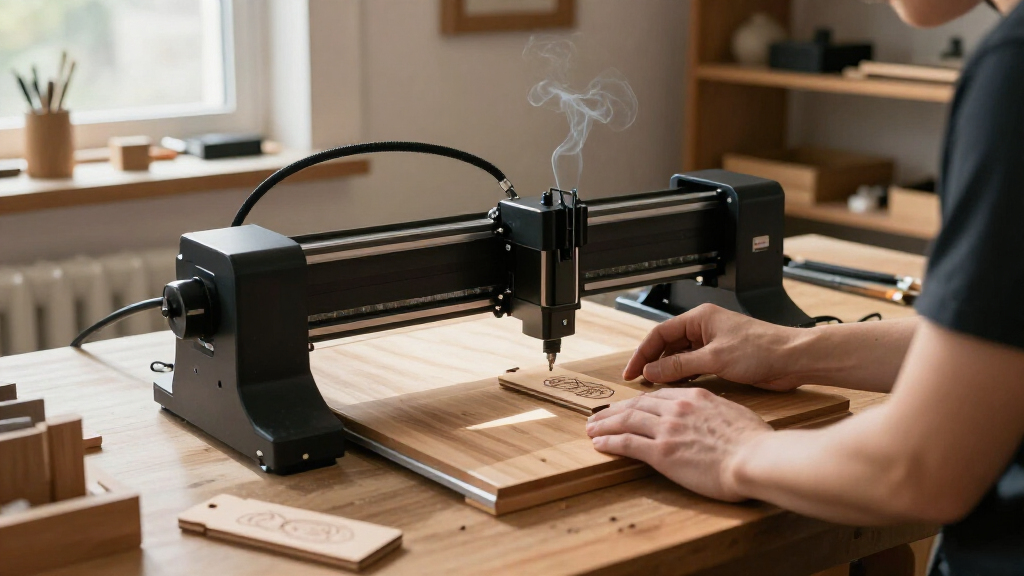
I evaluated these 14 laser engravers by prioritizing three core pillars: cutting performance, safety engineering, and workflow efficiency. For cutting performance, I looked beyond the advertised optical power to assess beam focus consistency and cutting speed on common materials like 3mm birch plywood and matte black acrylic. Safety engineering was a major filter; I favored enclosed units with active flame detection and fume extraction capabilities, as open-frame lasers pose significant risks in residential settings. Workflow efficiency considered the ease of software setup, compatibility with popular design tools like LightBurn, and the stability of connectivity (Wi-Fi vs. USB).
The ranking logic reflects a shift in the market toward plug-and-play reliability. Products that required extensive manual calibration or lacked robust community support were ranked lower, even if their theoretical specs were high. I also weighed the long-term cost of ownership, factoring in replacement parts availability and warranty support. This approach ensures that the recommendations are not just powerful on paper but practical for daily use.
Factors to Consider When Choosing Best Laser Engravers
Choosing the right laser engraver requires balancing technical specifications with your actual project needs. Many buyers make the mistake of focusing solely on wattage, ignoring critical factors like wavelength compatibility and safety features that determine whether a machine will be useful or frustrating.Understanding Diode vs. IR Laser Wavelengths
Most consumer laser engravers use diode lasers, which operate at a wavelength of around 450nm. This wavelength is excellent for engraving wood, leather, anodized aluminum, and painted surfaces but struggles with bare metals and clear or white plastics. If your work involves metal jewelry or dark plastics without coatings, you need an IR (infrared) laser, typically operating at 1064nm. Machines like the xTool F2 combine both, offering a versatile solution. Buying a high-wattage diode laser hoping to cut metal is a common and costly mistake; no amount of diode power will cleanly engrave stainless steel without a marking agent. Assess your material list before choosing your laser type to avoid wasted investment.
The Critical Role of Air Assist and Fume Extraction
Air assist is not just a luxury feature; it is essential for clean cuts. By blowing compressed air at the cutting point, it removes debris and suppresses flames, resulting in cleaner edges and reduced fire risk. Without air assist, you will encounter charred edges on wood and potential melting on acrylic. Similarly, fume extraction is vital for indoor use. Laser engraving releases toxic fumes from materials like PVC (which should never be engraved) and treated woods. Enclosed machines with built-in exhaust ports or integrated fans provide a safer environment, whereas open-frame units require you to source and install separate ventilation solutions, adding to the total cost and complexity.
Software Compatibility and Learning Curve
The hardware is only half the equation; the software determines your productivity. Some manufacturers lock you into proprietary software that may lack advanced features or become obsolete. Others, like Ortur and Twotrees, offer open architecture that works seamlessly with LightBurn, the industry-standard paid software. xTool and Creality have developed robust proprietary ecosystems that are user-friendly for beginners but may limit customization for power users. If you plan to scale your business, check if the machine supports third-party software integration. A steep learning curve can stall your projects, so look for models with active community forums and comprehensive documentation to troubleshoot issues quickly.
Workspace Size and Material Handling
Consider the dimensions of your typical projects. A 400x400mm workspace is standard for hobbyists but limits you to smaller coasters, phone cases, and small signs. If you plan to engrave larger panels or cut full sheets of material, you need a larger bed, such as the 400x500mm or larger options found in the Longer RAY5 or LASER TREE models. However, larger workspaces often compromise on beam focus consistency at the edges. Additionally, evaluate how the machine handles thick materials. Open-frame lasers allow you to place objects on the ground below the machine, while enclosed units restrict height. If you need to engrave mugs or bottles, check if the machine supports a rotary attachment and has sufficient clearance.
Safety Features and Compliance Standards
Laser safety is paramount, especially in homes with children or pets. Look for machines with Class 1 laser safety standards, which are achieved through fully enclosed designs that prevent accidental exposure to the beam. Features like flame sensors that automatically pause the machine, emergency stop buttons, and key locks add layers of protection. Open-frame lasers require strict adherence to safety goggles usage and supervised operation. In 2027, regulatory scrutiny on consumer lasers is tighter, and non-compliant units may face shipping restrictions or warranty voids. Investing in a compliant, enclosed unit reduces liability and health risks, making it the prudent choice for long-term ownership.
Frequently Asked Questions
Can a diode laser cut acrylic effectively?
Diode lasers can cut black acrylic very well because the material absorbs the laser’s wavelength, but they struggle with clear or white acrylic, which lets the light pass through. For clear acrylic, you need a CO2 laser or a specialized diode with a shorter wavelength, which are rare in consumer diode models. If you primarily work with colored or opaque acrylics, a 10W or 20W diode laser is sufficient. However, if clear acrylic is a core material for your projects, a diode laser is the wrong tool, and you should consider a CO2 model instead.Is an enclosed laser engraver better than an open-frame model?
Enclosed laser engravers are generally better for home and small business use because they contain fumes, reduce fire risks, and improve focus by blocking ambient light. They also allow for better air assist integration, which improves cut quality. Open-frame models offer more flexibility for large or odd-shaped items and are usually cheaper, but they require separate ventilation and strict safety protocols. For most users, the safety and convenience of an enclosed unit outweigh the lower cost and open access of a frame model, especially as safety regulations become stricter.Do I need a rotary attachment for my laser engraver?
You only need a rotary attachment if you plan to engrave cylindrical objects like mugs, bottles, or pens. If your work is limited to flat surfaces like wood panels, leather patches, or jewelry blanks, you can skip this accessory initially. Most modern laser engravers support rotary attachments, but compatibility varies, so check if the specific model you choose has a native mount or requires a third-party adapter. It is a worthwhile add-on if you diversify into drinkware or gifts, but it is not necessary for standard flat-bed engraving.How much maintenance do laser engravers require?
Laser engravers require regular maintenance to maintain cut quality and safety. This includes cleaning the lens and mirrors with isopropyl alcohol to prevent power loss, checking and tightening belts for accurate movement, and lubricating rails if specified by the manufacturer. You should also clean the exhaust fan and filters regularly to prevent clogging and ensure proper fume extraction. Neglecting these tasks leads to inconsistent cuts, reduced power, and potential fire hazards. Budget a few minutes of maintenance after every few hours of use to keep the machine running smoothly.Can I upgrade the laser module on my engraver later?
Some manufacturers offer modular laser heads that can be upgraded, but this depends entirely on the brand and model. Brands like xTool and Ortur often sell higher-power modules compatible with their existing frames, allowing you to start with a 10W and upgrade to 20W or 40W. However, many budget brands use proprietary connectors or firmware locks that prevent easy upgrades. Before buying, research whether the manufacturer supports module swaps and if the power supply can handle the increased wattage. Buying a machine with a clear upgrade path can save money if you anticipate needing more power in the future.Conclusion
Choosing the best laser engraver depends largely on your primary materials and safety requirements. For most users seeking a balance of power, safety, and ease of use, the Creality Falcon A1 Pro is the strongest recommendation due to its robust 20W engine and enclosed design. If you need to work with metals and dark plastics, the xTool F2 is the best premium choice thanks to its dual-laser capability. Hobbyists on a tight budget should look at the ACMER S2 or Twotrees TTS-10 Pro for best value performance, provided they have proper ventilation and safety gear. Beginners who want a hassle-free experience with strong community support will find the xTool M2 or BlazeX M3 to be the best for beginners, offering intuitive interfaces and reliable results out of the box.