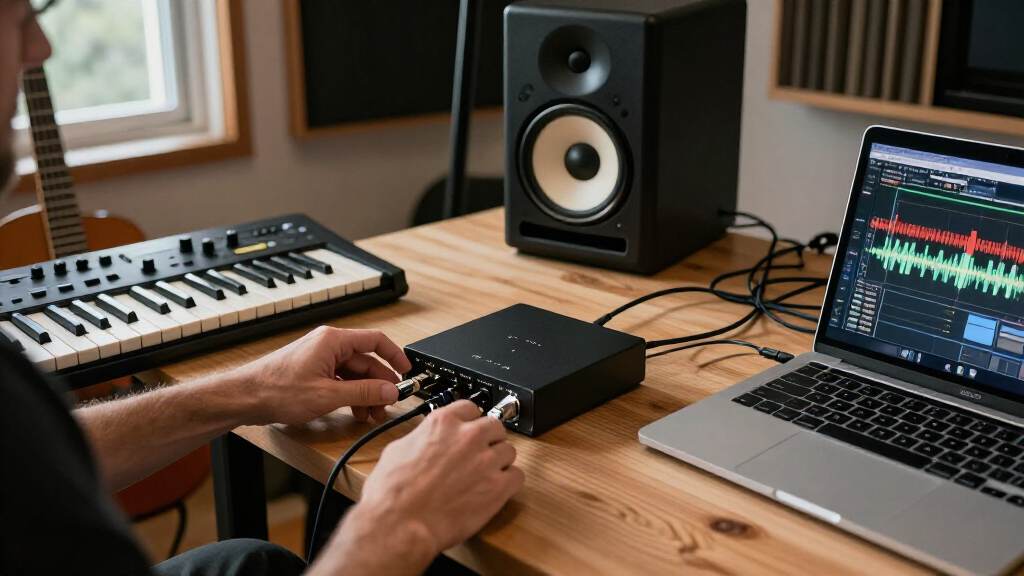
Choosing an Ethernet audio interface starts with deciding what needs to cross the network: microphone inputs, a headphone and monitor feed, or both. I’d start with the Focusrite RedNet X2P for a compact recording endpoint with two mic preamps, choose the MSQ-3900D when four networked XLR inputs matter more than local monitoring, and look at the RedNet AM2 when the job is listening and sending a stereo line feed rather than recording microphones.

Get the latest gadgets delivered free with Prime
- Fast, free delivery on millions of items
- Prime Video, Amazon Music and more included
- Member-only deals all year
These are all Dante-oriented devices, but they serve different points in a signal chain. The X2P combines input and output functions in a small unit, the MSQ-3900D gives you the most analog inputs, and the AM2 is a monitoring endpoint with flexible PoE or external power. None is a general-purpose USB interface that works on its own: a buyer needs a compatible network and a clear plan for routing audio. I rank the X2P first for its broadest useful mix of recording and monitoring, while the other two win when channel count or headphone distribution is the priority.
Complete the kit



Key Takeaways
- The Focusrite RedNet X2P is my best overall pick because its two mic preamps, stereo headphone output, and stereo line output cover both capture and monitoring in one Dante endpoint.
- The MSQ-3900D offers four XLR inputs and PoE, making it the strongest match for collecting several analog sources on a Dante or AES67 network.
- The RedNet AM2 is not a microphone-input interface; it is the dedicated choice for stereo headphone monitoring and balanced XLR line output.
- All three depend on a compatible Dante network and proper routing, so they are not direct substitutes for a standalone USB interface.
- The deciding tradeoff is functional fit: choose the X2P for two-channel recording and monitoring, the MSQ-3900D for four inputs, or the AM2 for a compact listening endpoint.
| Focusrite RedNet X2P 2×2 Ethernet Audio Digital IO with Mic Preamps | 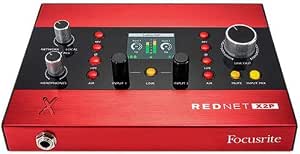 | Best Overall — a compact recording and monitoring endpoint | Audio channels: 2 | Network connectivity: Ethernet | Mic inputs: Two Red Evolution mic preamps; XLR input | VIEW LATEST PRICE | See Our Full Breakdown |
| Dante Audio 4 Channel Analog Audio Network Interface Box, Four 3-Pin XLR Inputs, PoE, Aluminum Housing, TAA Compliant |  | Best for Multiple Inputs — four XLR channels over the network | Analog inputs: 4 x 3-pin XLR | Network protocols: Dante, AES67 RTP | Maximum sample rate: 96 kHz | VIEW LATEST PRICE | See Our Full Breakdown |
| Focusrite RedNet AM2 Stereo Dante Headphone Amp and Line Out Interface with PoE |  | Best for Networked Monitoring — headphone and line outputs in a compact endpoint | Primary function: Stereo Dante headphone amp and line-output interface | Headphone output: 1/4-inch TRS | Line outputs: XLR | VIEW LATEST PRICE | See Our Full Breakdown |
| Ethernet audio interface | Maximum sample rate | Housing |
|---|---|---|
| Focusrite RedNet X2P 2×2 Ether | 96 kHz | — |
| Dante Audio 4 Channel Analog A | 96 kHz | Aluminum |
| Focusrite RedNet AM2 Stereo Da | — | Metal |
More Details on Our Top Picks
Focusrite RedNet X2P 2×2 Ethernet Audio Digital IO with Mic Preamps
The RedNet X2P is the most versatile option here because it puts two mic inputs and local listening in the same compact unit. Its two Red Evolution mic preamps give a recording position a direct way to feed microphones into a Dante network, while the stereo headphone output and stereo line output support monitoring nearby. Compared with the four-input MSQ-3900D, it has fewer mic channels, but it offers a more rounded set of functions for a two-source recording setup.
That combination suits a small studio, remote recording position, or stage location where a person needs to plug in microphones and hear the routed signal without a separate headphone interface. The stated maximum sample rate is 96 kHz, which fits many professional recording workflows. Ethernet also makes it possible to place the endpoint where sources are, rather than forcing every cable to run back to a central interface rack.
The tradeoff is that this is a Dante network device, not a plug-and-play USB interface. It needs a compatible network and routing setup, and the supplied specifications list Windows as the supported software platform; Mac users should verify support with Focusrite before choosing it. Two inputs may also be too restrictive for a multi-microphone session. Compared with the AM2, the X2P is the clear recording pick, but it is a more involved choice than a simple headphone endpoint.
Pros:- Two Red Evolution mic preamps in a compact network endpoint
- Headphone and stereo line outputs support local monitoring
- Supports sample rates up to 96 kHz
- Combines capture and monitoring functions in one unit
Cons:- Two mic inputs may be limiting for group recording
- Requires a compatible Dante network and routing setup
- The listed software support is Windows; other platform support should be verified
Best for: A Windows-based studio or stage user who needs two mic preamps plus local headphone and stereo line monitoring over Dante.
Not ideal for: Buyers who need four or more mic inputs, a standalone USB connection, or confirmed Mac support without checking the current manufacturer details.
- Audio channels:2
- Network connectivity:Ethernet
- Mic inputs:Two Red Evolution mic preamps; XLR input
- Outputs:Stereo headphone output and stereo line output
- Maximum sample rate:96 kHz
- Network format:Dante
- Listed software platform:Windows
Our verdict“I’d choose the RedNet X2P when two mic inputs and local monitoring matter more than maximum channel count.”
Dante Audio 4 Channel Analog Audio Network Interface Box, Four 3-Pin XLR Inputs, PoE, Aluminum Housing, TAA Compliant
If the main job is getting several analog sources onto a network, the MSQ-3900D has the most direct advantage in this lineup: four 3-pin XLR inputs. That doubles the X2P’s stated channel count and makes this box a better fit for multi-mic capture, installed audio, or a stage position collecting several feeds. It supports Dante and AES67 RTP, and its listed 96 kHz maximum sample rate gives buyers a stated ceiling to compare against their system requirements.
PoE can simplify placement because a compatible network connection can supply power, while the listed Type-C power input offers another option where PoE is unavailable. Its aluminum housing and low listed weight also suit compact installations. Compared with the RedNet X2P, this is the input-capacity pick; compared with the RedNet AM2, it is designed to collect audio rather than provide a headphone listening station.
The missing piece is local output functionality. The supplied description says there is no built-in digital audio output, and it does not specify a headphone output or mic preamp controls. That makes it less self-contained for a performer who needs to monitor directly at the device. Four inputs are still a fixed limit, and the unit needs compatible network infrastructure and configuration. I would choose it for networked input collection, not as a complete replacement for a studio interface with flexible local monitoring.
Pros:- Four XLR inputs provide the highest input count in this group
- Lists support for Dante and AES67 RTP
- PoE and Type-C power provide two installation approaches
- Aluminum housing is suited to professional environments
Cons:- No built-in digital audio output is listed
- No headphone output or local monitoring function is specified
- Requires compatible network hardware and configuration
Best for: Installers and recording teams that need four XLR analog inputs feeding a Dante or AES67-compatible network, with PoE as a useful placement option.
Not ideal for: Musicians who need a built-in headphone amp, direct local monitoring, more than four inputs, or a conventional USB interface.
- Analog inputs:4 x 3-pin XLR
- Network protocols:Dante, AES67 RTP
- Maximum sample rate:96 kHz
- Power:PoE or Type-C
- Housing:Aluminum
- Listed weight:10.56 oz
- Output functions:No built-in digital audio output listed
Our verdict“I’d pick the MSQ-3900D over the X2P when four networked XLR inputs matter more than an integrated monitoring section.”
Focusrite RedNet AM2 Stereo Dante Headphone Amp and Line Out Interface with PoE
The RedNet AM2 fills a different role from the other two picks. It is a stereo headphone amplifier and line-output interface, not a microphone-input box. Its independent level controls let a listener adjust the headphones separately from the balanced XLR line outputs, which is useful when one Dante feed needs to serve both personal monitoring and a separate downstream destination.
For a stage, control room, or distributed studio, the main appeal is a dedicated listening point that can sit near the person using it. PoE or an external power supply gives an installer flexibility about where the unit can go. The stated metal housing and microphone-stand mount also point toward practical placement in working audio spaces. Compared with the X2P, the AM2 gives up microphone inputs but concentrates on monitoring; compared with the MSQ-3900D, it does not collect multiple analog inputs.
The key limitation is exactly that specialization: it cannot replace either input-focused pick for recording microphones. It also depends on a compatible Dante system to receive audio, so it is not a standalone headphone amplifier for any source. The supplied listing gives confusing channel and sample-rate fields, so I would confirm technical details with the manufacturer rather than rely on those entries. Choose the AM2 when the networked stereo monitoring function matches the job, not simply because it has Ethernet.
Pros:- Dedicated stereo headphone amplifier and XLR line outputs
- Independent level controls for headphones and line outputs
- PoE or external power supports flexible placement
- Compact metal housing with a microphone-stand mount
Cons:- Does not provide microphone inputs
- Needs compatible Dante-enabled equipment and routing
- The supplied channel and sample-rate fields are unclear
Best for: A performer, engineer, or installer who needs a Dante-fed stereo headphone station with separate headphone and XLR line-output level control.
Not ideal for: Anyone seeking mic preamps, analog input capture, several independent input channels, or a standalone headphone amp with no Dante network.
- Primary function:Stereo Dante headphone amp and line-output interface
- Headphone output:1/4-inch TRS
- Line outputs:XLR
- Level controls:Independent headphone and line-output controls
- Power options:PoE or external power supply
- Housing:Metal
- Mounting:Microphone-stand mount
Our verdict“I’d select the RedNet AM2 when networked headphone and line monitoring are the goal, rather than recording analog inputs.”
How We Picked
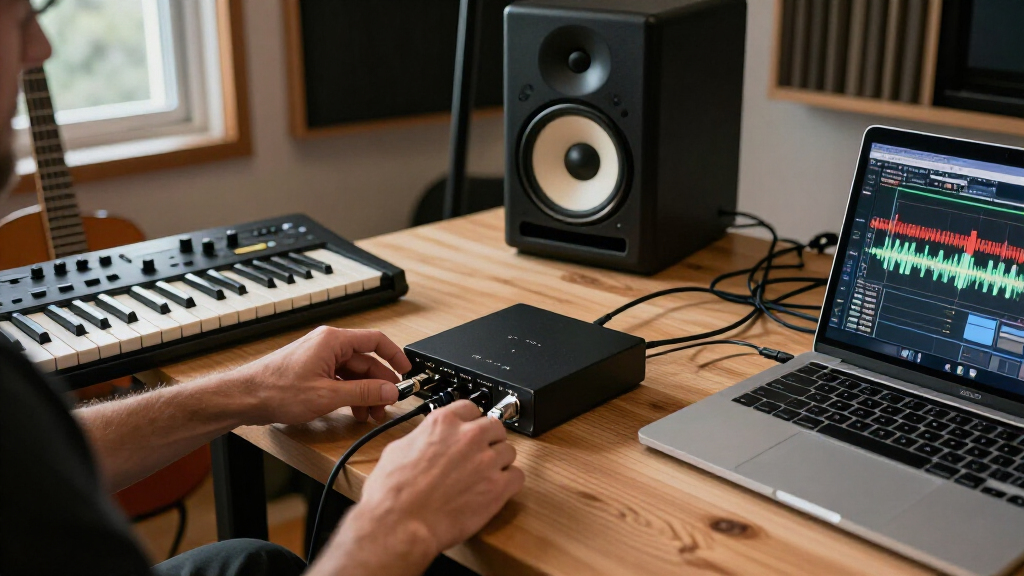
I ranked these products by how well each serves a distinct Ethernet-audio job, not by treating every box with network connectivity as interchangeable. My main questions were whether a device provides analog inputs, what monitoring or output functions it adds, how it connects to a Dante system, and whether its power options suit permanent installation or mobile use.
The RedNet X2P ranks first because it combines two mic preamps with headphone and stereo line outputs. That package makes it useful at a recording position without needing a second device just to monitor. The MSQ-3900D ranks next for input capacity: four XLR inputs are the clearest advantage in this group, though its listed feature set does not include a built-in digital audio output or headphone section. The RedNet AM2 takes the monitoring role. It has useful independent level controls and PoE support, but it should not be mistaken for a mic preamp interface.
I also checked the supplied specifications for conflicts and avoided treating unclear listing fields as reliable performance claims. For example, the AM2 listing’s channel and sample-rate fields do not give useful, consistent detail, so I describe its stated headphone and line-output functions instead. The product descriptions identify Dante as the common network context; the MSQ-3900D also lists AES67 RTP support. Buyers should verify compatibility, routing, sample-rate settings, and computer operating-system support against their own network and workflow before ordering.
| Ethernet audio interface | Housing |
|---|---|
| Focusrite RedNet X2P 2×2 Ether | — |
| Dante Audio 4 Channel Analog A | Aluminum |
| Focusrite RedNet AM2 Stereo Da | Metal |
Factors to Consider When Choosing Best Ethernet Audio Interfaces
Ethernet audio gear makes the most sense when you are building a networked signal path, not just seeking a different connector for a conventional interface. I’d match the product to the location and task first: capture microphones, provide a listening point, or gather several analog feeds. Then I’d check network compatibility, routing, power, and the number of channels the full system needs.
Start with the job at the endpoint
These three products divide neatly by function. The RedNet X2P is the balanced choice for two mic inputs plus local monitoring. The MSQ-3900D is the input-count option, with four XLR inputs and no listed built-in digital audio output. The RedNet AM2 is for listening and sending line output, not recording microphones. I would not compare their channel numbers without asking what those channels do: an input channel and a headphone output solve different problems.
Write down what must connect at the remote location. A pair of microphones and headphones points toward the X2P; four analog sources heading to a network point toward the MSQ-3900D; a person who needs a Dante-fed headphone mix and line feed points toward the AM2. If you need both four inputs and local headphone monitoring, you may need more than one endpoint or a different product category.
Check the network and routing requirements
An Ethernet connector does not by itself make these units operate like a USB interface. The product descriptions frame them as Dante devices, and the MSQ-3900D also lists AES67 RTP. Your audio network needs compatible devices, suitable routing, and a plan for channel names and destinations. Confirm whether the device and network need a dedicated switch, what software or controller is required, and whether the intended audio computer can join the system.
For a new installation, compatibility should come before the number of inputs on a product page. A device that fits your channel count still will not help if it cannot route to the equipment already in place. The X2P’s supplied specifications list Windows support, so buyers on another operating system should verify current support with the manufacturer. Do the same for the AM2’s operating details because its listing gives unclear sample-rate and channel fields.
Match input count to the whole session
Count the sources that need to be captured at the endpoint, including any likely expansion. The two-input X2P is suitable for a small position with a pair of microphones; it may become restrictive for drums, panel discussions, or several performers. The MSQ-3900D’s four XLR inputs make it the strongest of these three for a small multi-source setup, but four is still a firm ceiling unless the system adds another interface.
Also distinguish a stated input count from a fully specified preamp section. The X2P description names Red Evolution mic preamps. The MSQ-3900D description identifies four XLR inputs but does not provide comparable detail about preamp controls or local monitoring. If gain adjustment, phantom power, or other mic-input behavior matters, confirm those details before buying rather than assuming all XLR network boxes work the same way.
Plan monitoring before installation
Monitoring is where the X2P and AM2 differ most. The X2P includes a headphone output and stereo line output alongside mic inputs, letting one compact endpoint support capture and listening. The AM2 focuses on stereo headphones and XLR line outputs, with independent level controls for those paths. That makes it a more specialized monitoring choice, particularly when the input device is already elsewhere on the network.
The MSQ-3900D listing does not specify a headphone section. If performers need to hear a mix at the same location as its four inputs, confirm how that return path will be handled. You may need an AM2 or another monitoring device. Treating network capture and performer monitoring as one requirement helps avoid an installation with plenty of inputs but no convenient way to listen.
Compare power, placement, and installation
PoE can reduce the number of power outlets needed at an endpoint, but the network equipment must support the required power delivery. Both the MSQ-3900D and AM2 list PoE options; the MSQ-3900D also lists Type-C power, while the AM2 can use an external supply. The X2P description emphasizes Ethernet connectivity but does not specify PoE in the supplied details, so check its power requirements for the intended location.
Think about cable runs, mounting, and access to controls. The AM2’s microphone-stand mount can make a personal listening station easier to place near a performer. The MSQ-3900D’s aluminum housing and low listed weight suit compact installation, while the X2P’s small form factor suits a remote recording position. Network placement is useful only when the box can be mounted securely and its analog cables remain practical.
Treat sample-rate listings carefully
The X2P and MSQ-3900D descriptions list support up to 96 kHz. That is a useful compatibility point, but it does not alone establish sound quality or guarantee every connected device will run at that rate. The endpoints, network setup, and recording system need compatible settings. The AM2 product listing includes a malformed sample-rate field, so I would not use that entry to compare its performance.
When a specification looks inconsistent or incomplete, check manufacturer documentation for the exact model and hardware revision. This is particularly useful for sample-rate support, operating-system compatibility, power, and whether the desired audio format can be routed in the existing system. A verified workflow matters more than a larger-looking number on a listing.
Choose for expansion, not just today’s channel count
A two-input device can be the right purchase if the position will stay small and its monitoring functions eliminate extra equipment. A four-input device can reduce endpoint count for a small group of sources, though the MSQ-3900D does not provide the same described monitoring functions as the X2P. If your setup may grow, consider how a second endpoint would be added and whether the network can carry the resulting channel traffic.
My practical rule is to buy for the signal path you can describe clearly: what enters, what travels over Ethernet, and what needs to come back out. That points to the X2P for a compact capture-and-monitor station, the MSQ-3900D for more analog inputs, or the AM2 for a dedicated listening endpoint. If no one of those roles fits, a conventional multi-input interface or a larger networked system may be a better match.
Frequently Asked Questions
Are these Ethernet audio interfaces suitable as USB interface replacements?
Not as direct substitutes by default. These products are described as Dante-oriented network endpoints, so they need compatible network equipment and routing rather than simply connecting to a computer by USB. The X2P adds two mic preamps and local monitoring, the MSQ-3900D provides four XLR inputs, and the AM2 handles headphone and line output. I would choose one only after confirming how it will connect to the rest of the audio system.
Which of these three has the most microphone inputs?
The MSQ-3900D lists four 3-pin XLR inputs, the most in this comparison. The RedNet X2P has two mic preamps, while the RedNet AM2 is a headphone and line-output device and does not list microphone inputs. If you need more than four sources, plan on another network endpoint or look for a higher-channel-count system.
Which model is best for headphone monitoring?
The RedNet AM2 is the most focused monitoring choice because it is built around a stereo headphone amplifier and XLR line outputs, with separate level controls. The X2P also includes headphone monitoring, but combines it with two mic preamps, so it is a better fit when recording and listening need to happen at the same position. The MSQ-3900D’s supplied description does not specify a headphone output.
Can I power these units over Ethernet?
The AM2 and MSQ-3900D both list PoE support. The MSQ-3900D also lists Type-C power, and the AM2 lists an external power option. The supplied X2P details do not confirm PoE, so I would check its current manufacturer documentation before planning an installation without a local power connection. PoE also requires compatible network equipment that can supply the needed power.
What should I verify before buying a Dante interface?
Confirm that the device works with your Dante network, controller and routing setup, computer platform, sample-rate plan, and connected equipment. Then check the exact number and type of analog inputs and outputs, whether local monitoring is available, and how the unit is powered and mounted. For these products, I would pay special attention to the X2P’s listed Windows support and the AM2 listing’s unclear channel and sample-rate fields.
Conclusion
For a compact location that needs microphone capture and local listening, I’d choose the Focusrite RedNet X2P; it is the most balanced all-rounder here, provided its two inputs and network requirements suit the setup. If your priority is collecting four XLR sources over a Dante or AES67 network, the MSQ-3900D is the clear input-focused pick, though you should plan monitoring separately. For a performer or engineer who needs a networked stereo headphone station and line outputs, the RedNet AM2 is the better fit. My final recommendation is to match the endpoint to the job, then verify network, software, power, and routing compatibility before purchase.
Halloween Picks
halloween
As an affiliate, we earn on qualifying purchases.