Professional art therapy curriculum resources range from broad activity collections to focused approaches for particular clinical needs. I rank The Expressive Arts Activity Book, 2nd Edition as the best overall starting point for practitioners seeking a resource designed for professional use, while 250 Brief, Creative & Practical Art Therapy Techniques stands out for quick session ideas and ACT Art Therapy for clinicians integrating Acceptance and Commitment Therapy. The main tradeoff is breadth versus structure: a large collection can offer flexibility, while a focused guide or card deck can make it easier to choose an activity for a specific moment. These books and cards support planning, but they do not replace clinical training, supervision, or adaptations for individual clients. Read on for the full breakdown and guidance on matching a resource to your setting.

Get the latest gadgets delivered free with Prime
- Fast, free delivery on millions of items
- Prime Video, Amazon Music and more included
- Member-only deals all year
Complete the kit



Key Takeaways
- The Expressive Arts Activity Book, 2nd Edition leads for professional-facing breadth, while the ACT-focused title serves clinicians who want a more defined therapeutic framework.
- 250 Brief, Creative & Practical Art Therapy Techniques is the strongest fit when session time is limited and a practitioner needs a varied bank of short activities.
- Art Therapy Sourcebook and Essential Art Therapy Exercises have different kinds of reach: one supports broad reference use, while the other centers anxiety, depression, and PTSD.
- The Guided Art Therapy Card Deck is the most portable, prompt-based format, but its activity cards offer less room for extended curriculum planning than a book.
- Across the lineup, the best choice depends on the intended user and setting; none should be treated as a substitute for assessment, clinical judgment, or a tailored treatment plan.
| The Expressive Arts Activity Book, 2nd Edition: A Resource for Professionals |  | Best for Professional Activity Planning | Format: Book | Edition: 2nd edition | Stated focus: Expressive arts activities | VIEW ON AMAZON | See Our Full Breakdown |
| 250 Brief, Creative & Practical Art Therapy Techniques: A Guide for Clinicians and Clients | 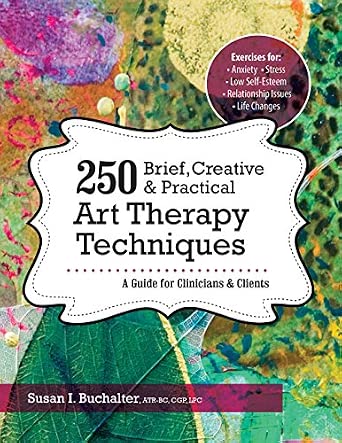 | Best for a Large Technique Repertoire | Format: Guide | Technique count: 250 | Stated technique qualities: Brief, creative, and practical | VIEW ON AMAZON | See Our Full Breakdown |
| Art Therapy Sourcebook |  | Best for Broad Subject Orientation | Format: Book | Stated subject: Art therapy | Resource type: Sourcebook | VIEW ON AMAZON | See Our Full Breakdown |
| ACT Art Therapy: Creative Approaches to Acceptance and Commitment Therapy |  | Best for ACT-Oriented Practice | Format: Book | Stated therapeutic framework: Acceptance and Commitment Therapy (ACT) | Stated approach: Creative approaches | VIEW ON AMAZON | See Our Full Breakdown |
| Guided Art Therapy Card Deck: 75 Activities to Explore Your Feelings and Manage Your Emotional Well-Being |  | Best for Flexible, Prompt-Based Reflection | Format: Card deck | Activity count: 75 | Stated activity focus: Exploring feelings | VIEW ON AMAZON | See Our Full Breakdown |
| Essential Art Therapy Exercises: Effective Techniques to Manage Anxiety, Depression, and PTSD |  | Best for Symptom-Focused Self-Guided Practice | Format: Book; further format details not provided | Content type: Art therapy exercises | Stated focus: Managing anxiety, depression, and PTSD | VIEW ON AMAZON | See Our Full Breakdown |
| professional art therapy curriculum resource | Format | ASIN | Title |
|---|---|---|---|
| The Expressive Arts Activity B | Book | 1787754332 | The Expressive Arts Activity Book, 2nd Edition: A Resource for Professionals |
| 250 Brief | Guide | 168373095X | 250 Brief, Creative & Practical Art Therapy Techniques: A Guide for Clinicians and Clients |
| Art Therapy Sourcebook | Book | 0071468277 | Art Therapy Sourcebook |
| ACT Art Therapy: Creative Appr | Book | 1787758036 | ACT Art Therapy: Creative Approaches to Acceptance and Commitment Therapy |
| Guided Art Therapy Card Deck: | Card deck | 0593690346 | Guided Art Therapy Card Deck: 75 Activities to Explore Your Feelings and Manage Your Emotional Well-Being |
| Essential Art Therapy Exercise | Book; further format details not provided | 1646111621 | — |
More Details on Our Top Picks
The Expressive Arts Activity Book, 2nd Edition: A Resource for Professionals
The Expressive Arts Activity Book, 2nd Edition is the clearest professional-facing choice in this group: its title identifies it as an activity resource for professionals, making it a more direct fit for practitioners planning expressive arts sessions than the broader Art Therapy Sourcebook. The second edition is another useful identifier for buyers checking which version they need. The available product information does not specify the activities, populations, materials, or clinical frameworks, though, so I would not assume it supplies a complete curriculum or a particular treatment protocol. Compared with 250 Brief, Creative & Practical Art Therapy Techniques, its stated scope is expressive arts rather than a defined count of art therapy techniques. That distinction may suit professionals seeking activity-oriented material, but limited detail makes it harder to judge depth before purchase.
Pros:- Explicitly identified as a resource for professionals
- Focuses on expressive arts activities rather than presenting itself as a general sourcebook
- Second-edition designation helps buyers identify the version
- Its professional framing may fit session-planning needs better than a self-reflection card deck
Cons:- Available information does not describe the activities or their clinical aims
- No listed population, therapeutic framework, or curriculum structure
- The title alone does not establish how much guidance is included for adapting activities
Best for: Art therapists, counselors, and other professionals seeking a clearly labeled expressive-arts activity resource to inform session planning.
Not ideal for: Buyers who need a documented session-by-session curriculum, specified client populations, or detailed technique descriptions before choosing a resource.
- Format:Book
- Edition:2nd edition
- Stated focus:Expressive arts activities
- Intended audience:Professionals
- Resource type:Activity resource
- Title:The Expressive Arts Activity Book, 2nd Edition: A Resource for Professionals
- ASIN:1787754332
Our verdict“Choose this when you want a professionally framed expressive-arts activity resource, but seek more detail if you need a defined curriculum or population-specific guidance.”
250 Brief, Creative & Practical Art Therapy Techniques: A Guide for Clinicians and Clients
250 Brief, Creative & Practical Art Therapy Techniques stands apart through its stated breadth: 250 techniques give clinicians and clients a clearly signposted collection to draw from, rather than the broadly framed subject coverage of Art Therapy Sourcebook. The title also highlights brief, practical activities, which may be useful when a practitioner wants options that can be selected individually instead of following a single named approach such as the ACT focus of ACT Art Therapy. The tradeoff is that the available information does not explain how the techniques are organized, what client needs they address, or how much clinical guidance accompanies each one. The number signals range, not a structured curriculum, so buyers who need sequenced lessons or a specified population should verify those details before relying on it as a program.
Pros:- States a collection size of 250 techniques
- Explicitly presents techniques as brief, creative, and practical
- Names both clinicians and clients as intended audiences
- Technique-focused scope is more specific than the general title of Art Therapy Sourcebook
Cons:- Available information does not show how techniques are grouped or sequenced
- No populations, clinical indications, or adaptation guidance are specified
- A large technique collection does not by itself establish a complete curriculum
Best for: Clinicians and clients who want a broad menu of brief art therapy techniques to select from according to session needs.
Not ideal for: Practitioners seeking a sequenced curriculum, a specific therapeutic framework, or documented adaptations for a particular client population.
- Format:Guide
- Technique count:250
- Stated technique qualities:Brief, creative, and practical
- Subject:Art therapy techniques
- Intended audiences:Clinicians and clients
- Title:250 Brief, Creative & Practical Art Therapy Techniques: A Guide for Clinicians and Clients
- ASIN:168373095X
Our verdict“Pick this for breadth of brief technique options, not as a substitute for a clearly sequenced or population-specific curriculum.”
Art Therapy Sourcebook
Art Therapy Sourcebook is the broadest-sounding reference in this set, which may appeal to readers who want an introduction to the field rather than a resource centered on one tool or modality. That general scope separates it from ACT Art Therapy, whose title names a specific therapeutic framework, and from 250 Brief, Creative & Practical Art Therapy Techniques, which specifies a collection of techniques. The breadth is also the main uncertainty: the provided information does not identify its chapters, intended reader, exercises, or clinical depth. I would treat it as a possible orientation resource, not assume it provides ready-to-run professional sessions or a formal curriculum. Buyers who need a defined format or evidence of population-specific guidance may find the more narrowly named activity and technique books easier to match to a concrete planning task.
Pros:- Clearly identifies art therapy as its subject
- Broad framing may suit readers seeking a general reference rather than one narrow method
- Offers a distinct contrast to the technique-count focus of 250 Brief, Creative & Practical Art Therapy Techniques
- May serve as a starting point for comparing more specialized resources
Cons:- Available information does not describe its contents or organization
- No intended audience, therapeutic approach, or activity format is specified
- Its broad title does not confirm that it functions as a professional curriculum
Best for: Readers seeking a broadly titled art therapy reference before choosing more specialized activity, technique, or framework-based material.
Not ideal for: Practitioners who need confirmed session plans, a specific method, or detailed guidance for a named client group.
- Format:Book
- Stated subject:Art therapy
- Resource type:Sourcebook
- Title:Art Therapy Sourcebook
- ASIN:0071468277
- Edition:Not specified
Our verdict“Consider this for broad art therapy orientation, but choose a more specifically described resource when you need activities or a named clinical approach.”
ACT Art Therapy: Creative Approaches to Acceptance and Commitment Therapy
ACT Art Therapy is the most framework-specific pick here: it explicitly connects creative approaches with Acceptance and Commitment Therapy. That makes its stated focus more targeted than The Expressive Arts Activity Book, 2nd Edition, which is described as a professional activity resource without a named therapy model. It may be the better match for practitioners already seeking creative ways to work within ACT, while the broad Art Therapy Sourcebook makes fewer promises about its approach. The limitation is that no further content details are available, so the title does not establish which exercises, client groups, or implementation guidance the book provides. I would choose it for its clearly named framework, not assume it offers a full ACT curriculum or a complete art therapy training resource without checking the contents.
Pros:- Explicitly names Acceptance and Commitment Therapy as its framework
- Connects creative approaches with a defined therapeutic subject
- More targeted by approach than the general Art Therapy Sourcebook
- Its stated focus can help ACT-oriented clinicians narrow their resource choice
Cons:- Available information does not describe the specific approaches or exercises
- No client populations or curriculum structure are specified
- May be too specialized for buyers seeking general art therapy activities
Best for: Therapists familiar with Acceptance and Commitment Therapy who want a resource explicitly focused on creative approaches within that framework.
Not ideal for: Practitioners seeking a general art therapy activity collection, a confirmed session sequence, or an approach unrelated to ACT.
- Format:Book
- Stated therapeutic framework:Acceptance and Commitment Therapy (ACT)
- Stated approach:Creative approaches
- Subject:ACT art therapy
- Title:ACT Art Therapy: Creative Approaches to Acceptance and Commitment Therapy
- ASIN:1787758036
Our verdict“Choose this when ACT is already central to your practice and you want a creative-approach resource, while verifying its contents if you need a structured curriculum.”
Guided Art Therapy Card Deck: 75 Activities to Explore Your Feelings and Manage Your Emotional Well-Being
Guided Art Therapy Card Deck takes a more portable, prompt-based route than the books in this lineup: its stated 75 activities are designed to help users explore feelings and support emotional well-being. That format may make it easier to select an individual activity than to consult a broader reference such as Art Therapy Sourcebook, though the available details do not say how cards are organized or guided. Compared with 250 Brief, Creative & Practical Art Therapy Techniques, the deck has a specific emotional-reflection emphasis rather than a stated collection of 250 techniques for clinicians and clients. Its tradeoff is limited evidence of professional curriculum depth: no clinical framework, facilitator instructions, client group, or sequence is described. It fits flexible reflection better than a structured treatment program.
Pros:- Provides 75 stated activities
- Activities are described as supporting emotional exploration and well-being
- Card-deck format offers a different way to select activities than a book-based source
- Has a more defined emotional-reflection focus than the broad Art Therapy Sourcebook
Cons:- Available information does not describe the cards’ instructions or organization
- No client population, clinical framework, or session sequence is specified
- The stated self-reflection focus may not meet needs for a professional curriculum
Best for: Facilitators, counselors, or individuals who want a card-based selection of emotional-reflection activities rather than a full curriculum.
Not ideal for: Art therapists who need a documented clinical framework, sequenced sessions, or detailed professional facilitation guidance.
- Format:Card deck
- Activity count:75
- Stated activity focus:Exploring feelings
- Stated purpose:Supporting emotional well-being
- Title:Guided Art Therapy Card Deck: 75 Activities to Explore Your Feelings and Manage Your Emotional Well-Being
- ASIN:0593690346
Our verdict“Choose this for flexible, feelings-focused prompts, not when your priority is a fully described professional treatment curriculum.”
Essential Art Therapy Exercises: Effective Techniques to Manage Anxiety, Depression, and PTSD
A focused exercise collection for readers seeking art activities connected to anxiety, depression, and PTSD, this book has a narrower stated scope than The Expressive Arts Activity Book, 2nd Edition, which is identified as a resource for professionals. That distinction may make Essential Art Therapy Exercises easier to match to specific concerns, but the available product details do not establish a formal curriculum, practitioner guidance, or how the activities are sequenced. Compared with Guided Art Therapy Card Deck, it is presented as a book rather than a set of cards, so buyers seeking a clearly specified activity count or a pick-one prompt format may prefer the deck. I would choose this for symptom-focused exercise ideas, not as a stand-alone professional training resource; the limited information makes it difficult to judge clinical depth or suitability for particular populations.
Pros:- Names anxiety, depression, and PTSD as the concerns its exercises aim to address.
- Exercise-centered format may suit readers looking for practical activities rather than a primarily theoretical resource.
- The stated focus can help buyers distinguish it from broader professional resources such as The Expressive Arts Activity Book, 2nd Edition.
Cons:- The available description does not specify the number, sequence, or format of exercises.
- No details are provided about clinical guidance, intended practitioner qualifications, or adaptations for different needs.
- Its stated focus on three concerns may be less suitable for buyers seeking a broad art therapy curriculum.
Best for: Readers or facilitators seeking art exercise ideas explicitly related to anxiety, depression, and PTSD, who can evaluate activities against their own needs and qualifications.
Not ideal for: Clinicians seeking a detailed, clearly documented curriculum, session plans, or evidence about clinical methods, since those details are not provided.
- Format:Book; further format details not provided
- Content type:Art therapy exercises
- Stated focus:Managing anxiety, depression, and PTSD
- Exercise count:Not provided
- Curriculum structure:Not provided
- Intended audience:Not specified in the available product details
- ASIN:1646111621
Our verdict“Choose this for symptom-focused art exercise ideas, but select a better-documented professional resource if you need a structured clinical curriculum.”

How We Picked
I compared these six resources by how clearly they support professional planning, how readily their activities can be adapted to different clients and session lengths, and whether their format suits the way practitioners work. I also weighed scope: a broad activity collection can serve varied needs, while a focused book may offer a clearer path for a specific modality or concern. Format mattered too, since a reference book, exercise guide, and card deck create different levels of structure and portability.
The ranking favors resources that appear most useful across professional contexts, then distinguishes specialist and quick-reference options by their best-fit audience. Titles aimed at defined concerns or approaches rank well for practitioners whose work matches that focus, but they are less versatile as general curriculum tools. These are editorial comparisons of the stated scope and formats, not claims that a resource is clinically validated or suitable for every client.
| professional art therapy curriculum resource | Format |
|---|---|
| The Expressive Arts Activity B | Book |
| 250 Brief | Guide |
| Art Therapy Sourcebook | Book |
| ACT Art Therapy: Creative Appr | Book |
| Guided Art Therapy Card Deck: | Card deck |
| Essential Art Therapy Exercise | Book; further format details not provided |
Factors to Consider When Choosing Professional Art Therapy Curriculum Resources
Before choosing a resource, decide what role it will play: a session-planning reference, a source of adaptable prompts, or a guide for a particular therapeutic approach. The questions below can help you avoid buying a well-matched book for the wrong job.
Match the Resource to Your Professional Role
Start with whether you need material for a licensed clinical setting, supervised training, teaching, or personal exploration. A title written for clinicians may still require you to supply the assessment, pacing, and client-specific adaptations yourself. Self-guided exercise books and card decks can be approachable, but that does not make them a clinical curriculum. A common mistake is choosing a resource because its activities sound engaging without checking who the material is meant to support. If you are a student or educator, prioritize clear prompts and teachable structure; if you practice clinically, look for material you can adapt within your scope of practice. Match the audience before comparing the number of exercises.
Choose Breadth or a Defined Therapeutic Framework
Broad collections give you more routes into a session, while framework-specific resources can make it easier to connect creative work with an established therapeutic orientation. Neither approach is automatically better: breadth helps when client needs vary, but it can leave more selection and sequencing work to the practitioner. A focused guide may fit a particular clinical model or treatment goal, yet have less use outside that lane. Avoid assuming that a book labeled for a condition supplies a complete treatment plan. Check whether you want idea generation, a repeatable session structure, or material that complements training you already have. Paying for specialization makes sense when it aligns with your regular caseload and practice approach.
Think About Session Length and Activity Pacing
Activities designed to be brief can be useful for check-ins, transitions between tasks, or sessions where time is tight, while longer exercises may allow for sustained exploration. A large activity count does not tell you how long each exercise takes or how much preparation it requires. Before buying, think about your real session rhythm, including discussion and reflection after the art-making. A frequent misstep is selecting an activity based only on its prompt and leaving too little time for processing or closure. For group settings, consider whether participants can work at different speeds without disrupting the session. Favor resources that let you adjust pacing rather than forcing every client into one timetable.
Pick a Format That Fits Your Workflow
A book can keep background and multiple exercises together, which helps when you plan ahead or need a broader reference. A card deck is easier to carry and can make it simple to select a prompt in the moment, but cards may provide less context for building a sequence across sessions. Consider where you prepare: at a desk, in a classroom, or while moving between client spaces. Check whether you need searchable reference material, a portable prompt, or both; buying a compact format when you need theory and progression can create extra work. Likewise, a substantial book may be a poor daily tool if you mainly want a quick activity cue. The right format reduces friction in your actual routine.
Review Adaptability, Materials, and Accessibility
Art-making activities can depend on supplies, sensory preferences, mobility, literacy, cultural context, and comfort with self-disclosure. A prompt that works well for one person may need a nonverbal alternative, fewer materials, or a different level of emotional intensity for another. Before using an exercise, check what it asks of participants and whether you can offer a genuine choice to modify or pass. Do not assume a resource is accessible just because its instructions are simple. Consider the cost of materials and setup time across repeated sessions, not only the initial effort of trying an activity. Resources that leave room for adaptation are often more useful than tightly scripted exercises in varied client settings.
Separate Curriculum Support From Clinical Training
A curriculum resource can supply ideas and structure, but it cannot establish competence in art therapy or replace supervision. This distinction matters most when a book targets significant mental health concerns or encourages emotionally revealing work. Check the author’s stated audience and scope, and use exercises in line with your credentials, training, and setting. A common buying mistake is treating a collection of activities as a ready-made treatment protocol. If you need a formal program, look for explicit sequencing and guidance appropriate to your context, then evaluate whether it meets your institution’s standards. Use books and cards as supports for informed practice, not as stand-alone clinical authority.
Frequently Asked Questions
Can I use a general activity collection as a full art therapy curriculum?
Usually, an activity collection is better treated as a source of prompts than as a complete curriculum. A curriculum also needs a purpose, sequencing, appropriate pacing, and a plan for reflection and adaptation. Check whether the resource provides those elements or mainly presents stand-alone exercises. If you are building a program, you may need to supplement it with your own learning objectives and setting-specific guidance. Keep clinical supervision and professional scope in view when activities may bring up difficult material.
Which format works better for sessions: a book or a card deck?
Choose a book when you need context, a broader reference, or material to plan from in advance. A card deck is more convenient when you want a portable prompt that can be selected quickly, though it may offer less support for sequencing multiple sessions. Neither format is automatically easier to use: a book can slow down in-the-moment selection, while cards can leave you to add context and follow-up questions. Think about whether you prepare before sessions or choose activities during them. If you need both functions, a deck and a reference book may complement each other.
Should I choose a resource focused on a diagnosis or a broad collection?
A focused resource may be a better match when its stated concerns align with your work and you already have the clinical training to use it appropriately. A broad collection can be more useful when you serve varied clients or need ideas across different session goals. Diagnosis-focused wording does not mean every exercise fits every person with that diagnosis, and it does not make a book a treatment protocol. Review the intended audience, scope, and activity structure before deciding. Your client population and professional approach should guide the choice more than the title alone.
What should I check before using an exercise with a group?
Look at material needs, expected activity length, and whether participants can engage without sharing more than they want to. Group members may have different comfort levels, abilities, and responses to the same prompt, so plan options for adaptation or opting out. Consider how you will manage reflection and closing discussion, rather than filling the session with art-making alone. A short prompt can still bring up strong feelings, so match the activity to your group’s context and your role. If the resource gives limited facilitation guidance, prepare that structure separately.
Do these resources replace art therapy training or supervision?
No. Books and activity cards can help with planning and idea generation, but they do not provide the full education, assessment skills, or supervision required for professional practice. This matters especially when an exercise touches trauma, mood symptoms, or other sensitive material. Use a resource within your credentials and the policies of your workplace or training program. If you are a beginner, favor learning materials that clarify their intended audience and pair independent reading with qualified instruction. Treat activity instructions as adaptable support, not clinical authorization.
Conclusion
I recommend The Expressive Arts Activity Book, 2nd Edition as the best overall choice for professionals seeking a broadly useful, professional-facing resource. For best value in practical variety, consider 250 Brief, Creative & Practical Art Therapy Techniques; it suits practitioners who want short options to draw from, though they will still need to shape activities to each client. ACT Art Therapy is my best premium-style specialist pick for clinicians whose work already fits that framework, while Art Therapy Sourcebook makes sense for readers seeking a broad reference. Beginners who want a portable, low-complexity prompt format may prefer the Guided Art Therapy Card Deck, with the caveat that cards are not a curriculum or training substitute. For specific work around anxiety, depression, or PTSD, Essential Art Therapy Exercises offers a more focused direction; choose it only if its scope fits your role and needs.