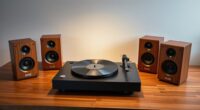
A wireless multiroom speaker system for whole home coverage means syncing audio across several rooms from one app, and the biggest tradeoff in this category is between platform ecosystems and flexible budget bundles. The Dio Node Multiroom Wi-Fi Home Speakers 5-Pack earns the best overall spot because it covers five rooms at once with dedicated Wi-Fi multiroom sync rather than patched-together Bluetooth. For buyers who want voice control and a smart-home hub in every room, the Google Nest Audio 3-Pack is the strongest alternative, while the Sonos Era 100 SL delivers the best single-speaker sound if you’d rather build a premium system one room at a time. The core tension you’ll face: multi-pack bundles spread sound widely but sound thinner per room, while premium standalone speakers sound superb but cost far more to scale. Read on for the full breakdown, including Auracast-based systems and portable options that blur the line between multiroom and party speakers.

Get the latest gadgets delivered free — and shop member deals
- Fast, free delivery on millions of items
- Access to Prime Big Deal Days deals on October 6–7
- Prime Video, Amazon Music and more included
Complete the kit



Key Takeaways
- Multi-pack bundles like the Dio Node 5-Pack win on whole-home coverage per dollar, but individual speakers in those bundles sound noticeably thinner than a single Sonos Era 100 SL.
- Auracast systems (Venucast Harmony A2 and A3, Avantree Harmony A1) are the most future-proof pick for buyers who want an open standard instead of a closed app ecosystem.
- Wi-Fi-based systems (Dio Node, Google Nest, Sonos) sync more reliably across many rooms than Bluetooth-only bundles, which start drifting or cutting out past three or four paired speakers.
- The Rocksteady Stadium bundle and Air Audio pull-apart speaker are really party and portable-surround products that support multi-room use — better for gatherings than permanent whole-home audio.
- Google Nest Audio 3-Pack is the only pick here that doubles as a full smart-home controller per room; buyers who don’t want microphones should lean toward the microphone-free Sonos Era 100 SL instead.
| Dio Node Multiroom Wi-Fi Home Speakers, 5-Pack |  | Best for Whole-Home Coverage | Pack Size: 5 speakers | Connectivity: Wi-Fi, Apple AirPlay 2 | Speaker Size: 4 inches | VIEW ON AMAZON | See Our Full Breakdown |
| Avantree Harmony 2 Multi-Room Wireless Speaker System |  | Best for TV and Low-Latency Listening | Latency: Under 30 ms | Connections: Optical, AUX, Bluetooth | Setup: No app; speakers auto-connect | VIEW ON AMAZON | See Our Full Breakdown |
| Dio Node Multiroom Wi-Fi Speakers, 3-Pack |  | Best Starter Kit for AirPlay Homes | Pack Size: 3 speakers | Connectivity: Wi-Fi, Apple AirPlay 2 | Maximum Output Power: 5 watts per speaker | VIEW ON AMAZON | See Our Full Breakdown |
| Venucast Harmony A2 Wireless Auracast Speaker System |  | Best No-Wi-Fi Expansion System | Included: 1 transmitter, 3 speakers | Connectivity: Bluetooth, Optical, AUX, Auracast | EQ Modes: Balance, Voice, Bass | VIEW ON AMAZON | See Our Full Breakdown |
| Air Audio Pull-Apart Wireless Bluetooth Speaker with Portable Surround Sound and Multi-Room Use, Black |  | Best Portable and Waterproof Pick | Output Power (Single Speaker): 24W | AirBase Frequency Response: 88 Hz – 17 kHz | AirConnect Frequency Response: 100 Hz – 17 kHz | VIEW ON AMAZON | See Our Full Breakdown |
| Rocksteady Stadium 4 Bluetooth Speakers and Subwoofer Bundle |  | Best Portable Party Setup | Included: 4 Stadium 2 speakers, 1 Stadium Subwoofer, USB-C charging cables with wall adapters, 3.5 mm aux cable | Battery life: Up to 30 hours at 50% volume | Bluetooth range: Up to 150 ft | VIEW ON AMAZON | See Our Full Breakdown |
| Venucast Harmony A3 Auracast Wireless Multi-Speaker Audio System |  | Best for Adding Your Own Speakers | Connectivity: Auracast, Bluetooth, RCA, 3.5 mm AUX, Optical | Maximum range: 328 ft (100 m) in open space | Audio output mode: Stereo | VIEW ON AMAZON | See Our Full Breakdown |
| Google Nest Audio Smart Speakers, 3-Pack |  | Best Smart Home Value | Quantity: 3 speakers | Connectivity: Wi-Fi and Bluetooth | Voice assistant: Google Assistant | VIEW ON AMAZON | See Our Full Breakdown |
| Sonos Era 100 SL Compact Microphone-Free Speaker, White |  | Best Premium Single-Room Sound | Color: White | Microphone: None (microphone-free design) | Connectivity: Wi-Fi, Bluetooth, line-in | VIEW ON AMAZON | See Our Full Breakdown |
| Avantree Harmony A1 Auracast Multi-Room Wireless Speaker System |  | Best Turnkey Background Audio Kit | Included components: 1 transmitter and 3 speakers | Wireless technology: Auracast | Wireless transmission range: Up to 100 meters; varies with environment and obstacles | VIEW ON AMAZON | See Our Full Breakdown |
| wireless multiroom speaker system whole home | Connectivity |
|---|---|
| Dio Node Multiroom Wi-Fi Home | Wi-Fi, Apple AirPlay 2 |
| Avantree Harmony 2 Multi-Room | — |
| Dio Node Multiroom Wi-Fi Speak | Wi-Fi, Apple AirPlay 2 |
| Venucast Harmony A2 Wireless A | Bluetooth, Optical, AUX, Auracast |
| Air Audio Pull-Apart Wireless | Bluetooth, USB |
| Rocksteady Stadium 4 Bluetooth | — |
| Venucast Harmony A3 Auracast W | Auracast, Bluetooth, RCA, 3.5 mm AUX, Optical |
| Google Nest Audio Smart Speake | Wi-Fi and Bluetooth |
| Sonos Era 100 SL Compact Micro | Wi-Fi, Bluetooth, line-in |
| Avantree Harmony A1 Auracast M | — |
More Details on Our Top Picks
Dio Node Multiroom Wi-Fi Home Speakers, 5-Pack
For buyers whose goal is saturating an entire house with audio, this five-pack makes the most sense — no other option in this lineup covers as many rooms out of one box. Compared with the Dio Node 3-Pack, it delivers the same AirPlay 2 workflow and shelf-mount design but spreads it across two extra zones, which is where whole-home systems either succeed or fall apart. Because these speakers ride on your home Wi-Fi network rather than Bluetooth, the sync between rooms stays tight without proximity limits, unlike the Air Audio pull-apart model. The tradeoff is philosophical: there are no microphones, no voice assistants, and no waterproofing, so this is a purist’s audio pick, not a smart-home hub like the Google Nest Audio.
Pros:- Five speakers cover most of a home in one purchase
- AirPlay 2 and Wi-Fi streaming avoids Bluetooth range limits
- No built-in microphones for privacy-focused households
- Setup is advertised at under a minute
Cons:- No voice assistant or microphone features at all
- Not water resistant, ruling out kitchens-with-splash-risk, bathrooms, and patios
Best for: Apple-centric households that want five rooms of synchronized audio from a single purchase
Not ideal for: Buyers who want voice assistant control or any outdoor/bathroom placement, since there are no microphones and no water resistance
- Pack Size:5 speakers
- Connectivity:Wi-Fi, Apple AirPlay 2
- Speaker Size:4 inches
- Mounting Type:Shelf mount
- Controls:Touch, app-based
- Enclosure Material:Metal, polycarbonate
- Signal-to-Noise Ratio:85 dB
- Water Resistance:None
Our verdict“Buy this if you want maximum room coverage in one box and already live in the Apple ecosystem; skip it if voice control matters.”
Avantree Harmony 2 Multi-Room Wireless Speaker System
Where most entries here are music-first systems, the Avantree Harmony 2 earns its spot with sub-30 ms latency, which is the difference between lip-synced dialogue and an unwatchable echo when you pipe TV audio to multiple rooms. The optical input is something the Dio Node speakers simply don’t offer, and the no-app, auto-connect setup removes the Wi-Fi configuration step that trips up systems like the Venucast’s larger sibling, the Harmony A3. This model is better suited to classrooms, offices, and homes where a TV, laptop, or phone feeds several rooms at once. The compromises are real: maximum volume won’t fill large outdoor spaces, and presenters should know it won’t take a USB or XLR microphone directly — line-level sources only.
Pros:- Under-30 ms latency keeps TV dialogue in sync
- Optical, AUX, and Bluetooth inputs cover nearly any source
- Speakers auto-connect with no app required
- Reliable synchronized playback across rooms
Cons:- Volume falls short for large or outdoor spaces
- No direct USB, XLR, or TRRS microphone support
Best for: TV viewers and presenters who need synchronized, delay-free audio across rooms from optical or AUX sources
Not ideal for: Outdoor event hosts or anyone wanting to plug in a microphone directly, due to volume and input limits
- Latency:Under 30 ms
- Connections:Optical, AUX, Bluetooth
- Setup:No app; speakers auto-connect
- Intended Use:Indoor multi-room audio
- Microphone Input:Line-level 3.5 mm TRS or RCA only
Our verdict“This is the pick when lip sync matters more than voice assistants — ideal for TV-led multiroom setups, wrong for live mic work.”
Dio Node Multiroom Wi-Fi Speakers, 3-Pack
Think of this as the entry tier of the Dio Node system — same 4-inch shelf speakers, same AirPlay 2 and Wi-Fi foundation as the 5-Pack, just sized for a smaller home or a first experiment with multiroom audio. Compared with the Avantree Harmony 2, it trades optical inputs and low-latency TV use for seamless integration with an existing Apple device household: an iPhone or Apple TV becomes the remote. The privacy-first, microphone-free design is a genuine selling point for buyers avoiding always-listening devices, and the metal-and-polycarbonate enclosures feel sturdier than typical plastic Bluetooth cubes. The honest limitation is 5 watts per speaker — fine for bedrooms, kitchens, and hallways, but it will not match the headroom of larger systems in a big living room.
Pros:- AirPlay 2 integration with iPhone, iPad, and Apple TV
- No microphones for a privacy-first setup
- Compact 4-inch shelf design fits discreetly in most rooms
- Metal and polycarbonate build quality
Cons:- 5-watt maximum output per speaker limits loudness
- No water resistance for bathrooms or covered patios
Best for: Apple users testing multiroom audio for the first time in an apartment or modest home
Not ideal for: Anyone filling large rooms or wanting bass-forward listening, given the modest 5-watt output
- Pack Size:3 speakers
- Connectivity:Wi-Fi, Apple AirPlay 2
- Maximum Output Power:5 watts per speaker
- Speaker Size:4 inches
- Control Method:App
- Power Source:Corded electric
- Dimensions:7.5 × 2.4 × 5.5 inches (D × W × H)
- Water Resistance:None
Our verdict“A sensible starter kit for Apple households wanting three rooms of synced audio without smart-speaker microphones.”
Venucast Harmony A2 Wireless Auracast Speaker System
The Harmony A2’s defining trait is that it skips Wi-Fi entirely, using Auracast to link its transmitter and three speakers — no app, no network configuration, no passwords. That makes it a better fit than the Dio Node speakers for anyone in a guest house, rental, or office where Wi-Fi access is unreliable or off-limits. It shares the plug-and-play spirit of the Avantree Harmony 2 but adds expandability: additional Harmony A2 or compatible Auracast units can join the system later, so coverage can grow room by room. The dedicated Balance, Voice, and Bass EQ modes are a practical touch for switching between music and spoken content. The catch is Bluetooth range — your phone needs to stay reasonably close to the transmitter, unlike Wi-Fi systems that follow your network throughout the house.
Pros:- No Wi-Fi, app, or network setup required
- Expandable with additional Harmony A2 or Auracast speakers
- Bluetooth, Optical, and AUX input flexibility
- Dedicated Balance, Voice, and Bass EQ modes
Cons:- Bluetooth source must stay near the transmitter for best results
- Auracast expansion limited to compatible speakers only
Best for: Renters and office managers who want multiroom audio without touching Wi-Fi settings or installing apps
Not ideal for: Listeners who roam the whole house with their phone in hand, since Bluetooth reach to the transmitter is limited
- Included:1 transmitter, 3 speakers
- Connectivity:Bluetooth, Optical, AUX, Auracast
- EQ Modes:Balance, Voice, Bass
- Setup:No Wi-Fi or app required
- Expandability:Additional Harmony A2 or Auracast-compatible speakers
Our verdict“The easiest path to app-free, router-free multiroom audio — as long as your phone stays in range of the transmitter.”
Air Audio Pull-Apart Wireless Bluetooth Speaker with Portable Surround Sound and Multi-Room Use, Black
The Air Audio is the outlier here: every other system in this roundup is a stationary, corded setup, while this one pulls apart into a true left-right stereo pair that magnetically snaps together or apart without re-pairing. Its IPX4 waterproofing makes it the only option safe for a shower or a rainy patio — something the Dio Node and Avantree systems explicitly can’t do. With 24 watts per speaker and up to five units linkable for multiroom play, it outguns the 5-watt Dio Node 3-Pack on raw output, though its AirConnect mode tops out at a 100 Hz low-end response, so bass depth trails wired, larger-driver systems. There’s also no app, which keeps things simple but rules out EQ tuning or grouped-zone control like the Venucast offers.
Pros:- True stereo separation from a pull-apart magnetic design
- IPX4 waterproofing for shower and outdoor use
- 24 watts of output per single speaker
- Links up to five speakers for multiroom audio
Cons:- Bass depth is limited by the 100 Hz–17 kHz response in AirConnect mode
- No app or software features for advanced tuning or grouping
Best for: Listeners who split time between indoor multiroom use and bathrooms, patios, or travel
Not ideal for: Audiophiles wanting deep bass or app-based zone control, given the limited low-end response and software-free design
- Output Power (Single Speaker):24W
- AirBase Frequency Response:88 Hz – 17 kHz
- AirConnect Frequency Response:100 Hz – 17 kHz
- AirConnect SPL:98 dB
- Connectivity:Bluetooth, USB
- Multi-Room Support:Up to 5 linked speakers
Our verdict“The only pick here you can take in the shower — choose it for portability and waterproofing over fidelity.”
Rocksteady Stadium 4 Bluetooth Speakers and Subwoofer Bundle
Most multiroom systems in this roundup are anchored to wall power and Wi-Fi, but this bundle takes a different approach: four battery-powered speakers plus a wireless subwoofer you can carry to the patio, garage, or backyard. That portability is the entire appeal here, and nothing else on this list — not the Google Nest Audio 3-Pack nor the Sonos Era 100 SL — can follow the party outdoors without extension cords. Channel assignment lets each speaker play a defined role rather than just repeating the same mono stream. The tradeoff is real, though: this is Bluetooth-based, so there’s no app-based whole-home zoning, no voice assistant, and the headline 30-hour battery figure assumes 50% volume, which drops fast once you push the subwoofer into action.
Pros:- Four portable speakers plus a wireless subwoofer in one bundle
- Speaker channel assignment enables true multi-speaker arrangements rather than simple mirroring
- Up to 30 hours of playback per charge and a 150 ft Bluetooth range
- Water resistant build for patio, garage, and backyard use
Cons:- The 30-hour battery claim only holds at 50% volume — expect far less at party levels
- No stated IP water-resistance rating, so durability outdoors is a question mark
- No app, no Wi-Fi streaming, and no voice control compared with smart-speaker rivals
Best for: Entertainers and renters who want room-to-room or indoor-outdoor sound without wiring or a Wi-Fi ecosystem
Not ideal for: Buyers who want app-controlled whole-home audio zones and voice assistant integration — this is a Bluetooth party kit, not a smart home system
- Included:4 Stadium 2 speakers, 1 Stadium Subwoofer, USB-C charging cables with wall adapters, 3.5 mm aux cable
- Battery life:Up to 30 hours at 50% volume
- Bluetooth range:Up to 150 ft
- Subwoofer drivers:5.11-inch front-facing bass driver; 6.7 x 4.5-inch rear-facing bass drum
- Audio inputs:Bluetooth, 3.5 mm aux
- Water resistance:Water resistant (no IP rating stated)
- Compatibility:iOS, Android, Windows, macOS
Our verdict“This is the pick if your multiroom needs move around with you — it trades smart-home polish for grab-and-go flexibility that fixed systems can’t match.”
Venucast Harmony A3 Auracast Wireless Multi-Speaker Audio System
Where the Avantree Harmony A1 bundles its own speakers, the Venucast Harmony A3 flips the formula: it’s a transmitter-and-receiver system that syncs powered speakers you already own. If you have bookshelf speakers, studio monitors, or a soundbar with an aux or optical input, this turns them into a synchronized multiroom array — a genuine cost saver if good speakers are already sitting on your shelves. The 328 ft open-space range beats typical Bluetooth, and the transmitter accepts optical, RCA, aux, and Bluetooth sources, so a TV can feed every room without re-pairing. Two caveats shape the buying decision: passive speakers need their own amplification, and walls and furniture will eat into that range in a real house, just as they do with the Harmony A1.
Pros:- Works with powered speakers you already own instead of forcing a hardware ecosystem
- Auracast broadcast syncs multiple rooms from one source without repeated pairing
- Optical, RCA, aux, and Bluetooth inputs accommodate TVs, laptops, and phones
- 328 ft (100 m) range in open space exceeds standard Bluetooth reach
Cons:- Not compatible with passive speakers, which excludes a large slice of home audio gear
- Real-world range shrinks in homes with walls and obstructions
- Push-button control only — no app or voice control layer
Best for: Audio enthusiasts who already own powered speakers and want to unify them into one synchronized whole-home system
Not ideal for: Anyone with passive, non-amplified speakers — this system has no power amplification for them
- Connectivity:Auracast, Bluetooth, RCA, 3.5 mm AUX, Optical
- Maximum range:328 ft (100 m) in open space
- Audio output mode:Stereo
- Control method:Push button
- Weight:160 g
- Power:3 included lithium-ion batteries
- Speaker compatibility:Powered speakers only; passive not supported
Our verdict“If you’ve already invested in powered speakers, this is the most economical path to true multiroom sync — just don’t expect it to drive unamplified gear.”
Google Nest Audio Smart Speakers, 3-Pack
For buyers who want multiroom audio to double as a whole-home control layer, this three-pack is the pragmatic choice. Each speaker ties into Google Assistant, so the same hardware that plays music in the kitchen also answers questions, runs timers, and commands smart lights and thermostats. Compared with the Sonos Era 100 SL, the individual sound quality is more modest — these are compact assistants first, music speakers second — but you get three rooms covered for the price of roughly one premium unit, plus stereo pairing when two speakers share a space. Compared with the Rocksteady Stadium bundle, setup is far simpler: plug in, connect to Wi-Fi, and group rooms in the Google Home app. The catch is ecosystem lock-in — smart home features depend on compatible devices, and anyone outside the Google/Chromecast world gives up most of the advantages.
Pros:- Three rooms covered in one purchase at a lower per-room cost than premium rivals
- Two speakers can stereo-pair for noticeably better sound in a single room
- Google Assistant handles music, timers, information, and smart home devices by voice
- Works across Android, iOS, and Chromecast-enabled apps over Wi-Fi and Bluetooth
Cons:- Smart home features require compatible devices and a Google account setup
- Single-speaker sound can’t match the bass and clarity of the Sonos Era 100 SL
- Deeper features favor Android users; iPhone owners get a reduced experience
Best for: Google-centric households that want affordable three-room coverage with voice control built in
Not ideal for: Audiophiles and anyone outside the Google ecosystem — single-speaker fidelity trails Sonos, and Apple-first homes lose most of the smart features
- Quantity:3 speakers
- Connectivity:Wi-Fi and Bluetooth
- Voice assistant:Google Assistant
- Audio features:Multi-room playback and stereo pairing
- Smart home compatibility:Thousands of compatible devices
- Platform support:Android, iOS, Chromecast-enabled apps
Our verdict“This makes the most sense for Google households prioritizing broad coverage and voice control over audiophile sound.”
Sonos Era 100 SL Compact Microphone-Free Speaker, White
This is the sound-quality play of the roundup. With dual angled tweeters and a dedicated midwoofer, the Era 100 SL delivers genuine stereo imaging and bass depth that compact smart speakers — the Nest Audio included — simply can’t approach from a single cabinet. The line-in port sets it apart from every other option here: it’s the only pick that accepts a turntable directly, and Trueplay room tuning adjusts output to your space’s acoustics. Notably, the SL designation means no microphone at all, which is either the feature or the flaw depending on your perspective — there’s no voice assistant, but there’s also nothing to mute or disable. Building a whole home from these gets expensive fast compared with multi-packs like the Dio Node 5-Pack, so most buyers will start with one or two rooms.
Pros:- Dual angled tweeters plus a midwoofer produce real stereo separation and deep bass from one cabinet
- Line-in accepts a turntable or other sources directly — unique in this lineup
- Trueplay tuning adapts the sound to each room’s acoustics
- Wi-Fi, Bluetooth, and line-in cover virtually every streaming or wired scenario
Cons:- No microphone means no voice assistant, unlike the Nest Audio
- Per-speaker cost makes whole-home coverage far pricier than multi-pack systems
- One speaker covers one room — a full home requires buying several units
Best for: Listeners who prioritize single-room fidelity, vinyl playback, and privacy over budget multi-room coverage
Not ideal for: Buyers seeking affordable whole-home coverage — filling five rooms at this price point far exceeds multi-pack alternatives, and voice control is absent
- Color:White
- Microphone:None (microphone-free design)
- Connectivity:Wi-Fi, Bluetooth, line-in
- Drivers:Dual angled tweeters and midwoofer
- Room tuning:Trueplay via Sonos app
- Multiroom support:Sonos ecosystem grouping
Our verdict“Buy this for the rooms where sound quality matters most and fill secondary spaces with cheaper multi-packs — it’s the fidelity anchor of this roundup.”
Avantree Harmony A1 Auracast Multi-Room Wireless Speaker System
The Harmony A1 answers the question most systems here dodge: what if you want everything in one box? Unlike the Venucast Harmony A3, which assumes you already own speakers, this bundle ships a transmitter and three matching speakers ready to place in separate rooms — no mixing hardware, no guesswork about compatibility. That makes it a natural fit for background music in shops, salons, restaurants, and small venues, where consistent ambient sound matters more than audiophile dynamics. Inputs span Bluetooth, optical, and aux, so the source can be a TV, a tablet, or a house music player. Compared with the larger Avantree Harmony 2, this is the entry tier. Its limits: Bluetooth streaming works best with the source near the transmitter, and the 100 m range claim shrinks with every wall — factor in your floor plan before committing.
Pros:- Transmitter plus three speakers included — no separate speaker purchases needed
- Expandable via additional Harmony A1 speakers and Auracast-enabled devices
- Bluetooth, optical, and AUX inputs handle TVs, phones, and media players
- Simple setup compared with component-based systems like the Venucast A3
Cons:- Bluetooth performs best when the source device stays close to the transmitter
- Advertised 100 m range varies with walls and obstacles in real homes
- Sound tuned for background coverage rather than detailed music listening
Best for: Small business owners and homeowners who want a complete, matching three-room speaker set straight out of the box
Not ideal for: Listeners who want hi-fi music quality or voice control — these are ambient-audio speakers, not critical-listening units or smart assistants
- Included components:1 transmitter and 3 speakers
- Wireless technology:Auracast
- Wireless transmission range:Up to 100 meters; varies with environment and obstacles
- Inputs:Bluetooth, optical, AUX
- Expandability:Supports additional Harmony A1 speakers and Auracast-enabled devices
- Best use case:Homes, stores, restaurants, and small venues
Our verdict“Choose this if you want plug-in-and-go multiroom audio without sourcing speakers separately — it’s the easiest complete package for ambient whole-space sound.”

How We Picked
I ranked these systems on four factors that actually determine satisfaction with whole-home audio: sync reliability across multiple rooms, sound quality per speaker, scalability (how easily and affordably the system grows), and control experience (app design, voice options, and source support like Spotify Connect or AirPlay). Wi-Fi-based platforms scored higher than Bluetooth-only setups because whole-home use exposes Bluetooth’s range and pairing limits quickly. I also weighed privacy features, since microphone-free options matter to a real segment of buyers, and whether each product locks you into a proprietary app or supports the open Auracast standard.
The ranking logic follows a simple buyer question: how many rooms do you get covered, how well, for what commitment? Multi-pack Wi-Fi bundles rank highest for the literal whole-home use case, smart-speaker packs rank next for households that want voice control everywhere, and party-oriented bundles rank lower because multi-room support is a secondary feature rather than their core design goal.
| wireless multiroom speaker system whole home | Connectivity |
|---|---|
| Dio Node Multiroom Wi-Fi Home | Wi-Fi, Apple AirPlay 2 |
| Avantree Harmony 2 Multi-Room | — |
| Dio Node Multiroom Wi-Fi Speak | Wi-Fi, Apple AirPlay 2 |
| Venucast Harmony A2 Wireless A | Bluetooth, Optical, AUX, Auracast |
| Air Audio Pull-Apart Wireless | Bluetooth, USB |
| Rocksteady Stadium 4 Bluetooth | — |
| Venucast Harmony A3 Auracast W | Auracast, Bluetooth, RCA, 3.5 mm AUX, Optical |
| Google Nest Audio Smart Speake | Wi-Fi and Bluetooth |
| Sonos Era 100 SL Compact Micro | Wi-Fi, Bluetooth, line-in |
| Avantree Harmony A1 Auracast M | — |
Factors to Consider When Choosing Wireless Multiroom Speaker System Whole Home
Before committing to a system, it helps to understand the structural choices that shape whole-home audio — mistakes here are expensive to undo because speakers from different platforms rarely work together.Wi-Fi, Bluetooth, or Auracast — Pick Your Connection Wisely
The connection technology is the single biggest decision, and most buyers get it wrong by defaulting to Bluetooth. Bluetooth-only systems work fine for two or three speakers in close proximity, but whole-home coverage across floors and walls exposes range limits and introduces lip-sync drift between rooms. Wi-Fi systems stream independently per speaker through your router, which is why platforms like Dio Node, Google Nest, and Sonos hold sync reliably across an entire house. Auracast is the newest option: it broadcasts audio over Bluetooth LE to unlimited receivers, making it the most flexible long-term bet, though the ecosystem of compatible speakers is still growing. My advice is to choose based on house size — apartments can get away with Bluetooth bundles, but anything larger than roughly 1,500 square feet demands Wi-Fi or Auracast.
Coverage Math: Rooms Covered Versus Sound Per Room
Every multiroom purchase is a tradeoff between speaker count and speaker quality, and bundles make this tension explicit. A five-pack covering five rooms means each speaker is necessarily small — fine for background music and podcasts, underwhelming for a living-room listening session. Conversely, buying two premium speakers and expanding later gives you great sound where it counts but leaves half the house silent for months. The most common mistake I see is buying maximum coverage immediately and then being stuck with thin sound in the room where you actually listen most. A smarter approach: prioritize the two or three rooms where music matters, buy quality there, and fill bedrooms and hallways with budget units from the same platform later.
Ecosystem Lock-In and Long-Term Expandability
Multiroom speakers are not standalone purchases — they’re the first bricks in a platform, and that platform decision follows you for years. Proprietary systems like Sonos offer polished apps and broad streaming-service support but only play nicely with their own hardware. Google Nest ties you into Google’s smart home stack, which is a feature if you already use Google Assistant and a burden if you don’t. Auracast-based systems like the Venucast and Avantree options invert this: any future Auracast speaker from any brand can join the party, which protects your investment as the standard spreads. Before buying, check whether the platform supports the streaming services you actually use — nothing is more frustrating than a system that can’t reach your library.
Microphones, Privacy, and Smart Features
Voice control is genuinely convenient for whole-home audio — walking between rooms saying “play jazz in the kitchen” is the experience multiroom systems were built for. But always-listening microphones aren’t for everyone, and the Sonos Era 100 SL exists precisely for that buyer. Think through who uses the house: households with privacy concerns, shared spaces, or home offices with sensitive conversations should lean microphone-free or pick speakers with hardware mute switches. Also check whether voice assistants are even supported in your region, since Assistant and Alexa features vary by country. A speaker without working voice features is just a speaker with an unused monthly cost baked into its price.
Room Size, Placement, and Stereo Pairing
Matching speaker size to room size is where multi-pack bundles quietly disappoint or delight. Small satellite speakers like those in the Dio Node bundles saturate a bedroom or kitchen beautifully but get lost in open-plan living areas. Check whether identical speakers can be stereo-paired — two units acting as left and right channels transform a modest system into a proper listening setup in your main room. Subwoofers, as in the Rocksteady Stadium bundle, compensate for small drivers but demand placement thought since bass carries through walls and floors. Finally, consider power outlets: Wi-Fi multiroom speakers generally need permanent power, so map outlet locations before deciding how many rooms you can realistically cover.
Frequently Asked Questions
Can I mix brands in one whole-home multiroom system?
Mostly no, and this is the category’s biggest gotcha. Traditional multiroom platforms like Sonos and Google Cast only sync speakers within their own ecosystem, so a Sonos speaker cannot join a group with a Google Nest. Your realistic options are buying within one platform, or choosing Auracast-based systems like the Venucast Harmony A2 or Avantree Harmony A1, which accept audio from any Auracast-compatible device regardless of brand. Bluetooth-only bundles pair within their own family but ignore everything else. The practical rule: decide your platform before your first speaker purchase, because every subsequent speaker has to live inside it.
How many speakers do I actually need for a whole-home setup?
Count the rooms where you genuinely want music, not every room in the house — most households land on three to five. A 3-pack like the Dio Node or Google Nest bundle typically covers a living room, kitchen, and bedroom, which handles 90% of listening scenarios. Five-room coverage makes sense for larger or multi-floor homes, but hallway and dining-room speakers often end up silent. If your budget forces a choice, put better speakers in the two rooms where you actively listen and cheaper units in pass-through spaces. You can always add a speaker later; you can’t easily unbuy coverage you never use.
Is Auracast worth choosing over established platforms like Sonos or Google?
It depends on how you weigh future-proofing against polish today. Auracast is an open broadcast standard, so speakers from different manufacturers can join the same audio stream — a genuine advantage over closed ecosystems, and the Venucast A3 shows the approach scales well. The tradeoff is maturity: apps, streaming-service integration, and features like per-room volume grouping are more refined on Sonos and Google today. Buyers who expect to expand gradually over five-plus years benefit most from Auracast’s openness, while buyers who want everything to work flawlessly right now are safer with an established platform. Neither choice is wrong; they optimize for different timelines.
Do multiroom systems drain my Wi-Fi or require a special router?
Wi-Fi multiroom audio uses surprisingly little bandwidth — a lossy stream is comparable to a video call — so a healthy modern router handles five or more speakers without strain. What actually causes dropouts is Wi-Fi coverage, not capacity: speakers at the edge of your router’s range will stutter no matter how fast your internet plan is. If you have dead zones, a mesh Wi-Fi system solves the problem before any speaker upgrade will. Bluetooth-based bundles sidestep your router entirely but then face their own range ceilings, which is why they suit apartments better than multi-floor homes. Either way, test speaker placement in the farthest room before mounting anything permanently.
Can I use these systems for TV and movie audio, not just music?
Some, but with caveats worth understanding. Wi-Fi multiroom systems introduce slight latency, which is fine for music but creates lip-sync problems if you route TV dialogue through distant speakers. The Rocksteady Stadium bundle is the closest thing here to a home-theater solution, with its subwoofer and surround-capable design, though it’s optimized for gatherings rather than quiet movie nights. Google Nest speakers can group with Chromecast-connected TVs within Google’s ecosystem for acceptable sync. For serious TV use, a dedicated soundbar remains the better tool — treat multiroom speakers as a music-first system that occasionally helps with casual viewing.
Conclusion
Mapping these picks to buyer types closes the decision cleanly. For best overall whole-home coverage, the Dio Node Multiroom Wi-Fi 5-Pack delivers the most rooms with reliable Wi-Fi sync per dollar spent, with its 3-Pack sibling as the right-sized alternative for smaller homes. The Google Nest Audio 3-Pack is my pick for best value for smart-home households — it covers three rooms with full voice control and doubles as a home automation hub, something no other bundle here does. For best premium single-speaker sound, the Sonos Era 100 SL stands alone, offering the richest audio and microphone-free privacy for buyers building a system room by room. Beginners should start with the Avantree Harmony A1 or the Venucast Harmony A2 — Auracast systems are simple to set up and won’t lock you into an ecosystem you might outgrow. Finally, for portable and party-focused needs, the Air Audio pull-apart speaker and Rocksteady Stadium bundle trade permanent whole-home installation for flexibility and big gathering sound. Choose based on how many rooms you’re covering today and how many you’ll want tomorrow — the platform you pick now is the one you’ll live with.
Halloween Picks
halloween
As an affiliate, we earn on qualifying purchases.