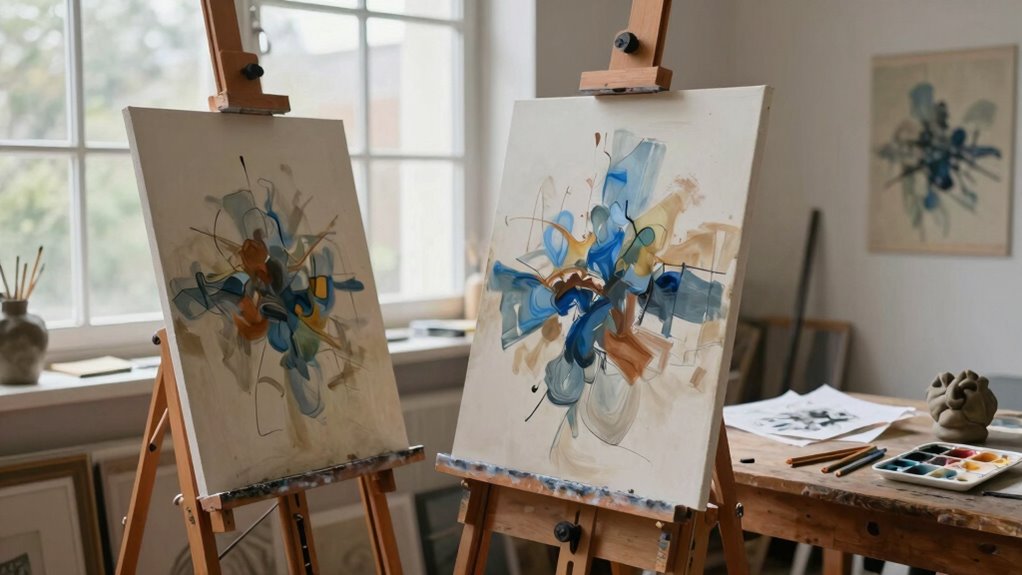

Art-making gives you a safe space to process grief without the need for quick resolution. It allows you to express feelings that are hard to put into words and lets emotions unfold naturally. You can work with colors, shapes, or textures that resonate with your mood, helping you untangle complex feelings at your own pace. By embracing this flexible process, you’ll discover how creative expression supports healing without forcing closure—if you want to explore further.
Open a free Amazon Business account
Business pricing, bulk buying and tax-exempt orders.
As an affiliate, we earn on qualifying purchases.
Key Takeaways
- Art provides a non-judgmental space for honest emotional expression without the need for immediate resolution.
- Creative processes allow feelings to unfold naturally, supporting healing at an individual pace.
- Engaging in art helps untangle complex emotions, making them more manageable without forcing closure.
- Artistic expression acts as a gentle, ongoing dialogue with oneself, promoting acceptance and understanding.
- Making art during grief encourages resilience and self-compassion without emphasizing final outcomes.

When you’re grieving, creating art can become a powerful way to process your emotions and find moments of solace. Art provides a safe space to express feelings that words often can’t fully capture. Instead of forcing yourself to reach closure, you allow your creative process to unfold naturally, honoring your unique experience of loss. This gentle approach can help you cultivate emotional resilience, enabling you to cope more effectively with ongoing feelings of grief. This act of emotional expression becomes a vital part of your journey through grief, helping you release pent-up pain, confusion, or anger in a constructive way. You might find that your artwork doesn’t need to be perfect or meaningful to anyone else; it simply needs to reflect what you’re feeling in that moment.
Creating art during grief helps release emotions and offers a safe space for healing and self-expression.
Through creative healing, you give yourself permission to explore your emotions without judgment. Making art during grief isn’t about producing a finished masterpiece; it’s about engaging with your inner world honestly. As you pick up a brush, sculpt, or draw, you’re doing more than creating images—you’re communicating with yourself on a deeper level. This process can help you untangle complex feelings, making them more manageable and less overwhelming. You might notice that certain colors, shapes, or textures resonate with your mood, offering a visual language that complements your internal state. Over time, this ongoing dialogue with your art can foster a sense of understanding and acceptance.
One of the most important aspects of using art for grief is that it doesn’t require a timeline or specific outcome. You don’t have to rush toward a solution or resolution. Instead, you can let your art-making be a steady, ongoing practice that adapts to your needs. Sometimes, creating can feel cathartic, providing release and relief; other times, it may simply serve as a quiet reflection. Either way, it’s a way to honor your feelings without feeling pressured to “move on” or “get over it.” You’re allowed to sit with your grief, acknowledge it, and express it in ways that are meaningful to you. Engaging in emotional expression can also promote resilience by helping you process complex feelings gradually and with patience.
Ultimately, art becomes a gentle companion on your path, supporting emotional expression and creative healing without insisting that you arrive at closure. You’re not obligated to fix or resolve your grief through your artwork—its purpose is to help you navigate your feelings at your own pace. Engaging in creative expression can be a safe and accessible way to process your emotions during difficult times. This approach empowers you to embrace your emotional landscape, fostering resilience and self-compassion as you move through your healing process. Recognizing that emotional processing can happen gradually allows you to be patient and gentle with yourself as you work through your grief.
As an affiliate, we earn on qualifying purchases.
Frequently Asked Questions
Can Art-Making Replace Traditional Grief Therapy?
Art-making can’t fully replace traditional grief therapy, but it offers valuable support through emotional expression and creative exploration. You can process feelings, gain insights, and find comfort without needing clinical intervention. Engaging in art allows you to explore your grief at your own pace, making space for healing. While it complements therapy, it’s essential to reflect on professional help for deeper emotional challenges or complex grief.
Is Prior Art Experience Necessary to Benefit From Grief Art?
No, prior art experience isn’t necessary to benefit from grief art. You can use personal expression and creative exploration to process your emotions at your own pace. Art-making offers a safe space to explore feelings, regardless of skill level. It’s about expressing what you’re going through, not creating perfect artwork. This process helps you connect with your grief, find relief, and gain a new perspective without needing previous experience.
How Long Should Someone Engage in Grief Art Activities?
Like a river flowing steadily, your engagement in grief art depends on your emotional readiness and timing considerations. You should continue as long as it feels helpful, not forced. There’s no fixed duration—some find relief after a few sessions, others need ongoing expression. Trust your instincts, and give yourself permission to pause or extend your art-making whenever you feel it’s aiding your healing process.
Are There Specific Art Mediums Better for Processing Grief?
You might find that expressive techniques like painting, journaling, or sculpting work best for processing grief, as they allow deep emotional release. Material choices also matter—soft pastels or textured clay can evoke comfort, while bold colors or rough textures might express intense feelings. Trust your instincts and experiment with different mediums to discover what helps you process grief most authentically and gently, without forcing closure.
Can Children or Adolescents Use Art to Cope With Loss?
You see a young girl sketching her feelings after losing her pet—her art becomes a safe harbor, offering expressive freedom and emotional expression. Children and adolescents can definitely use art to cope with loss, providing a non-verbal way to process complex feelings. This creative outlet helps them explore grief at their own pace, fostering healing without forcing closure, much like a gentle tide that gradually recedes yet leaves a lasting imprint.
As an affiliate, we earn on qualifying purchases.
Conclusion
Through art-making, you gently tend to the quiet, unspoken garden of your grief, allowing each stroke or shape to sway like softly whispering leaves. Instead of forcing the season to change, you nurture the ongoing dance of remembrance and healing, letting your emotions flow like a gentle stream. In this delicate process, you discover that sometimes, the most profound peace comes not from closure, but from learning to live with the tender, ever-blooming ache.
As an affiliate, we earn on qualifying purchases.
As an affiliate, we earn on qualifying purchases.
NFL season / tailgating Picks
team gear
As an affiliate, we earn on qualifying purchases.