
The new relationship between luxury and sustainability transforms designs into meaningful expressions of value. You’ll find eco-friendly materials, like reclaimed wood and recycled metals, used to create stunning, durable pieces. Ethical sourcing guarantees transparency, supporting communities and reducing environmental impact. This shift emphasizes authenticity and social responsibility, making luxury about purpose and integrity. If you want to discover how this movement is reshaping elegance with consciousness, keep exploring more.
Key Takeaways
- Luxury design now integrates eco-friendly materials and ethical sourcing to promote sustainability without compromising elegance.
- Consumers increasingly value authenticity and purpose, shifting luxury towards responsible and environmentally conscious choices.
- Ethical procurement supports fair wages, traditional craftsmanship, and reduces environmental impacts in the supply chain.
- Sustainable luxury emphasizes durability and timelessness, redefining opulence through mindful consumption.
- Industry standards are evolving to prioritize environmental and social responsibility alongside aesthetic appeal.
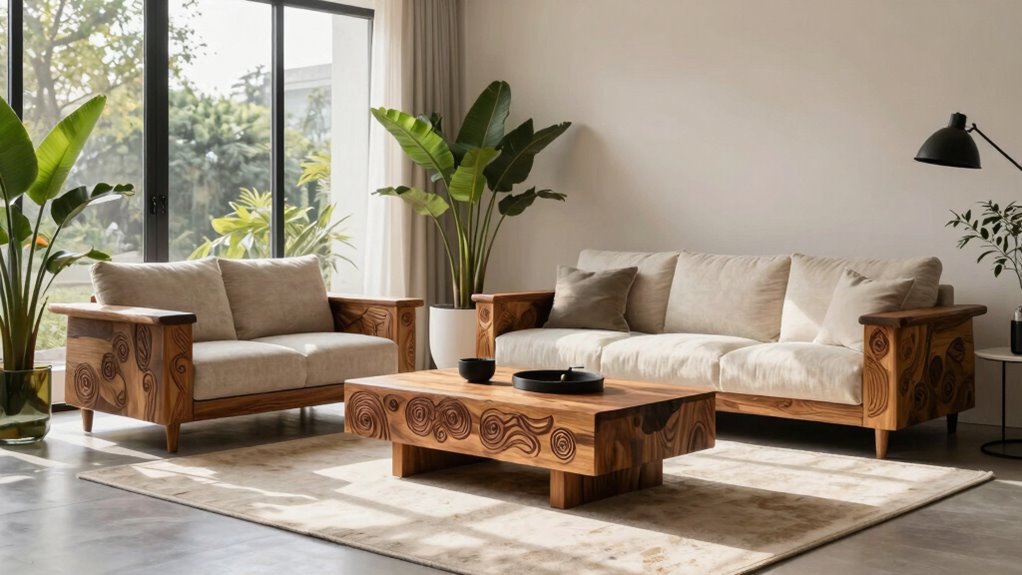
Have you ever wondered how luxury design can embrace sustainability without sacrificing elegance? It’s a question many are asking as the industry shifts toward more responsible practices. The good news is that luxury doesn’t have to come at the expense of environmental or social values. Instead, it’s evolving to incorporate eco-friendly materials and ethical sourcing, creating a new standard that combines sophistication with responsibility.
Luxury design now seamlessly blends elegance with sustainability through eco-friendly materials and ethical sourcing.
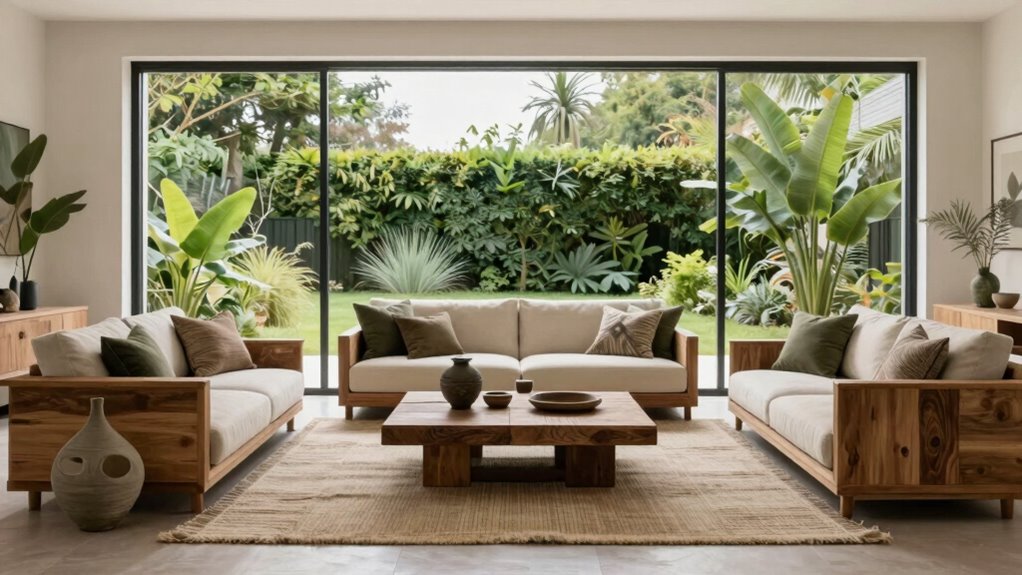
When you choose eco-friendly materials, you’re opting for high-quality, sustainable options that reduce environmental impact. Think renewable resources like bamboo, reclaimed wood, or recycled metals that are crafted into stunning pieces. These materials are not only beautiful but also promote longevity, ensuring your design choices stand the test of time. Such sustainable options challenge the misconception that luxury must be synonymous with excess or waste. Instead, they embody refinement through mindful consumption, where every element is thoughtfully selected for its minimal ecological footprint. Incorporating sustainable materials can also inspire innovative design approaches that elevate the aesthetic while supporting environmental goals.
Ethical sourcing plays a crucial role in this new relationship between luxury and sustainability. It’s about knowing where your materials come from and ensuring they’re obtained responsibly. You’re supporting artisans, farmers, and workers who are paid fair wages and work under safe conditions. Brands committed to ethical sourcing often partner directly with local communities, helping preserve traditional craftsmanship while reducing the environmental impact of transportation and manufacturing. When you invest in products with transparent supply chains, you’re not just acquiring luxury items; you’re also fostering positive social change. Embracing biodiversity in sourcing practices ensures the preservation of ecosystems and the diversity of life involved in production processes.
This integration of eco-friendly materials and ethical sourcing elevates the concept of luxury, making it more meaningful. It shifts the focus from superficial opulence to authenticity and purpose. As a consumer, you’re empowered to make choices that reflect your values. Whether it’s selecting furniture made from reclaimed wood or textiles sourced from fair-trade producers, your decisions influence the industry to prioritize sustainability alongside elegance.
Designers and brands are increasingly embracing this approach, blending innovation with tradition to create timeless pieces that respect both people and the planet. They’re redefining what luxury means in a contemporary context—more than just aesthetics, it’s about integrity and impact. In this way, you get to enjoy beauty and exclusivity without guilt, knowing your choices contribute to a more sustainable future. Ultimately, the marriage of eco-friendly materials and ethical sourcing in luxury design proves that elegance doesn’t have to be at odds with environmental and social responsibility; instead, it can be a reflection of your commitment to a better world.

Alaterre Furniture Modesto 48-Inch Reclaimed Wood Coffee Table, Rustic Natural Pine Finish with Metal Strap Legs, Powder-Coated Steel Base, Protective Felt Pads, Ideal for Living Room and Accent Decor
- Crafted for Durability: Solid wood top with metal strap and steel legs
- Rustic Natural Finish: Emulates reclaimed wood with knots and grains
- Spacious Surface and Shelf: Large top with lower storage shelf
As an affiliate, we earn on qualifying purchases.
As an affiliate, we earn on qualifying purchases.
Frequently Asked Questions
How Do Luxury Brands Verify Sustainable Sourcing Claims?
You verify luxury brands’ sustainable sourcing claims by checking their supply chain transparency and guaranteeing they uphold ethical labor practices. Ask for detailed reports or third-party certifications like Fair Trade or FSC, which confirm responsible sourcing. You can also research the brand’s commitment to these standards on their website. By doing so, you ensure they genuinely prioritize sustainability, from raw materials to final production, aligning with your values.
What Are the Cost Implications of Sustainable Luxury Design?
Like a modern David facing Goliath, you’ll find sustainable luxury design involves higher costs. Eco-conscious craftsmanship and ethical material sourcing demand premium wages, transparent supply chains, and quality materials, which increase production expenses. While initial investments are steeper, they foster brand loyalty and long-term sustainability. Ultimately, embracing these practices may elevate your brand’s value and appeal, proving that true luxury now aligns with responsibility and environmental stewardship.
How Do Consumers Perceive Eco-Friendly Luxury Products?
You see that consumers increasingly perceive eco-friendly luxury products positively, especially when brands emphasize eco-conscious branding and transparency. With rising consumer awareness, people value sustainability and are willing to pay a premium for products aligned with their eco-values. You notice that clear communication about sustainable sourcing and ethical practices strengthens this perception, making eco-friendly luxury items more desirable. Ultimately, your customers view these products as a reflection of their commitment to a more sustainable lifestyle.
Are There Certifications That Validate Sustainable Luxury Designs?
Yes, there are certifications that validate sustainable luxury designs. For example, the Global Organic Textile Standard (GOTS) and Fair Trade labels support ethical craftsmanship and eco-friendly practices. Notably, 70% of consumers now prefer brands with genuine sustainability credentials. These certifications drive luxury innovation by ensuring products meet strict environmental and ethical standards, helping you confidently choose brands committed to genuine sustainability and ethical craftsmanship.
How Can Small Designers Incorporate Sustainability Into Luxury?
You can incorporate sustainability into luxury by prioritizing sustainable craftsmanship and ethical sourcing. Focus on using eco-friendly materials and working with artisans who follow ethical practices. Emphasize craftsmanship that respects traditional techniques and minimizes waste. Transparent sourcing builds trust with your clients. Small designers have the flexibility to innovate and personalize, making sustainability a core part of your brand identity. This approach not only elevates your luxury appeal but also supports environmental and social responsibility.

Anniversary Sundial Gift for 15th Crystal Wedding Anniversary in 2026 – Recycled Metal Home Decor Or Garden Present Idea – Handmade in UK for Him, Her Parents Or Couples 15 Year Celebration
- Anniversary Years: 2011-2026 Crystal Anniversary
- Special Occasion: Celebrates 15th Wedding Anniversary
- Material: Recycled Aluminum for Durability
As an affiliate, we earn on qualifying purchases.
As an affiliate, we earn on qualifying purchases.
Conclusion
As you embrace this new era, remember that luxury and sustainability aren’t at odds—they’re two sides of the same coin. By choosing mindful design, you not only elevate your space but also contribute to a better world. It’s clear that the tides are turning, and those who adapt will lead the way. After all, the proof of the pudding is in the eating—sustainable luxury is here to stay, and it’s worth every effort.

Stories of Fashion, Textiles, and Place: Evolving Sustainable Supply Chains
As an affiliate, we earn on qualifying purchases.
As an affiliate, we earn on qualifying purchases.

The New Luxury: Individuality, quality and sustainability in interior design
As an affiliate, we earn on qualifying purchases.
As an affiliate, we earn on qualifying purchases.