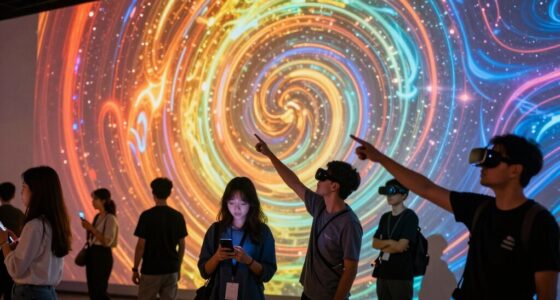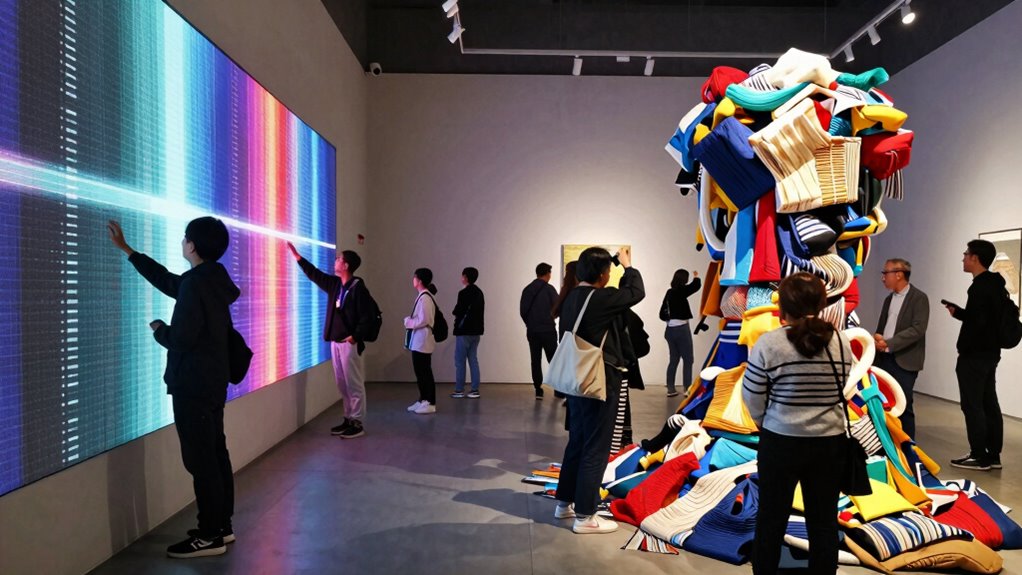

Interactive art invites you to respond within a set framework, often triggering predefined responses that support the artist’s vision. Truly participatory art, on the other hand, involves you actively shaping and co-creating the artwork itself, transforming you into a collaborative partner. This shift gives you more control and ownership over the final piece. To understand these differences better and see how each form engages you uniquely, keep exploring the distinctions further.
Key Takeaways
- Interactive art involves responding within a predefined framework, while participatory art encourages active co-creation of the artwork.
- Participatory art shifts artistic control to the audience, making them active collaborators, unlike the creator-centered focus in interactive art.
- Interactive art maintains clear boundaries between artist’s intent and audience response, whereas participatory art involves shared ownership and unpredictable outcomes.
- The primary difference lies in control: interactive art responds to viewers, while participatory art is shaped by collective contribution.
- Participatory art fosters community and collective creativity, emphasizing shared responsibility, unlike the more individual response focus of interactive art.
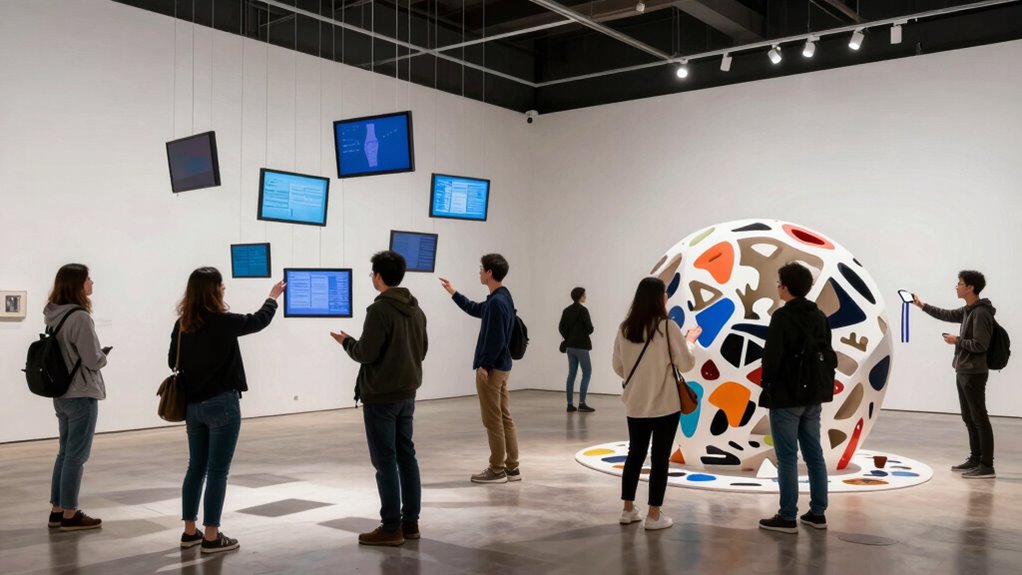
While both interactive and participatory art invite audiences to engage, they differ fundamentally in scope and intent. As you explore these art forms, you’ll notice that interactive art primarily seeks to foster audience engagement through a designed experience. It often involves viewers manipulating or responding to the artwork in some way, but the artistic intention remains largely centered on the creator’s vision. In this scenario, your participation might be limited to pressing buttons, moving through a digital installation, or activating certain elements that trigger predefined responses. The goal is to create an engaging experience that blurs the line between observer and participant, yet the artist controls much of the interaction’s flow and meaning.
In contrast, truly participatory art encourages you to become an active co-creator in the artistic process. Here, audience engagement isn’t just about responding to an artwork but about contributing to its development or outcome. You’re invited to shape the piece through your actions, ideas, or presence, which means the artistic intention shifts from a singular vision to a collective endeavor. The artist’s role transforms from a director to a facilitator, aiming to dissolve traditional boundaries between creator and audience. As you participate, you help generate the artwork itself, making each experience unique and often unpredictable. This form of art emphasizes the democratic nature of creative expression, where your involvement is essential to the work’s meaning and existence. Recognizing the shared ownership in participatory art can deepen your understanding of its emphasis on collective creativity.
Understanding this distinction helps you appreciate the depth of truly participatory art. It’s not just about engaging with a piece but about becoming part of a living, evolving project. Your actions influence the outcome, and your voice may be as important as the artist’s original concept. This level of involvement often fosters a sense of community and shared ownership, creating a more meaningful connection to the art. Meanwhile, interactive art, while engaging, tends to maintain a clearer boundary between the artist’s intentions and your role as an audience member. It’s designed to be accessible and engaging but doesn’t necessarily require or allow your input to shape the final form.
In the end, the key difference lies in how much control you have and how central your participation is to the artwork’s core. Interactive art invites you in to experience and respond within a set framework, whereas participatory art invites you to help create and redefine the piece itself. Both forms deepen your engagement with art, but understanding their fundamental differences enhances your appreciation of their unique ways of involving audiences. Recognizing the democratic nature of participatory art can deepen your understanding of its emphasis on shared creative ownership.
As an affiliate, we earn on qualifying purchases.
Frequently Asked Questions
How Do Artists Determine the Level of Participation?
You determine the level of participation by aligning it with your artistic intent and understanding your audience’s motivation. If you want viewers to engage actively, create opportunities that invite input or collaboration. For more passive involvement, design experiences that encourage observation or reflection. Consider what message you want to convey and how much influence you want your audience to have, ensuring the participation level fits your creative goals.
Can Participatory Art Exist Without Technology?
They say, “Where there’s a will, there’s a way,” and yes, participatory art can thrive without technology. You can engage audiences through physical actions, storytelling, or shared experiences that influence the artwork directly. Digital interaction isn’t always necessary; what matters is the audience’s influence. By creating spaces for genuine participation, you foster connections and collective creativity that transcend technological boundaries.
What Are the Ethical Considerations in Participatory Art?
In participatory art, you must consider ethical issues like respecting participants’ autonomy and avoiding exploitation, which impact the cultural impact of your work. As an artist, you have responsibilities to guarantee informed consent, protect privacy, and foster inclusive environments. Balancing your creative goals with these ethical considerations helps create meaningful art that benefits communities and nurtures trust, ultimately highlighting your role in shaping positive cultural change.
How Is Audience Engagement Measured in Participatory Art?
You measure audience engagement in participatory art through engagement metrics like participation levels, duration, and emotional responses. Audience motivation drives their involvement, so observing how actively they contribute or how long they stay engaged offers insight. You can also gather feedback or use surveys to assess their connection and enthusiasm. These measures help determine whether the audience truly connects with and invests in the artwork, reflecting its success.
Are There Famous Examples of Truly Participatory Art?
You’ll find famous examples of truly participatory art that ignite audience motivation and align with artistic intent. Projects like Rikrit Tiravanija’s “Untitled (Free)” invite viewers to share a communal meal, fostering connection and involvement. Similarly, Joseph Beuys’ “I Like America and America Likes Me” engages participants in a profound dialogue with art’s purpose. These works emphasize collective experience, transforming viewers into active co-creators, fulfilling the essence of participatory art.
participatory art project supplies
As an affiliate, we earn on qualifying purchases.
As an affiliate, we earn on qualifying purchases.
Conclusion
In the end, understanding the difference between interactive and truly participatory art transforms how you experience creativity. Interactive art might invite a quick tap or glance, but truly participatory art pulls you into its heart, making you a co-creator of the masterpiece. It’s like stepping into a universe where your voice shapes the story—an experience so powerful, it’s almost like you hold the universe’s secrets. Embrace participation and access art’s fullest potential!
collaborative art installation kits
As an affiliate, we earn on qualifying purchases.
As an affiliate, we earn on qualifying purchases.
As an affiliate, we earn on qualifying purchases.