
To anchor an open-plan space with art, choose bold, vibrant pieces or striking gallery walls to create focal points. Position furniture to face these artworks, encouraging engagement and defining zones. Focus lighting on key pieces to make them stand out and add warmth. Harmonize the art with your color scheme and layout for a cohesive feel. By applying these principles, you’ll craft a balanced, inviting environment—exploring further reveals even more effective ways to transform your space.
Key Takeaways
- Select bold, eye-catching artwork to serve as a focal point and visual anchor in the open-plan area.
- Position art strategically to define zones and create a sense of separation within the space.
- Use lighting, such as accent or picture lights, to highlight key art pieces and draw attention.
- Arrange furniture to face or frame artwork, guiding movement and interaction around the art.
- Ensure cohesive color schemes and design principles to unify the space and enhance the art’s anchoring role.
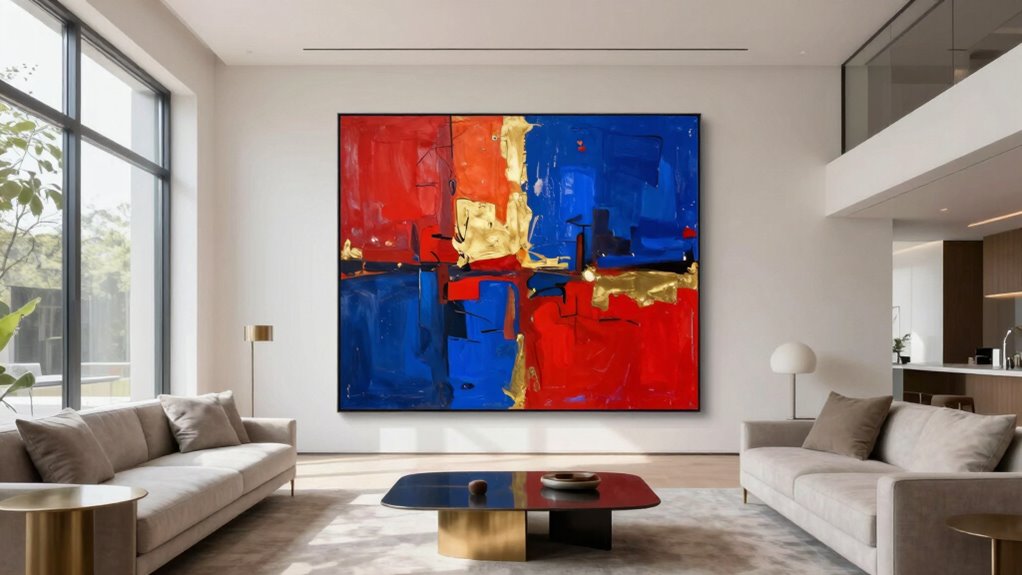
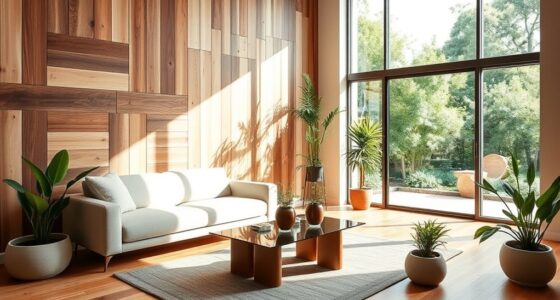
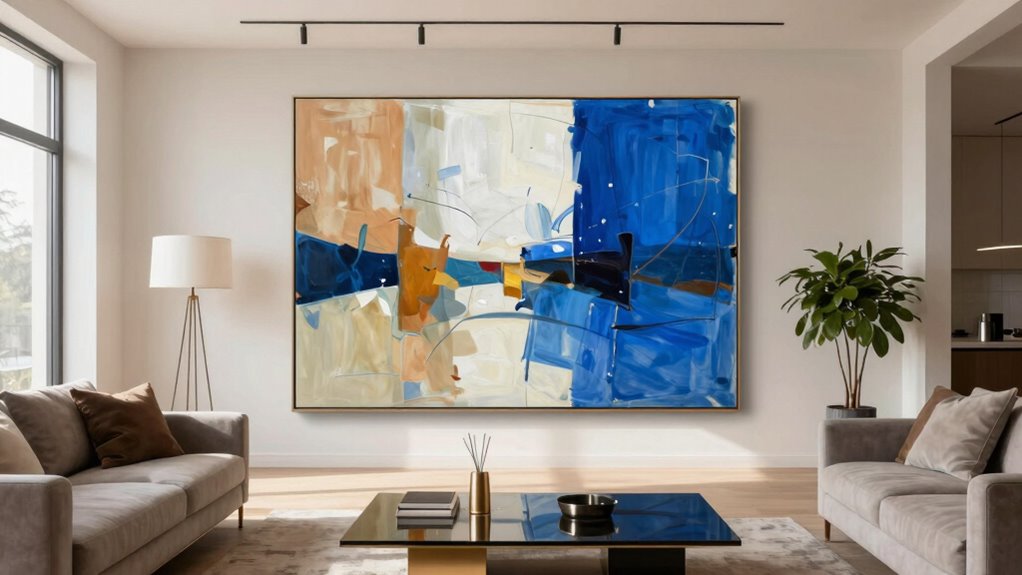
Have you ever wondered how to make an open-plan space feel more cohesive and inviting? The secret often lies in how you use art to create a visual anchor that ties everything together. One of the most effective ways to do this is by carefully choosing your color schemes and considering furniture placement around your artwork. When you select a piece of art, think about its colors and how they can complement or contrast with the surrounding environment. For example, if your space features neutral tones, adding artwork with bold, vibrant hues can energize the room and serve as a focal point. Conversely, if your color scheme is already lively, opting for art with softer shades can help balance the overall look and prevent visual chaos.
Choosing artwork with bold colors energizes neutral spaces, creating a striking focal point and enhancing overall cohesion.
Furniture placement plays a vital role in showcasing your art and establishing a sense of flow within your open-plan layout. Position your furniture in a way that directs attention toward your main artwork, whether it’s a large statement piece on a prominent wall or a gallery wall that acts as a visual divider. For example, arranging seating so it faces the artwork naturally draws the eye and encourages conversation around the piece. You can also use furniture to create designated zones within the open space, with art acting as the boundary or connection point between different areas like the living and dining zones. Keep in mind that the placement of furniture should not block or overshadow your artwork; instead, it should enhance its visibility and impact. Additionally, understanding spatial design principles can help you optimize your layout for both aesthetics and functionality. Incorporating visual balance can further ensure that your space feels harmonious and well-organized.
Furthermore, paying attention to art placement guidelines can help maximize the impact of your chosen pieces and create a more intentional flow throughout the room. Lighting is another essential element that works hand-in-hand with your art and furniture arrangement. Proper lighting can make your artwork pop and create a warm, inviting atmosphere. Use accent lights or picture lights to highlight your art, ensuring it becomes an anchor that draws people in. When positioning your furniture, think about how natural light falls during the day and how you can use lamps or spotlights to enhance your art in the evening.
Ultimately, using art to anchor an open-plan space involves thoughtful choices about color schemes, furniture placement, and lighting. By selecting pieces that harmonize with your overall design and positioning your furniture to showcase these works, you create a cohesive environment that feels inviting and well-balanced. This approach not only adds personality to your space but also establishes visual zones that guide movement and interaction, making your open-plan layout both functional and beautiful.
As an affiliate, we earn on qualifying purchases.
Frequently Asked Questions
How Do I Choose Art That Complements Multiple Zones?
To choose art that complements multiple zones, focus on color coordination and style consistency. Select pieces with a common color palette or similar tones to unify different areas. Opt for artworks that share a style or theme, creating a cohesive flow. Consider varying sizes and placements to balance the space visually. This approach helps anchor your open-plan layout, making it feel harmonious and thoughtfully curated.
What Are Budget-Friendly Art Options for Large Open Spaces?
You can find budget-friendly art options by exploring prints, posters, or DIY projects that match your wall color and enhance lighting effects. Thrift stores and online marketplaces often offer affordable, striking pieces. Consider creating a gallery wall with diverse sizes to add visual interest. Using complementary frames can unify the look, while strategic lighting highlights the artwork, making your large space feel cohesive and inviting without overspending.
How Can Art Define Different Functional Areas?
You can define different functional areas by using art with coordinated colors and thematic consistency that reflect each space’s purpose. Place bold, distinct pieces in areas like the dining zone, while softer, calming art works well in relaxation spaces. This approach visually separates zones, guides flow, and creates a cohesive look. Remember, consistent framing and style help unify the overall design while allowing individual areas to stand out.
What Are the Best Placement Strategies for Large Artwork?
You should place large artwork where it naturally draws attention, like above sofas or dining tables. Use color coordination to guarantee the art complements your existing palette, creating harmony. Select frames that match your decor style—sleek for modern, ornate for traditional. Position the piece at eye level for maximum impact, and consider lighting to highlight it. This strategy makes your space feel cohesive and inviting, anchoring the open-plan layout effectively.
How Do I Maintain Art in a High-Traffic Open-Plan Area?
To maintain art in a high-traffic open-plan area, you should focus on strategic wall arrangements and lighting techniques. Place durable, protected artwork where it won’t get easily bumped or damaged, and consider using protective glass or frames. Incorporate layered lighting to highlight pieces and minimize glare, ensuring they stay vibrant and visible. Regularly clean and inspect your art, adjusting placements if needed, to keep your space lively and inviting.
accent picture lights for artwork
As an affiliate, we earn on qualifying purchases.
As an affiliate, we earn on qualifying purchases.
Conclusion
By thoughtfully incorporating art, you create focal points that define your open-plan space, making it feel cohesive and inviting. Did you know that homes with curated art collections sell 20% faster? This shows how art not only enhances your environment but also boosts your home’s appeal. So, invest in meaningful pieces that reflect your personality, and watch your space transform into a warm, connected haven that truly feels like yours.
As an affiliate, we earn on qualifying purchases.
furniture for open plan living room
As an affiliate, we earn on qualifying purchases.
As an affiliate, we earn on qualifying purchases.