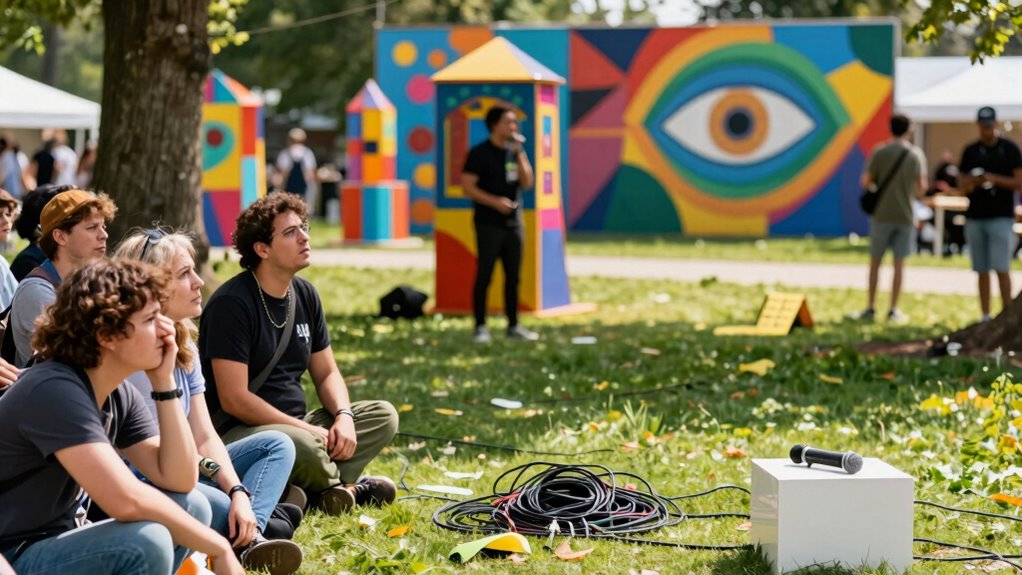
Public-facing art events need better audio planning because sound considerably enhances audience engagement. When you create an immersive atmosphere with effective sound design, your audience connects more deeply with the artwork. Poor audio can diminish this impact, especially outdoors where environmental noise poses challenges. You’ll want to take into account equipment logistics and real-time adjustments to guarantee a seamless experience. Ready to find out how to elevate your event with better audio strategy?
Key Takeaways
- Effective audio enhances audience engagement and creates an immersive atmosphere that complements the artwork.
- Outdoor events face unique sound challenges, necessitating careful planning to ensure quality and clarity.
- Strategic speaker positioning and equipment choices are critical for mitigating environmental noise and optimizing sound propagation.
- Real-time audience feedback allows for immediate adjustments, improving the overall audio experience during the event.
- Poor audio planning can undermine the impact of the art, risking audience disengagement and diminishing the event’s success.
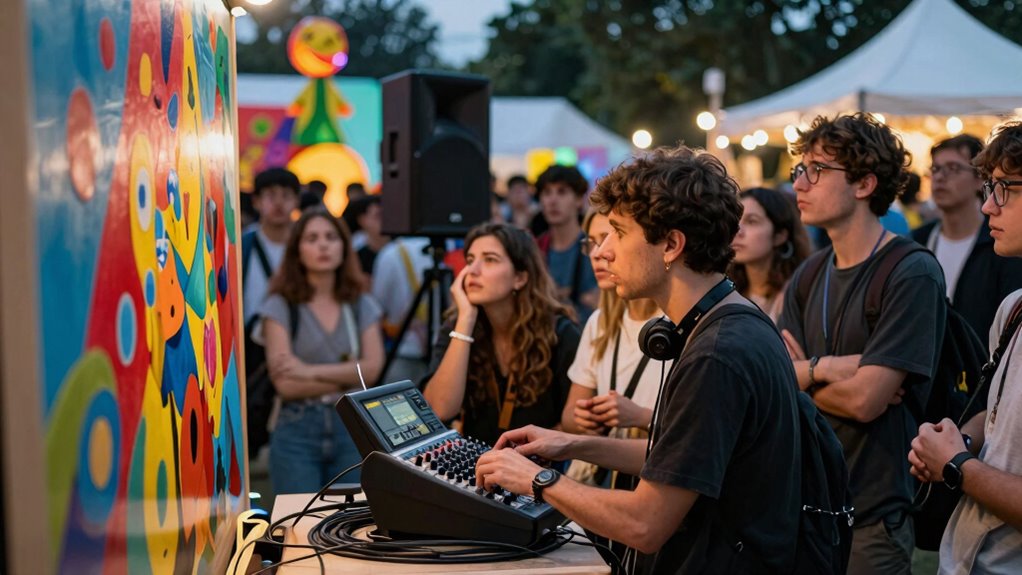
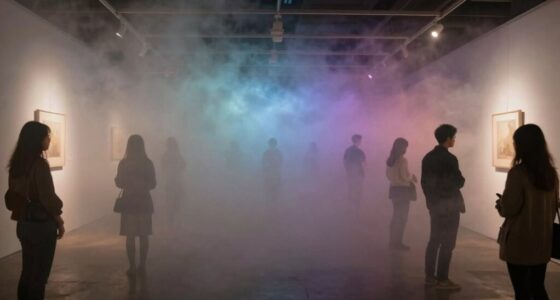
When planning a public art event, you can’t overlook the importance of audio. It’s not just about what you see; the sounds surrounding your installation can greatly enhance the experience for your audience. Effective sound design draws people in, creating an immersive atmosphere that resonates with the artwork. Without careful audio planning, you risk losing audience engagement, undermining the impact of your art.
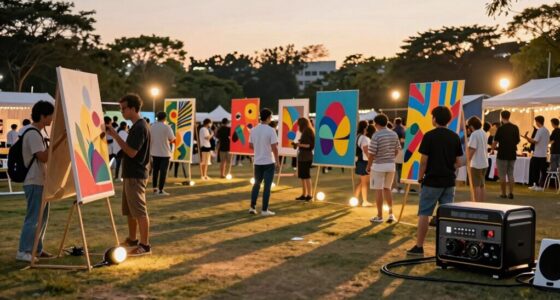
One of the first things you’ll face is the technical challenges of sound. Outdoor events, in particular, present unique hurdles. You have to take into account performance acoustics; what sounds great in a studio might fall flat in an open space filled with competing noises. You’ll need to assess how sound travels and interacts with the environment. Wind, traffic, and even the natural acoustics of the space can all affect how your audience perceives audio. This is where environmental factors come into play. You might need to strategically position speakers or use specific types of equipment to guarantee that the sound reaches everyone effectively. Understanding sound propagation is crucial to achieving the desired audio impact in outdoor settings, especially since outdoor environments often involve complex environmental factors that influence sound behavior. Incorporating audio technology that adapts to these conditions can significantly improve clarity and reach.
Technical challenges of sound in outdoor events require careful consideration of acoustics and environmental factors to ensure effective audio delivery.
Speaking of equipment logistics, planning involves more than just choosing the right speakers. You’ll have to think about power sources, cabling, and how to transport everything to your event site. It’s essential to have a clear plan that details who’ll handle setup and teardown. Engaging the community can help alleviate some of these logistical issues. By involving local sound engineers or volunteers who understand the area, you can streamline the process and foster a sense of ownership among community members.
Feedback systems also play an important role in audio planning. Once your installation is up and running, it’s imperative to gather audience reactions. You might set up simple surveys or interactive kiosks where visitors can share their thoughts. This feedback isn’t just valuable for future events; it can also guide you in making real-time adjustments to improve the audio experience.
outdoor portable PA speaker
As an affiliate, we earn on qualifying purchases.
As an affiliate, we earn on qualifying purchases.
Frequently Asked Questions
How Do Weather Conditions Affect Audio Equipment at Outdoor Events?
Weather conditions can greatly impact audio equipment at outdoor events. Rain, humidity, and extreme temperatures can compromise equipment durability, causing failures or poor sound quality. For instance, moisture can damage speakers and microphones, while excessive heat can overheat components. You need to make certain your gear is weather-resistant and properly protected. Taking these precautions helps maintain peak performance, allowing you to deliver clear sound despite unpredictable weather conditions.
What Types of Microphones Are Best for Public Art Installations?
For public art installations, consider using condenser microphones for their sensitivity and clarity, especially in quieter environments. If you’re in a bustling area, dynamic microphones can handle higher sound levels without distortion. Lavalier microphones are great for hands-free audio integration, allowing artists to engage without being tethered. Don’t forget about shotgun mics for directional sound capture, minimizing background noise. Each type serves a unique purpose, ensuring your installation’s audio resonates perfectly with the audience.
How Can I Ensure Audio Accessibility for Hearing-Impaired Attendees?
Did you know that around 15% of adults in the U.S. experience hearing loss? To guarantee audio accessibility for hearing-impaired attendees, you can use assistive technology like hearing loops or FM systems. Incorporate visual cues alongside audio elements, such as captions or sign language interpreters. This way, everyone can fully engage with your event. It’s essential to create an inclusive environment where every attendee feels welcomed and connected.
What Are the Common Noise Pollution Regulations for Public Art Events?
To guarantee compliance with common noise pollution regulations at public art events, you need to check site-specific regulations in your area. These laws often dictate maximum sound levels and when you can operate sound equipment. Implement sound level monitoring throughout your event to keep noise within acceptable limits. By doing this, you’ll maintain a harmonious atmosphere while respecting neighbors and attendees alike, guaranteeing everyone enjoys the experience without disturbance.
How Can I Assess the Acoustics of a Chosen Venue?
To assess the acoustics of your chosen venue, start by examining the venue layout. Walk around and listen for sound reflections; they can greatly impact audio quality. Pay attention to how sound travels in different areas—some spots might amplify or muffle sound. Use a sound level meter to gauge volume levels and note any problematic areas. By doing this, you’ll guarantee the best listening experience for your audience.
wireless microphone system for events
As an affiliate, we earn on qualifying purchases.
As an affiliate, we earn on qualifying purchases.
Conclusion
In the end, you might just find that great audio can transform a simple art event into an unforgettable experience. Imagine standing amidst vibrant installations, lost in the rhythm of perfectly balanced sound, when suddenly, a familiar melody plays, sparking a cherished memory. That’s the magic of thoughtful audio planning. So, whether you’re an artist or an organizer, remember that the right sound can create unexpected moments of joy, connecting everyone in ways you never anticipated.
weatherproof outdoor speakers
As an affiliate, we earn on qualifying purchases.
As an affiliate, we earn on qualifying purchases.
sound level meter for outdoor events
As an affiliate, we earn on qualifying purchases.
As an affiliate, we earn on qualifying purchases.