
📊 Full opportunity report: Acoustic Dampening, Placement, and the “Rig in the Closet” Setup on ThorstenMeyerAI.com — validation score, market gap, and execution plan.
TL;DR
Placing AI workstations in separate rooms or closets significantly reduces noise. Proper ventilation is essential when using enclosed setups, and acoustic treatment alone is less effective than strategic placement.
Placing high-power AI workstations in separate rooms or closets, with proper ventilation, is the most effective way to reduce noise in a workspace, according to technical experts.
Research and expert advice emphasize that the most impactful noise reduction method is relocating the rig away from the workspace, such as into another room or closet, where it can operate at full capacity without disturbing occupants.
The ‘rig in the closet’ setup is effective but requires careful attention to ventilation. Sealed spaces trap heat, risking thermal damage; thus, active airflow or purpose-built soundproof cabinets with temperature control are recommended.
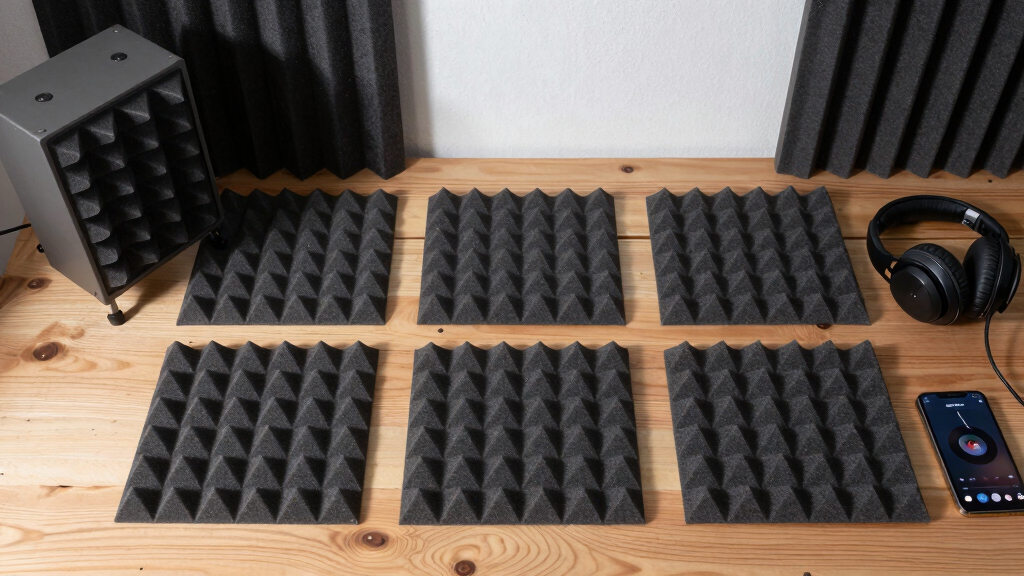
Acoustic treatment, such as foam panels, is less effective in isolation and primarily reduces echo within a room rather than blocking sound transmission. Mechanical decoupling, like rubber feet or anti-vibration pads, can significantly reduce structure-borne noise.
Experts advise prioritizing distance and proper airflow over solely relying on soundproofing materials for optimal noise management in high-performance AI setups.
Acoustic dampening
& the rig in the closet.
The most powerful noise fix isn’t a material — it’s a floor plan. A rig you can’t hear because it’s in another room beats any amount of foam. Tap the approaches in Part 1 to see what actually works.
(another room)
(levers 1–4)
(door / barrier)
(acoustic foam)
Contain the noise, not the heat
Why Placement and Ventilation Are Critical for Noise Control
Effective noise management improves workspace comfort, reduces stress, and prevents thermal damage to hardware. Proper placement and ventilation are cost-effective, scalable solutions that significantly outperform simple acoustic foam treatments, especially for high-power AI rigs.
soundproof closet for AI rig
As an affiliate, we earn on qualifying purchases.
As an affiliate, we earn on qualifying purchases.
High-Power AI Workstation Noise Management Best Practices
Traditionally, noise mitigation focused on acoustic foam and barriers, but experts now emphasize that the most effective solution is spatial separation. The trend toward remote inference and network-based workflows supports placing rigs in separate rooms or closets, where noise and heat are less problematic.
Sealed enclosures with active ventilation are increasingly used, combining acoustic dampening with thermal management, to maintain hardware longevity and workspace quietness.
"The most effective way to reduce noise isn't foam or barriers—it's moving the rig out of your workspace entirely, into another room or closet."
— Thorsten Meyer, AI workstation expert

Focusound 52 Pack Acoustic Foam Panels 1" x 12" x 12" Sound Proof Foam Panles Soundproofing Noise Cancelling Wedge Panels for Home Office Recoding Studio with 300PCS Double-Side Adhesive
Soundproofing - Acoustic foam panels triangular grooves structure for better noise absorption, helps to reduce and absorb unwanted...
As an affiliate, we earn on qualifying purchases.
As an affiliate, we earn on qualifying purchases.
Remaining Challenges in Quiet, Safe AI Rig Placement
While placing rigs in separate rooms is proven effective, the optimal design of soundproof, ventilated enclosures remains complex and costly. There is ongoing debate about the best balance between noise reduction, thermal management, and cost-efficiency.
It is also unclear how newer hardware with different heat profiles will impact enclosure design and airflow requirements in the future.

CORSAIR 4000D RS ARGB Frame Modular Mid-Tower ATX PC Case, High Airflow, 3X Pre-Installed RS Fans, InfiniRail™ Mounting System, ASUS BTF, MSI Zero, Gigabyte Stealth, Black
FRAME Modular Case System – The revolutionary FRAME system gives new meaning to the word customization. Want to...
As an affiliate, we earn on qualifying purchases.
As an affiliate, we earn on qualifying purchases.
Future Developments in Quiet AI Workstation Design
Advances in low-noise hardware, improved thermal management solutions, and integrated soundproof enclosures are expected to make silent, high-performance AI rigs more accessible. Increased adoption of network-based workflows will further reduce the need for local, noisy hardware in workspaces.
Research into smarter ventilation systems and cost-effective soundproofing options will continue, making it easier for users to implement effective noise mitigation strategies.

4 Pack of Anti Vibration Pads 4" x 4" x 3/8" All Rubber Vibration isolation pads
Has a solid cross-ribbed design (3/8" thick)
As an affiliate, we earn on qualifying purchases.
As an affiliate, we earn on qualifying purchases.
Key Questions
Is acoustic foam effective for reducing noise from AI workstations?
Acoustic foam primarily reduces echo and reflections within a room but does not block sound transmission. For significant noise reduction, spatial separation or barriers are more effective.
Can I put my high-power AI rig in a closet without overheating?
Yes, but only if the closet has proper ventilation, such as active exhaust fans or ducted airflow, to prevent heat buildup and hardware damage.
What are the best practices for ventilating a sealed enclosure?
Use thermostatically controlled fans, passive vents with airflow, or purpose-built soundproof cabinets with integrated cooling systems to ensure adequate heat dissipation.
Does moving the rig away from my workspace affect workflow?
In most cases, no. Many AI workflows are network-based, allowing remote operation via SSH or APIs, so the physical location of the hardware is less critical.
Are there cost-effective solutions for noise and heat management?
Yes, using rubber feet, anti-vibration pads, and placing the rig in a separate room or closet with proper ventilation are affordable and effective strategies.
Source: ThorstenMeyerAI.com