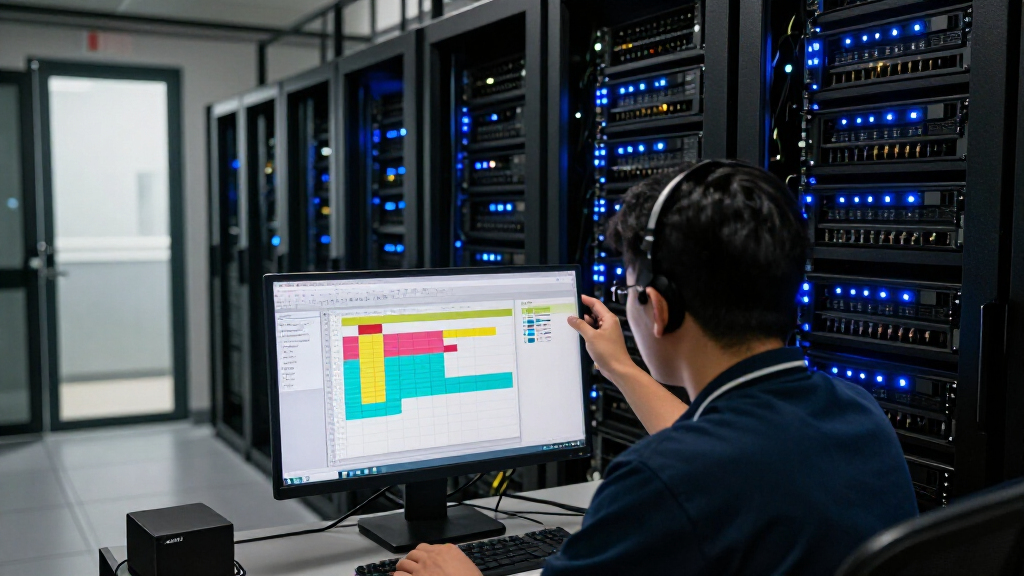

🔍 Read the full analysis: How To Schedule GPU Clusters For Greater Impact on ThorstenMeyerAI.com

Get the latest gadgets delivered free with Prime
- Fast, free delivery on millions of items
- Prime Video, Amazon Music and more included
- Member-only deals all year
TL;DR
Ai2 says it has replaced priority-based GPU scheduling with project time budgets, hierarchical fair-share allocation and a time-slicing contract. The change shifts decisions about compute allocation toward administrative budgeting, but the institute has not published results showing whether utilization, wait times or research output have improved.
Ai2 says it has replaced its priority-based GPU scheduler with a system that assigns compute through project time budgets, hierarchical fair-share allocation and time slicing. The research institute says the change is intended to direct scarce GPU capacity toward work it considers valuable while keeping resources available across teams; it has not provided measured results for the new system.
Ai2’s infrastructure team manages what the institute describes as thousands of NVIDIA H100, B200 and B300 GPUs, across clusters ranging from 88 to 1,024 GPUs. About 150 internal researchers use the systems for work including language and vision model training, robotics reinforcement-learning simulations and scientific agent development. Ai2 says incoming workloads request two to three times as much GPU capacity as is available at any given moment.
Under the former system, workloads could opt out of preemption, and teams faced limits on how many GPUs they could protect from interruption. Preemptible workloads could run on capacity not otherwise in use. Ai2 says this encouraged some users to keep idle workloads running so they could connect debugging jobs quickly. It also says priority levels became less useful as teams increasingly selected the highest setting, while on-call engineers spent substantial time negotiating the shutdown of protected jobs on machines needing maintenance.
The replacement allocates GPU time to projects rather than permanent control of specific GPUs. According to Ai2, budgets allow leadership to set relative priorities before jobs arrive, and the scheduler uses those priorities to manage incoming work. The description names hierarchical fair-share allocation and a time-slicing contract as parts of the design, but does not explain their detailed operation.
How Compute Budgets Could Change Research
The change makes access to scarce compute an explicit organizational allocation decision, rather than relying chiefly on priority labels and protections attached to individual workloads. That could give research leaders a way to set tradeoffs across projects before demand peaks, while allowing the scheduler to share hardware as workloads arrive and change.
For researchers, the practical stakes include how long jobs wait, whether experiments can run on schedule and how quickly teams can respond to debugging or maintenance needs. For infrastructure staff, fewer protected jobs could make it easier to service machines. Those are possible effects of the design, not outcomes established by the information available: Ai2 has reported no before-and-after data on utilization, wait times, maintenance response or research throughput.
Budgeting also creates a balancing problem. Research demand can be uneven, and projects may not use compute at a steady rate. If allocations are difficult to adjust, capacity could sit idle while other teams wait; if they are too easy to change, budgets may not preserve the priorities they were intended to express. How Ai2 manages that tradeoff is not described.
As an affiliate, we earn on qualifying purchases.
Why Ai2 Moved Beyond Priority Queues
Ai2 says the old arrangement became harder to manage as users had incentives to seek protected access and select high priority. When many workloads carry the same top rating, the scheduler has less room to distinguish among them. The institute also says some users kept idle workloads ready to make it easier to attach work later, a practice it describes as GPU “squatting.” These are Ai2’s accounts of its own operations; the supplied material does not include independent measurements or a detailed incident record.
The institute says it tried tighter controls on priority settings and assigning GPU monopolies to selected projects. In Ai2’s account, monopolies could leave hardware unused when a team was not ready to run jobs, making fixed ownership a poor fit for changing research schedules. The team says it decided to iterate on its ownership model rather than continue relying on those arrangements.
Ai2 relates the problem to a broader challenge in resource allocation: users may know more about the value of their own workloads than the organization does, and their incentives may not align with overall efficiency. Its post cites a 2011 paper on Dominant Resource Fairness by Ghodsi and co-authors, which describes users adding infinite loops to make code appear highly utilized when access to dedicated machines depended on a utilization guarantee. That example illustrates a potential incentive problem; it does not establish how Ai2’s replacement performs.
““We decided to iterate on the ownership model.””
— Ai2’s AI Infrastructure team
As an affiliate, we earn on qualifying purchases.
Scheduler Results and Rules Remain Unreported
The available description does not say when the new scheduler began operating or how long it has been in use. It provides no measurements comparing the new system with the previous one, including GPU utilization, job wait times, research output, cluster occupancy or time spent responding to maintenance issues. Ai2’s stated aims should not be read as confirmed improvements.
Several implementation questions also remain open: how project budgets are calculated, how often leadership can revise them, what happens when a project uses its budget early, and how urgent work is treated. The source names time slicing and hierarchical fair share but does not spell out how slices are set or how unused allocations are handled. Without those details, it is not possible to judge how the scheduler balances strategic priorities with changing demand.
As an affiliate, we earn on qualifying purchases.
Evidence Needed to Judge the Rollout
The next useful evidence would be operational results from Ai2 comparing the new arrangement with its prior scheduler. Measures such as GPU utilization, job wait times, preemption rates and maintenance response could show whether the change addresses the problems the institute identified. Research throughput and the frequency of unused capacity would help assess whether project budgets make effective use of the cluster.
Ai2 could also clarify how budgets are assigned and adjusted, how the scheduler responds to urgent work and what protections exist when one project’s needs shift. The supplied material does not announce a reporting date or a formal evaluation milestone. Until the institute releases more detail or performance data, the confirmed development is the scheduling design change—not evidence that it has improved outcomes.
high performance GPU for scientific computing
As an affiliate, we earn on qualifying purchases.
As an affiliate, we earn on qualifying purchases.
Key Questions
What changed in Ai2’s GPU scheduler?
Ai2 says it replaced priority-based scheduling with a system based on project GPU-time budgets, hierarchical fair-share allocation and time slicing. Projects receive allocations of compute time rather than permanent control of particular GPUs.
How many GPUs and researchers does the system cover?
Ai2 says its infrastructure team manages thousands of NVIDIA H100, B200 and B300 GPUs in clusters ranging from 88 to 1,024 GPUs. About 150 internal researchers use them, according to the institute.
Has Ai2 shown that the new system improves performance?
No performance results are provided in the source material. It does not report before-and-after figures for utilization, wait times, research throughput or maintenance response.
How will projects receive and use their budgets?
The description says leadership sets relative priorities through project budgets, but does not explain how budgets are calculated, revised or enforced. It also leaves open how unused allocations and urgent jobs are handled.
Primary source: Hugging Face · via ThorstenMeyerAI.com
Columbus Day / Indigenous Peoples' Day Picks
long weekend sales
As an affiliate, we earn on qualifying purchases.