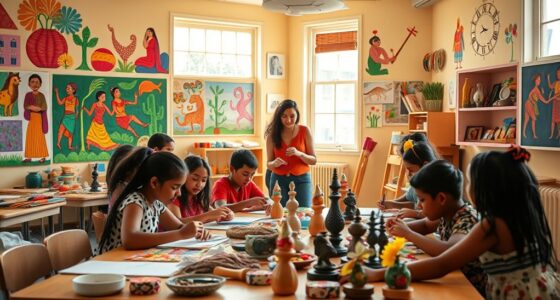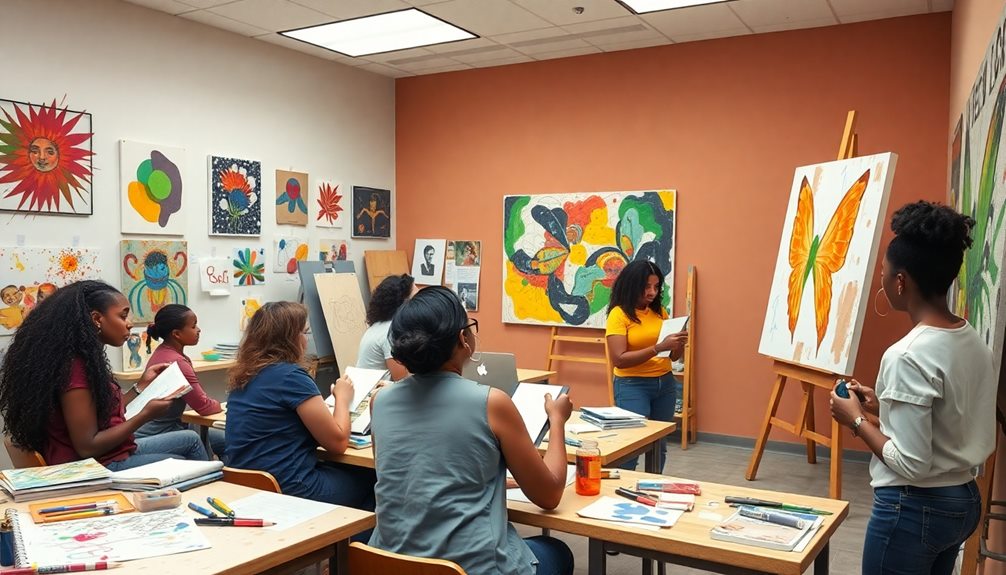
Using art in your classroom can be a powerful way to promote student wellness. It allows learners to express their emotions creatively, helping them process feelings and reduce stress. Engaging in artistic activities fosters self-understanding, boosts confidence, and creates a calming environment. By encouraging vulnerability and focusing on the creative process, you help students build resilience and emotional regulation skills. Keep exploring how integrating art therapy principles can transform your classroom into a supportive space.
Key Takeaways
- Classroom art activities enable emotional expression, helping students process feelings and foster self-awareness.
- Artistic projects provide calming effects, reduce stress, and promote relaxation for improved mental well-being.
- Using symbols and focusing on the creative process encourages vulnerability and enhances emotional resilience.
- Integrating art therapy principles supports emotional regulation and develops coping skills.
- Regular art engagement builds a safe space for self-discovery, confidence, and holistic wellness beyond academics.
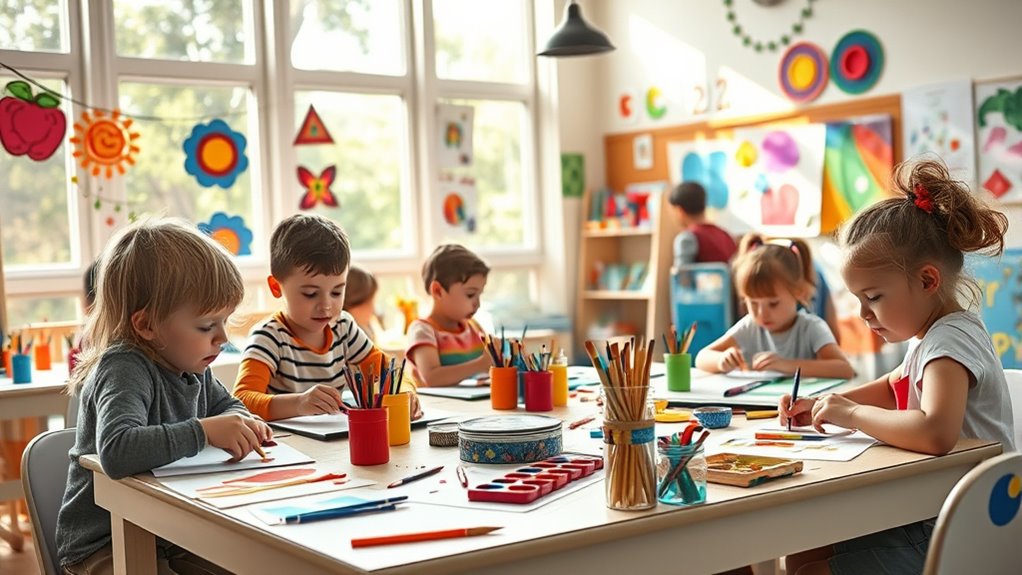
Art has increasingly become a powerful tool for healing and self-expression. When you incorporate art into your classroom activities, you’re opening a door for students to explore their emotions and find healthier ways to cope with everyday stresses. Creating art allows students to express feelings they might not have words for, making emotional expression more accessible and authentic. Instead of bottling up emotions, students can channel their thoughts and experiences into visual forms, which often leads to a sense of relief and clarity. This process not only helps them process complex emotions but also fosters a deeper understanding of themselves. When students engage in artistic activities, they often experience a calming effect, which can profoundly reduce stress levels. Art provides a safe space where worries and anxieties can be transformed into something tangible, giving students a sense of control and mastery that they might not feel otherwise. It’s a form of stress relief that doesn’t require words or judgment; it’s simply about creating and expressing freely. As an educator, you can facilitate this by offering diverse art projects tailored to different emotional needs. For example, encouraging students to create abstract pieces when feeling overwhelmed or to draw symbols representing their hopes and fears can be remarkably therapeutic. The act of choosing colors, shapes, and textures helps students process their feelings in a non-verbal way, which can be especially beneficial for those who struggle to articulate their emotions verbally. Furthermore, engaging students in collaborative art projects promotes a sense of community and shared understanding, further enhancing their emotional well-being. You’ll notice that when students are involved in art activities, they tend to become more engaged and motivated, which positively impacts their overall mental health. It’s important to remember that the goal isn’t perfection but rather expression and relief. By emphasizing the process over the product, you encourage students to focus on their feelings and experiences rather than on creating a perfect masterpiece. This shift in perspective allows students to embrace their vulnerabilities and gain confidence in their emotional resilience. Incorporating regular art activities into your classroom routine can transform it into a sanctuary where students learn to manage stress, express their emotions, and develop a healthier relationship with their feelings. Additionally, understanding the benefits of art therapy can help educators recognize its significance as a mental health tool. For instance, integrating art therapy principles supports emotional regulation, helping students develop skills to manage their reactions more effectively. Ultimately, art becomes more than just a classroom activity; it becomes a essential tool for emotional self-care. When you prioritize art as a form of therapy, you empower students to navigate their emotional landscapes more effectively, fostering wellness that extends beyond the classroom walls.
Frequently Asked Questions
How Can Art Therapy Benefit Students With Special Needs?
You might wonder how art therapy benefits students with special needs. It helps by enhancing sensory integration, allowing students to process sensory information more effectively. Additionally, it encourages emotional expression, giving students a safe space to communicate feelings they might struggle to verbalize. Through creative activities, you support their emotional well-being and development, making art a powerful tool for fostering growth and resilience in students with diverse needs.
What Materials Are Most Effective for Classroom Art Therapy Activities?
Think of the tools like Da Vinci’s palette; your classroom’s most effective materials include colorful paints and textured papers. These materials allow students to explore self-expression and sensory experiences actively. Using vibrant paints boosts engagement, while textured papers offer tactile stimulation, making art therapy more accessible and enjoyable. Choose versatile, safe supplies that encourage creativity and facilitate emotional growth, helping students connect with their feelings through meaningful artistic activities.
How Can Teachers Assess Emotional Progress Through Art Projects?
You can assess emotional progress by observing emotional indicators in students’ art projects, like color choices, themes, and expressions. Encourage students to share their work and reflect on their feelings, which aids progress tracking. Look for changes over time, such as increased confidence or openness. Regularly documenting and discussing these artworks helps you understand their emotional growth, fostering a supportive environment that promotes wellness through creative expression.
Are There Specific Art Techniques Best Suited for Mental Health Improvement?
Imagine painting with vibrant colors that reflect your feelings, using expressive techniques to unveil your emotions. You can also practice mindfulness exercises while creating art, helping you stay present and reduce stress. The best techniques for mental health improvement include expressive techniques like abstract art and mindful drawing, which foster self-awareness and emotional release. These methods turn art into a powerful tool for healing and personal growth.
How Can Schools Incorporate Art Therapy Into Their Existing Curriculum?
To incorporate art therapy into your school’s curriculum, start by integrating simple art activities that promote self-expression and emotional awareness. You can also organize teacher training sessions on art therapy techniques, enabling staff to facilitate these activities effectively. By embedding these practices into daily lessons, you create a supportive environment that fosters mental well-being, making art an accessible tool for all students to process emotions and build resilience.
Conclusion
By embracing art as therapy in your classroom, you gently nurture students’ well-being and foster a sense of calm. These creative activities serve as a subtle, yet powerful, way to support emotional health without the need for words. When you incorporate art, you help students find quiet strength and resilience, creating a space where they can softly blossom. Ultimately, it’s through these gentle strokes that you guide them toward a brighter, more balanced outlook on life.