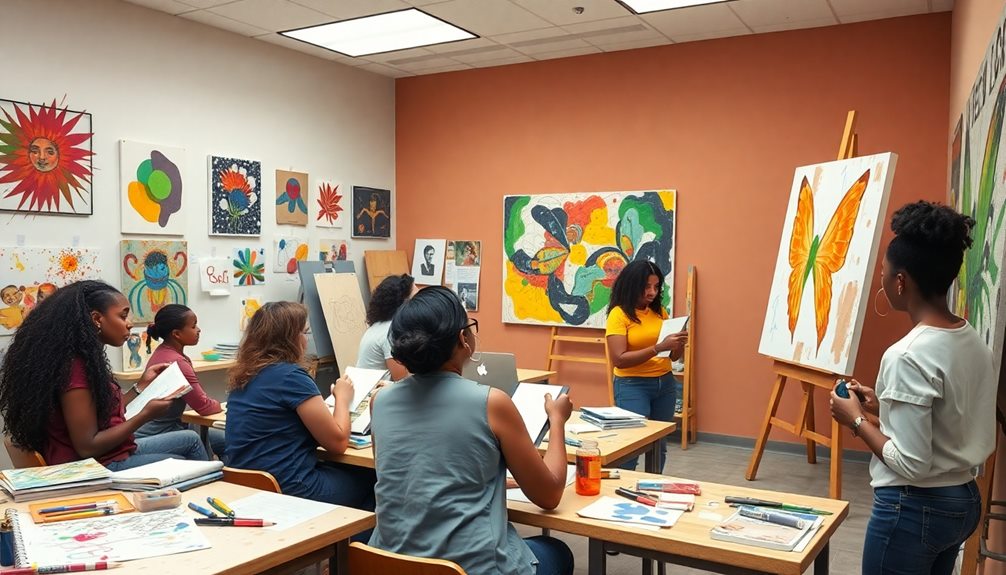
Culturally responsive teaching in the art room means intentionally designing lessons that celebrate and include your students’ diverse backgrounds. By incorporating multicultural art forms, showcasing artists from different cultures, and allowing students to share their traditions, you create an inclusive space where everyone feels valued and inspired. Adjust your methods to accommodate various styles and encourage authentic expression. Keep exploring these strategies to build a vibrant, equitable art environment that truly reflects all your students’ identities.

Get the latest gadgets delivered free — and shop member deals
- Fast, free delivery on millions of items
- Access to Prime Big Deal Days deals on October 6–7
- Prime Video, Amazon Music and more included
Key Takeaways
- Incorporate diverse cultural art forms and traditions to reflect students’ backgrounds and promote authentic representation.
- Use inclusive teaching strategies that accommodate different learning styles and cultural nuances within art lessons.
- Highlight artworks and artists from various cultures to foster understanding, empathy, and multiple perspectives.
- Create a classroom environment that celebrates differences, encourages dialogue, and invites students to share their cultural stories.
- Align curriculum and materials with cultural awareness to inspire student engagement and bolster a sense of belonging.

In today’s diverse art classrooms, incorporating culturally responsive teaching isn’t just beneficial—it’s essential. As an educator, embracing multicultural perspectives helps you create a learning environment where every student feels seen, valued, and inspired. When you incorporate inclusive art practices, you’re signaling that all backgrounds, identities, and experiences matter. This approach isn’t about token gestures; it’s about weaving cultural awareness into your curriculum, materials, and interactions so students develop a genuine appreciation for different worldviews through their creative expression.
Start by actively seeking out a variety of cultural art forms and traditions. This not only broadens your artistic repertoire but also enriches your students’ understanding of global aesthetics. When students see their cultures reflected in the art projects and resources you provide, they’re more likely to engage deeply and take pride in their work. Using multicultural perspectives means going beyond stereotypical images, aiming instead to showcase authentic representations that respect the histories and significance behind each art form. For instance, instead of just presenting a generic African mask, explore its cultural roots, symbolism, and significance, encouraging students to connect with its meaning. Incorporating culturally responsive teaching strategies helps ensure that your classroom remains inclusive and respectful of diverse backgrounds.
Explore diverse cultural art forms to deepen student engagement and foster authentic understanding and respect.
Inclusive art practices involve adjusting your teaching strategies to accommodate diverse learning styles and cultural nuances. This might mean offering multiple ways for students to express their ideas—through drawing, sculpture, digital media, or performance—so each student can connect with the project in a way that resonates with their background. It also involves fostering a classroom culture that celebrates differences, encourages dialogue about cultural influences in art, and challenges stereotypes. When students share their own cultural stories and artistic traditions, they contribute to a richer, more dynamic classroom environment. Additionally, understanding home furnishings and how they reflect cultural identities can deepen students’ appreciation for traditional and contemporary art forms rooted in their communities.
Moreover, your role extends to choosing diverse artists and artworks to introduce students to a wide range of perspectives. Highlighting artists from various cultural backgrounds demonstrates that art isn’t monolithic but a vast, interconnected web of voices and stories. As students analyze and create art rooted in multicultural perspectives, they gain a deeper understanding of social contexts and develop empathy for people whose experiences differ from their own. This process helps cultivate an inclusive space where creativity flourishes and students feel confident expressing their identities.
Ultimately, integrating multicultural perspectives and inclusive art practices in your teaching isn’t just about adding diversity for its own sake. It’s about transforming your classroom into a space where all students can thrive artistically and personally, recognizing that their cultural identities are valuable sources of inspiration. When you do this intentionally, you empower students to see themselves in art and the world around them, fostering a more equitable, vibrant learning community.
Frequently Asked Questions
How Can I Assess Cultural Responsiveness in My Art Classroom Effectively?
To assess your cultural responsiveness effectively, start by gathering student feedback regularly to understand their perspectives and experiences. Incorporate cultural reflection into your lessons, encouraging students to share their backgrounds and influences. Observe how students engage with diverse art styles and themes, and adjust your approach accordingly. This ongoing process helps you guarantee your teaching is inclusive, respectful, and truly responsive to the cultural identities in your classroom.
What Resources Are Available to Support Culturally Responsive Art Teaching?
You can find resources like books and online platforms that showcase diverse cultural artifacts to inspire your lessons. Engage with community collaborations to gain authentic perspectives and deepen your understanding. Museums and cultural centers often offer educator guides and workshops that support culturally responsive art teaching. These resources help you incorporate meaningful cultural artifacts into your curriculum, fostering an inclusive environment where students see their identities reflected and valued through diverse artistic expressions.
How Do I Handle Cultural Misunderstandings or Conflicts Among Students?
Think of cultural misunderstandings as tangled threads in a vibrant tapestry. You handle these with patience and empathy, weaving in cultural sensitivity to untangle conflicts. Encourage open dialogue, listen actively, and validate each student’s perspective. Use conflict resolution strategies like mediation and reflection. By fostering a respectful environment, you transform misunderstandings into opportunities for growth, helping students appreciate diversity and build stronger connections through shared creativity.
How Can I Incorporate Students’ Cultural Backgrounds Into Art Projects?
You can incorporate students’ cultural backgrounds into art projects by encouraging them to explore their cultural symbolism and artistic diversity. Invite students to share stories or traditions that inspire their work, and provide materials that reflect different cultures. This approach fosters inclusivity and enriches the classroom environment, allowing students to celebrate their unique backgrounds through creative expression. Engaging with their cultural symbolism helps them feel valued and understood.
What Challenges Might I Face When Implementing Culturally Responsive Teaching Strategies?
Ever wonder what obstacles you might face when trying to boost student engagement through curriculum adaptation? You could encounter resistance from students or colleagues, limited resources, or difficulty finding authentic cultural materials. Balancing diverse perspectives can be tricky, and you might worry about unintentionally reinforcing stereotypes. Stay patient and flexible—these challenges are part of creating an inclusive, engaging learning environment that celebrates all backgrounds.
Conclusion
As you continue to embrace culturally responsive teaching in your art room, you gently open doors to new worlds of understanding and appreciation. By weaving diverse perspectives into your lessons, you create a space where every student feels valued and seen. Remember, small shifts can lead to meaningful connections. Your efforts subtly nurture a more inclusive, vibrant community—one brushstroke at a time—guiding your students toward a brighter, more harmonious future together.
Fall Picks
fall essentials
As an affiliate, we earn on qualifying purchases.