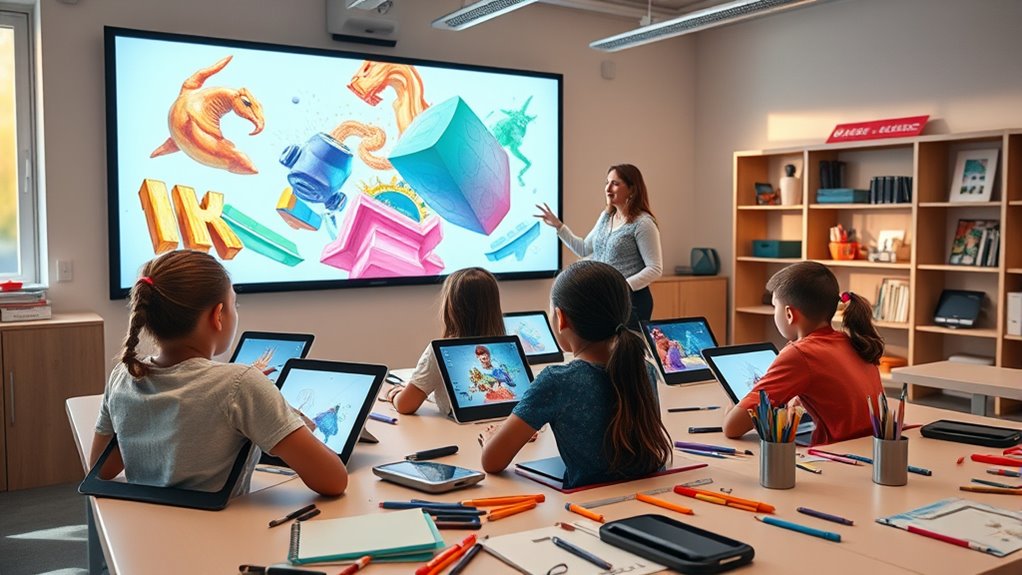

Digital tools like augmented reality, virtual galleries, and interactive platforms are revolutionizing art education by making lessons more immersive, engaging, and accessible. You can visualize artworks in real environments, explore famous museums remotely, and analyze details in new ways. These technologies support diverse learning styles and encourage creativity through multimedia projects. By integrating these tools, you’ll create dynamic, memorable experiences that deepen understanding and foster innovation—if you want to explore more, keep going to discover new possibilities.
Key Takeaways
- Digital tools like AR and virtual galleries enhance engagement, visualization, and exploration of artworks in art education.
- Interactive platforms foster active learning, critical thinking, and emotional connections with art through immersive experiences.
- Creative applications enable students to design virtual exhibits, AR installations, and multimedia projects, promoting innovation.
- Digital tools support diverse learning styles and digital literacy development, making art education more inclusive and accessible.
- Technology facilitates remote access to famous museums and artworks, expanding educational opportunities beyond physical boundaries.

Technology has transformed art education by making creative tools more accessible and interactive than ever before. One of the most exciting advancements is augmented reality (AR), which allows you to bring digital elements into the real world. Instead of just looking at flat images or static models, you can now use AR apps to visualize artwork in your own space, walk around sculptures virtually, or see how different colors and textures interact in real-time. This immersive experience helps deepen your understanding of artistic techniques and concepts, making lessons more engaging and memorable.
Augmented reality makes art lessons immersive by visualizing artwork and textures in real-time.
Virtual galleries are another innovation reshaping how you explore and learn about art. These digital spaces let you tour famous museums and exhibitions from anywhere, using a computer or VR headset. You can stand in front of masterpieces, examine details up close, and even participate in guided tours without leaving your classroom or home. Virtual galleries break down geographical and financial barriers, giving you access to a vast array of artworks and curatorial perspectives that were previously limited to physical visits. They also enable educators to curate personalized virtual exhibitions tailored to specific lessons or student interests, making art history and appreciation more dynamic. Additionally, the use of digital navigation skills is essential when exploring virtual environments, ensuring you can effectively locate and analyze artworks within digital spaces.
Incorporating AR and virtual galleries into your curriculum means you can offer interactive, experiential learning opportunities that weren’t possible before. Imagine students using AR apps to analyze Renaissance paintings, discovering hidden symbols and techniques in a hands-on way. Or, hosting virtual gallery visits where students can compare different styles, ask questions, and engage in discussions with peers or experts worldwide. These tools foster active participation, critical thinking, and a deeper emotional connection to art, all while leveraging the flexibility and convenience of digital platforms. Additionally, integrating digital literacy skills into art lessons prepares students to navigate and utilize emerging technologies confidently.
Moreover, these technologies encourage creativity by inspiring you to experiment with digital art forms and multimedia projects. You might create your own virtual gallery exhibit, design AR-based installations, or collaborate with classmates on projects that combine physical and digital media. Additionally, understanding the importance of color accuracy in digital representations of artwork ensures that your digital reproductions remain faithful to the original pieces. Exploring the aura concept can also deepen your appreciation for the energy and emotional impact behind artworks, fostering a more profound connection to the art you study. The interactive nature of AR and virtual galleries also supports diverse learning styles, helping you better grasp complex ideas through visual, kinesthetic, and experiential methods. Embracing these innovations can also foster a greater appreciation for sustainable practices by encouraging mindful consumption and digital sharing.
Frequently Asked Questions
How Can Digital Tools Enhance Traditional Art Teaching Methods?
Digital tools can greatly enhance traditional art teaching methods by enabling virtual collaboration, allowing students to share ideas and feedback in real time. Augmented reality brings artwork to life, offering immersive experiences that deepen understanding. You can easily incorporate these tools into your lessons to foster creativity, improve engagement, and expand learning opportunities. Embracing technology helps bridge gaps, making art education more interactive and accessible for all students.
What Are the Costs Associated With Implementing Digital Art Tools?
When considering the costs of implementing digital art tools, you should think about your budget considerations first. Expenses include purchasing equipment like tablets, software licenses, and peripherals. Additionally, you need to plan for ongoing costs such as equipment maintenance and software updates. These costs can add up, so it’s crucial to balance your needs with your available resources to guarantee sustainable integration into your teaching methods.
How Do Digital Tools Support Diverse Learning Styles in Art Education?
You might find that digital tools truly support diverse learning styles by offering multisensory engagement and personalized learning experiences. For visual learners, digital art platforms provide vibrant visuals, while kinesthetic learners can experiment through interactive drawing apps. Auditory learners benefit from tutorials and sound features. These tools adapt to individual needs, making art education more inclusive and engaging, helping you connect with students on a deeper level and fostering their creative growth.
Are There Accessibility Concerns With Using Technology in Art Classrooms?
You might wonder if using technology in art classrooms raises accessibility concerns. The digital divide can limit students’ access to digital tools, creating disparities. However, assistive technology helps bridge this gap by providing tailored support for students with disabilities. To guarantee everyone benefits, you should prioritize equitable access and choose inclusive tools. This way, technology enhances creativity without leaving anyone behind.
What Training Is Needed for Teachers to Effectively Use Digital Art Tools?
Did you know that 85% of teachers feel underprepared for integrating digital tools? To use digital art tools effectively, you need targeted professional development that boosts your technical proficiency. This training should cover software basics, troubleshooting, and creative applications, ensuring you’re confident in guiding students. Ongoing support and workshops help you stay updated, making your lessons more engaging, inclusive, and innovative.
Conclusion
Imagine you’re guiding a young artist with a paintbrush in one hand and a tablet in the other. Just like blending traditional and digital paints creates richer artwork, integrating technology into art education deepens creativity. Studies show students engaged with digital tools excel in innovation and problem-solving. Embrace these tools as your palette, transforming your teaching and inspiring students to craft masterpieces that merge imagination with technology’s endless possibilities.