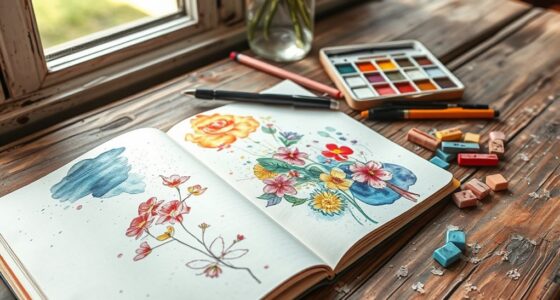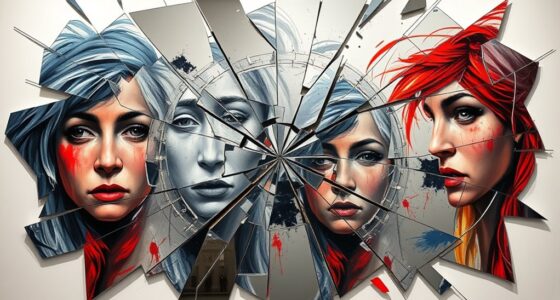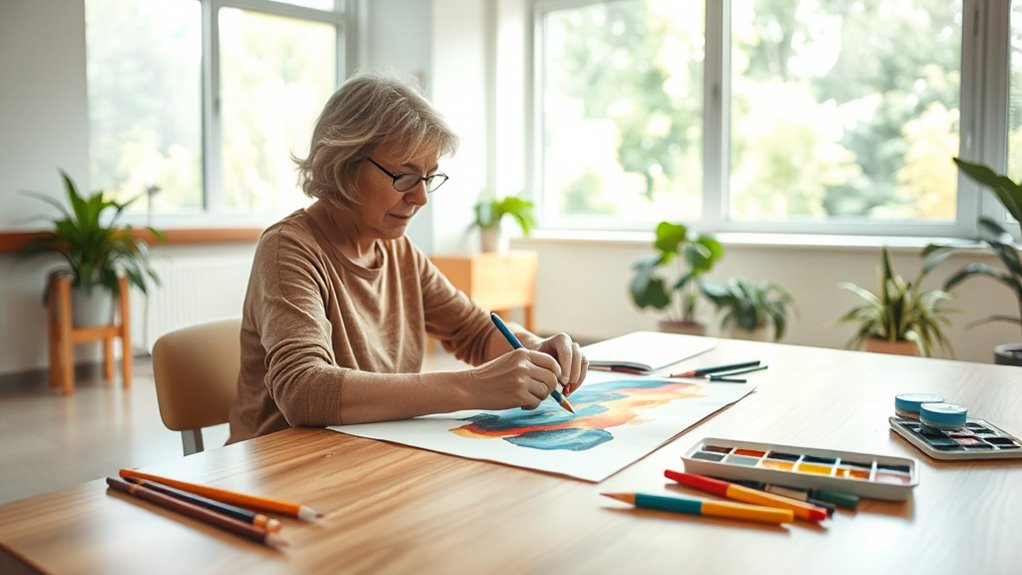

Art therapy in medical settings helps you express emotions that are hard to put into words, making it easier to process feelings like fear or grief. It also shifts your focus from pain, providing distraction and promoting mindfulness. By creating a safe space for vulnerability, it boosts resilience and overall well-being, supporting both emotional and physical recovery. If you keep exploring, you’ll discover how this creative approach enhances healing in more meaningful ways.
Key Takeaways
- Art therapy provides emotional expression and processing, helping patients manage complex feelings during recovery.
- It offers distraction and mindfulness techniques that reduce perceived pain and stress.
- Creative activities foster resilience, hope, and a sense of control, supporting mental well-being alongside physical healing.
- Art therapy creates a safe space for vulnerability, promoting emotional exploration and reducing feelings of isolation.
- Incorporating art therapy enhances holistic care by addressing both emotional and physical aspects of healing.
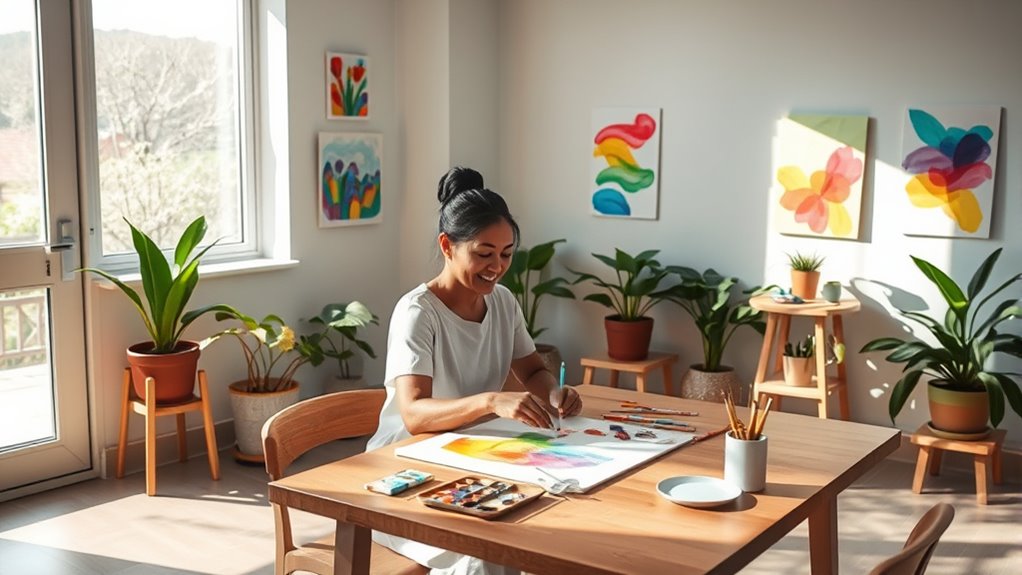
Have you ever wondered how creative expression can aid healing? Art therapy in medical settings leverages the power of artistic activity to support patients through challenging health journeys. When you participate in art therapy, you’re encouraged to express emotions that might be difficult to put into words. This process of emotional expression becomes a crucial tool for managing pain and reducing stress. Instead of focusing solely on physical symptoms, art therapy allows you to channel your feelings into visual forms—whether through drawing, painting, or sculpting—helping you process complex emotions like fear, grief, or frustration. This emotional release can lessen the burden of pain, making it more manageable. When pain feels overwhelming, creating art offers an alternative outlet, shifting your focus from discomfort to a productive, expressive activity. Through this, you regain a sense of control and agency over your experience, which can be empowering during times of vulnerability.
In addition to emotional expression, art therapy provides a unique approach to pain management. It distracts your mind from ongoing discomfort and fosters mindfulness, helping you stay present in the moment. As you work on your art, your attention shifts away from pain signals, reducing their intensity and emotional impact. This distraction isn’t just a temporary relief; it can have lasting effects by helping you develop coping strategies that you can use outside the therapy sessions. Engaging in art also activates the brain’s reward system, releasing feel-good chemicals like dopamine, which can lift your mood and improve your overall outlook. These positive effects contribute to a more balanced emotional state, making it easier to face the physical challenges of your medical condition. Recognizing the importance of emotional expression in healing can further enhance the benefits of art therapy.
Furthermore, art therapy creates a safe space where you can explore difficult feelings without judgment. This supportive environment encourages vulnerability, helping you confront fears or anxieties associated with illness or treatment. As you express yourself creatively, you may discover new insights about your emotional landscape, fostering resilience and hope. The act of creating art becomes a form of self-care, nurturing your mental health alongside your physical recovery. Over time, this holistic approach can enhance your sense of well-being, making the healing process more all-encompassing. In essence, art therapy transforms the often isolating experience of illness into a collaborative, expressive journey that supports both your emotional and physical health. It reminds you that healing isn’t just about treating the body but also nurturing the mind and spirit through the power of creative expression.
Frequently Asked Questions
How Is Art Therapy Integrated Into Standard Medical Treatment Plans?
You’ll find art therapy integrated into medical treatment plans through creative collaboration with healthcare teams. It’s often part of interdisciplinary approaches, where therapists work alongside doctors, nurses, and psychologists to tailor interventions that address emotional and psychological needs. This collaborative effort helps guarantee that art therapy complements medical care, supporting patients’ recovery by reducing stress, enhancing emotional expression, and fostering a holistic healing environment.
What Qualifications Do Art Therapists Need in Hospital Settings?
You need to have a master’s degree in art therapy from an accredited program and obtain certification through the Art Therapy Credentials Board (ATCB). Certifications requirements also include passing the ATR or ATR-BC exam. To stay current, you should engage in continuing education regularly. These qualifications guarantee you’re equipped to provide effective support in hospital settings, helping patients recover physically and emotionally through art therapy.
Are There Specific Art Techniques Used for Different Medical Conditions?
You might think certain art techniques are only for fun, but in medical settings, visualization techniques and sensory art activities are tailored for specific conditions. For example, visualization can help reduce anxiety in surgery patients, while sensory activities support motor skills in stroke recovery. These methods are backed by research, showing how targeted art therapy can address diverse medical needs, making your recovery process more effective and personalized.
How Do Patients Typically Respond Emotionally to Art Therapy Sessions?
You’ll often notice patients experience a range of emotional reactions during art therapy sessions, from relief to frustration. These responses help them express feelings they might struggle to verbalize, acting as coping mechanisms. As they create, they may feel empowered, calmer, or more hopeful. These emotional reactions are essential, guiding therapists to support their healing journey and foster resilience through creative expression.
What Evidence Exists Supporting Art Therapy’s Effectiveness in Medical Recovery?
Empirical studies show that art therapy enhances healing mechanisms, reducing stress and anxiety, which accelerates recovery. You can see improvements in patients’ emotional resilience and physical health outcomes, like lowered pain levels and better immune responses. These studies provide strong evidence that engaging in creative activities activates neural pathways linked to relaxation and emotional regulation, ultimately supporting medical recovery. Art therapy truly complements traditional treatments, fostering holistic healing.
Conclusion
Incorporating art therapy into medical settings can transform your recovery journey, turning pain and anxiety into powerful expressions of hope and resilience. You might feel like a tiny spark in a vast, healing universe, but your creative voice can ignite profound change. Remember, art isn’t just therapy—it’s a beacon guiding you through the darkest moments towards brighter days. Embrace it fully, knowing that your courage to create can make healing feel limitless.