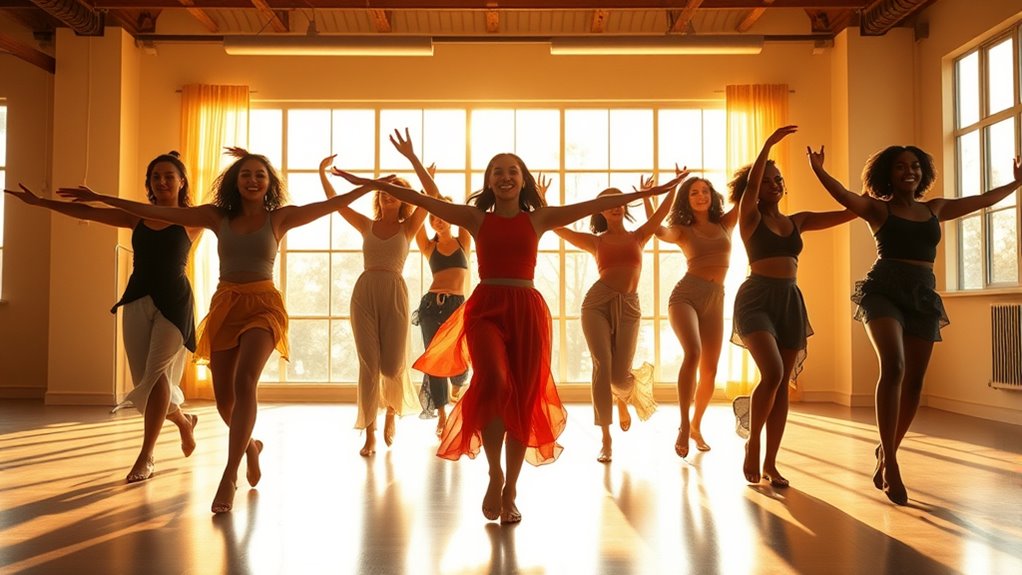

Dance movement therapy naturally connects your body, mind, and spirit through expressive movement rooted in cultural influences. By engaging in improvisation, mirroring, and guided movements, you can explore emotions beyond words, foster self-awareness, and honor your heritage. This holistic approach promotes emotional healing, resilience, and a sense of community. As you discover how cultural gestures deepen your experience, you’ll gain insights into this transformative practice—continue to explore to learn more.
Key Takeaways
- Dance Movement Therapy uses movement to foster emotional, mental, and physical integration, promoting overall well-being.
- Incorporates cultural dance styles and gestures to deepen self-awareness and emotional connection.
- Encourages listening to the body’s impulses to facilitate self-discovery and expressive communication.
- Cultivates a sense of community and shared understanding through culturally meaningful movements.
- Bridges body, mind, and spirit for transformative healing and holistic emotional balance.
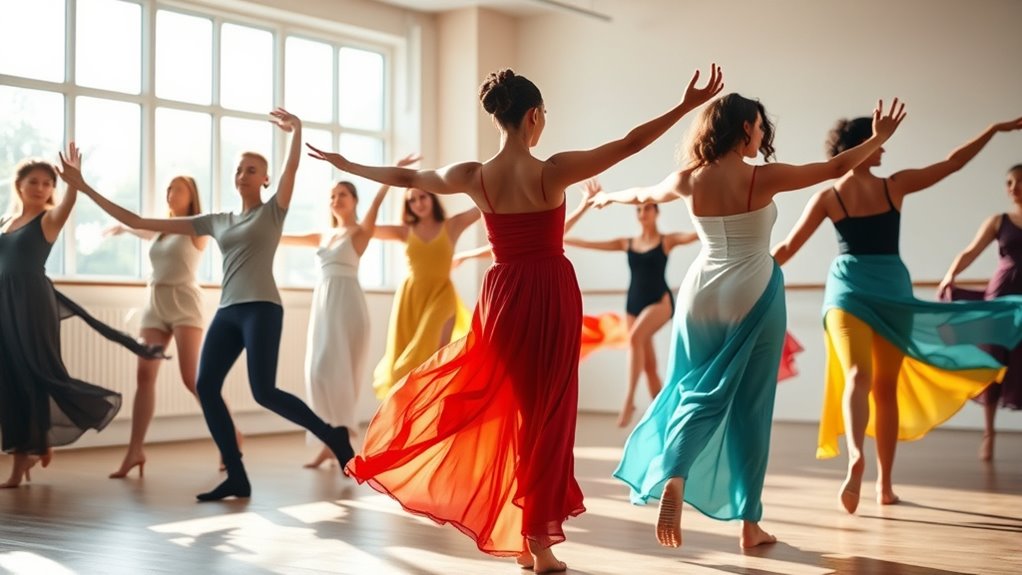
Dance Movement Therapy is a powerful form of expressive therapy that uses movement to promote emotional, mental, and physical well-being. When you engage in this therapy, you’re not just moving your body—you’re tapping into a range of expressive techniques that help you communicate feelings beyond words. These techniques include improvisation, mirroring, and guided movement, all designed to liberate emotions, reduce stress, and foster self-awareness. As you explore these methods, you’ll discover how movement becomes a language of its own, allowing you to express complex emotions that might be difficult to articulate verbally. Understanding the history of dance movement therapy** can deepen your appreciation of its roots and significance. Cultural influences play a significant role in shaping your dance movement therapy experience. Every culture brings its own unique dance styles, gestures, and movements, which can deepen your connection to your roots and help you feel more grounded. Whether you’re drawing from traditional African drumming dances, Asian martial arts, or Native American ceremonial dances, these cultural elements enrich your expressive repertoire. They serve as a bridge between your personal history and your present self, enabling you to explore identity and heritage through movement. By integrating cultural influences, you can access a sense of belonging and pride, which supports emotional healing and resilience. As you work with expressive techniques rooted in cultural traditions, you may find that your movements become more meaningful and authentic. This authenticity encourages a deeper emotional connection not only with yourself but also with others in your therapy group or session. It’s common to notice how cultural gestures evoke memories or feelings, helping you process past experiences or confront difficult emotions. Additionally, incorporating cultural influences into your movement practice fosters a sense of community and shared understanding, reinforcing that healing can be a collective journey. Throughout your dance movement therapy sessions, you’ll learn to listen to your body’s natural impulses and use them as a guide. The expressive techniques, combined with the rich diversity of cultural influences, empower you to communicate on a profound level. This approach nurtures your mind, body, and spirit, creating a holistic path toward self-discovery** and emotional balance. Whether you’re improvising freely or following structured movements inspired by your cultural background, every step helps you connect more deeply with yourself. Ultimately, dance movement therapy offers a safe, empowering space where your unique story unfolds through movement, bridging the gap between body and spirit in a truly transformative way.
Frequently Asked Questions
How Does Dance Movement Therapy Differ From Traditional Talk Therapy?
Dance Movement Therapy differs from traditional talk therapy by focusing on embodiment practices and non-verbal communication. Instead of just talking through issues, you actively use movement to express emotions and explore feelings physically. This approach helps you access deeper insights, connecting your body, mind, and spirit. You engage in movement to process experiences, making it a more holistic, sensory-driven form of therapy that complements verbal techniques.
Can Dance Movement Therapy Be Effective for Children and Seniors?
Yes, dance movement therapy can be highly effective for children and seniors. For children, it supports emotional development by helping them express feelings non-verbally. For seniors, it boosts physical health, improving mobility and balance. You’ll find that moving creatively allows both groups to connect with their bodies, enhance well-being, and foster emotional resilience, making dance movement therapy a versatile approach for all ages.
What Qualifications Should a Dance Movement Therapist Have?
If you want to dance your way into a career, skip the clown costume and focus on credentials requirements. You should pursue a degree in dance/movement therapy or related fields, then complete a certified training program. The certification process involves supervised clinical hours and passing a national exam. This guarantees your skills meet professional standards, so you can genuinely connect body, mind, and spirit—and not just do the moonwalk at parties.
Are There Specific Conditions or Disorders Best Treated With Dance Movement Therapy?
You can use dance movement therapy to effectively treat conditions like depression, anxiety, PTSD, and developmental disorders. Through expressive movement and musical improvisation, you help clients access emotions, improve body awareness, and foster emotional release. This approach is especially helpful for those who struggle with verbal expression, enabling them to connect with their inner experiences and promote healing through creative, embodied practices.
How Can I Find a Certified Dance Movement Therapist Near Me?
You might uncover a certified dance movement therapist nearby by exploring local directories or professional associations. These resources often list qualified practitioners, along with their credentials and specialties. Don’t forget to verify their certification and experience—this connection could be transformative. As you search, you’ll find the right match that resonates with your needs, opening the door to healing through movement. The journey toward wellness starts with the right step.
Conclusion
So, next time life’s chaos feels like a wild dance floor, remember that dance movement therapy is your secret dance partner. It smoothly guides your body, mind, and spirit through the chaos, turning your inner shuffles into a harmonious waltz. Think of it as your personal choreographer, transforming awkward steps into a graceful performance. Because, really, who wouldn’t want their emotional baggage to come with a killer dance move? Just swing into it and let the healing begin!