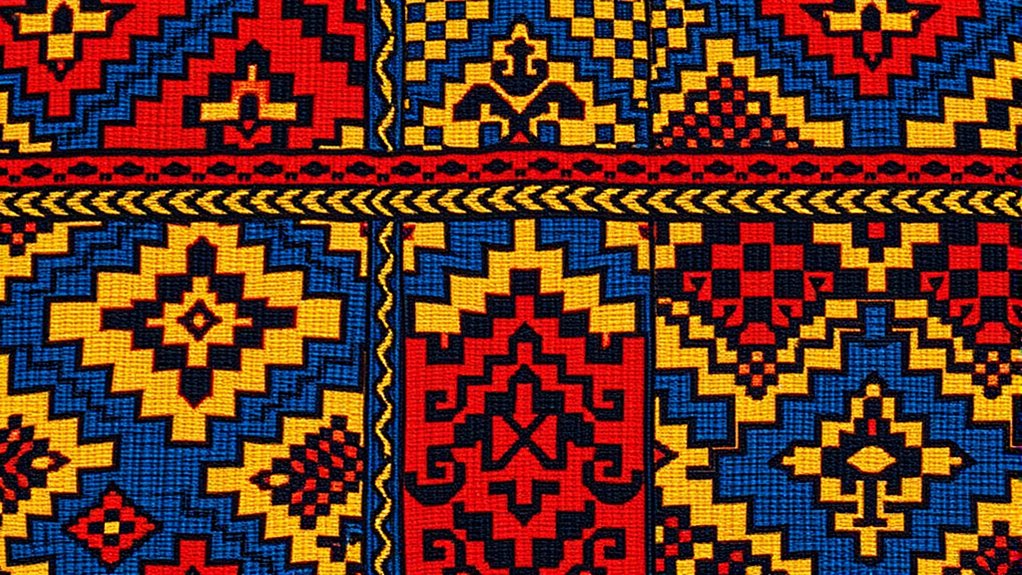

African textile patterns tell powerful stories through symbols, motifs, and vibrant colors that reflect cultural beliefs, social status, and history. Each design holds deep meaning—geometric shapes symbolize unity, while colors like indigo and red represent peace or energy. These textiles aren’t just beautiful; they’re woven messages of identity, tradition, and resilience. By exploring these patterns further, you’ll uncover stories that connect communities and preserve rich cultural heritage.
Key Takeaways
- African textile patterns feature motifs and colors that symbolize cultural beliefs, social status, and historical narratives.
- Geometric shapes and vibrant hues like indigo and red convey meanings such as unity, vitality, and spiritual connections.
- Traditional dyeing techniques like tie-dye and batik create contrasting, meaningful patterns with cultural significance.
- Textiles serve as a visual language, expressing identity, heritage, and storytelling through symbolic motifs and colors.
- Craftsmanship in textile creation preserves cultural traditions, celebrating African resilience, history, and artistic mastery.
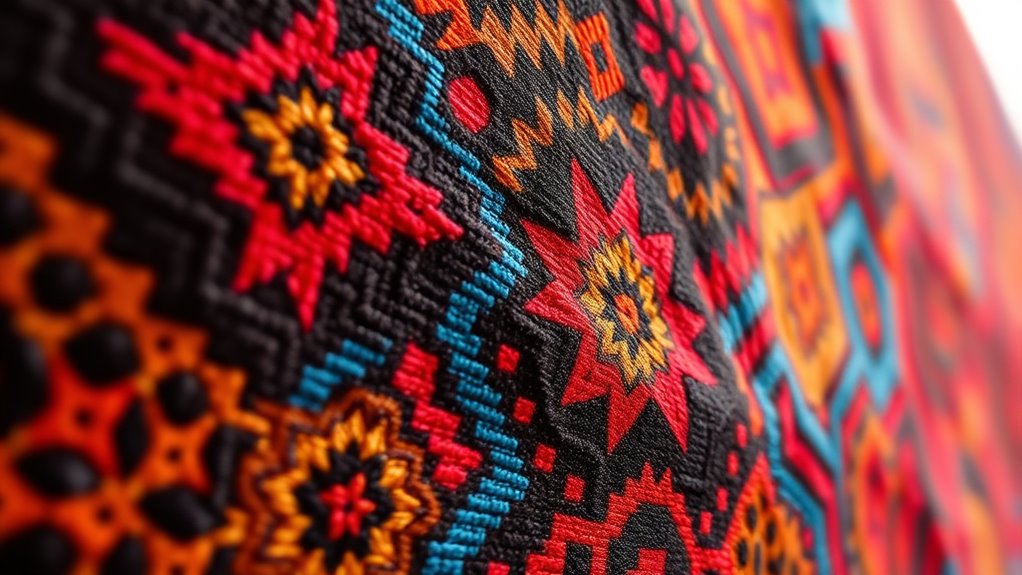
Have you ever noticed the vibrant, intricate designs woven into African textiles? These patterns aren’t just eye-catching; they carry deep symbolism and tell stories passed down through generations. Every motif and color choice has meaning, reflecting cultural beliefs, social status, or historical events. When you look closely, you’ll see that symbolism in textiles is woven into every thread, creating a visual language that communicates identity and tradition. For example, certain geometric shapes might symbolize unity or community, while specific colors could represent fertility, wealth, or spiritual connection. Understanding these symbols helps you appreciate the textiles beyond their beauty—they’re alive with cultural significance.
The artistry behind these textiles is also rooted in sophisticated dyeing techniques that have been refined over centuries. Traditional dyeing methods, like tie-dyeing and batik, involve intricate processes that require skill and patience. Natural dyes derived from plants, minerals, and insects color the fabrics, often in vibrant hues that hold symbolic meaning. For instance, indigo creates deep blues associated with peace and harmony, while bright reds symbolize vitality and life. These dyeing techniques aren’t just about coloring fabric—they’re a craft that enhances the textile’s storytelling power. The process often involves resist-dyeing, where parts of the fabric are protected from dye to create contrasting patterns, adding layers of symbolism and complexity. dyeing techniques are a crucial element that showcase the artisans’ mastery and cultural heritage.
You might notice how these techniques influence the texture and appearance of the fabric as well. The careful application of dyes and resist methods results in designs that are both visually striking and rich in cultural context. Sometimes, the dyeing process itself becomes a ceremonial act, connecting artisans and communities through shared traditions. It’s this combination of symbolism in textiles and dyeing techniques that makes African fabrics so compelling. They’re not merely decorative; they’re a tapestry of history, beliefs, and social identity woven into every fiber.
Dyeing techniques shape textiles into symbols of culture, history, and community.
When you explore these textiles, take a moment to reflect on the craftsmanship behind them. The symbols, colors, and techniques all serve as a language that expresses what words often cannot. Each piece is a tribute to a culture’s resilience and creativity. By appreciating the symbolism in textiles and the dyeing techniques used, you gain insight into a rich heritage that continues to thrive today, woven into the very fabric of African communities.
Frequently Asked Questions
How Are Traditional African Textile Patterns Preserved Today?
You can preserve traditional African textile patterns by actively engaging in cultural practices and passing down techniques through generations. Many artisans use preservation techniques like dyeing with natural materials and hand-weaving to maintain authenticity. Recognizing the cultural significance of these patterns encourages communities to keep their heritage alive. Supporting local artisans and sharing their stories also helps ensure these rich traditions continue to thrive in today’s world.
What Are the Main Differences Between Regional Textile Designs?
You’ll notice that regional textile designs differ mainly in their cultural significance and design variations. Each area has unique motifs and color schemes that reflect local traditions, beliefs, and histories. For example, West African fabrics often feature bold, geometric patterns, while East African textiles may showcase intricate, flowing designs. These differences help preserve cultural identities and tell stories through the textiles, making them more than just fabric—they’re symbols of heritage.
How Do Textile Patterns Influence Modern African Fashion Trends?
Textile patterns shape modern African fashion like vibrant brushstrokes on a canvas, making cultural identity visible and alive. You see bold, intricate designs that serve as a form of artistic expression, telling stories of heritage and tradition. These patterns influence trends by blending age-old symbolism with contemporary styles, allowing you to wear your roots proudly. They turn fabric into a powerful statement, connecting past and present in every thread.
Are There Specific Symbols in Patterns That Hold Special Meanings?
Yes, many patterns feature symbolic motifs with deep cultural significance. You’ll find that specific shapes, colors, and designs represent important values, beliefs, or social statuses. For example, certain geometric patterns symbolize unity or fertility, while colors like red or white hold particular meanings. When you wear or create these textiles, you’re carrying a piece of history and tradition, making each pattern a powerful expression of identity and cultural storytelling.
What Are the Traditional Methods Used to Create These Textiles?
You use traditional methods like dying techniques and weaving processes to create these textiles. First, you prepare natural dyes from plants, roots, or minerals to achieve vibrant colors. Then, you weave intricate patterns using handlooms or backstrap looms, carefully following specific designs. These methods guarantee each piece reflects cultural stories and craftsmanship, preserving centuries-old traditions. By mastering these techniques, you keep the rich heritage of African textiles alive and authentic.
Conclusion
As you admire these vibrant textiles, remember they’re more than just fabric; they’re stories woven into every thread. Each pattern, like a secret code, carries history, identity, and culture. Just as the ancient Egyptian hieroglyphs told stories across centuries, so do these designs connect you to a rich, living tradition. So next time you see a bold textile, imagine it as a modern tapestry, a wearable history that keeps the past alive in the present.