
To achieve professional airbrush results, focus on proper setup. Mix your paints thoroughly and test them on scrap surfaces for smooth spray and adhesion. Mask your design carefully with painter’s tape or stencils to create crisp edges. Keep your workspace organized and regularly maintain your equipment to prevent clogging. Planning your layers and shifts ahead saves time and improves quality. Mastering these steps ensures 80% of your success—continue to explore the detailed workflow winders to perfect your skills.
Key Takeaways
- Proper workspace setup with organized tools and supplies accelerates the workflow and reduces interruptions.
- Thorough paint mixing and thinning ensure smooth, consistent spray results with minimal adjustments.
- Effective masking techniques create crisp edges, minimizing corrections and rework during final stages.
- Regular equipment maintenance prevents clogs and ensures consistent spray patterns, saving time.
- Planning layers and transitions in advance streamlines the process and enhances overall quality with less rework.
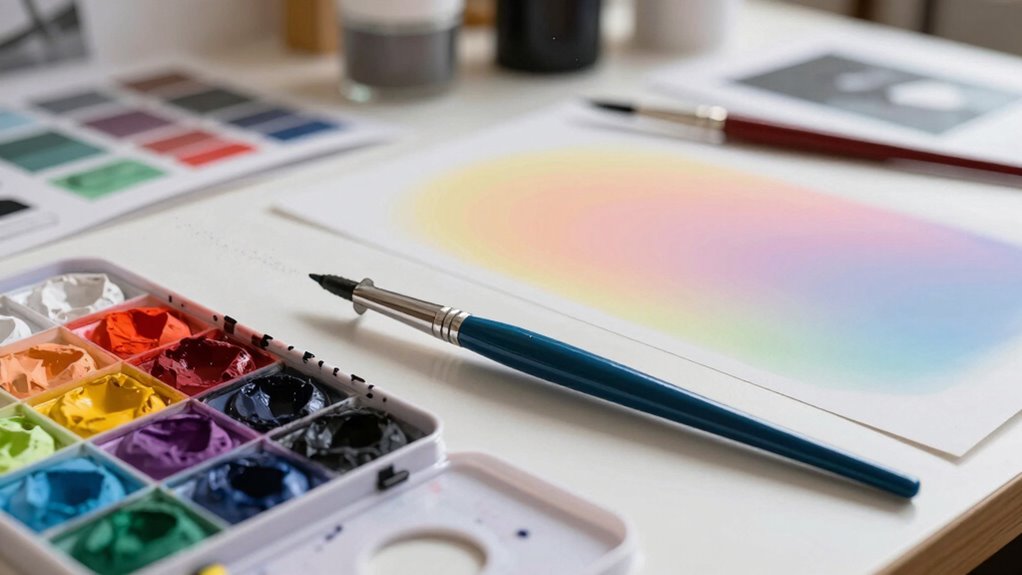
Mastering an efficient airbrush workflow can considerably improve your results and save you time. One of the most pivotal aspects is proper preparation, especially when it comes to color mixing. Before you even start spraying, take the time to mix your paints thoroughly. This ensures consistent color application and reduces the need for touch-ups later. Use a palette or mixing cups to blend your colors precisely, adjusting ratios until you achieve the perfect hue. Proper color mixing not only enhances vibrancy but also minimizes wasted paint, making your workflow more economical. Keep in mind that using the right thinning agents is essential, as a well-thinned paint flows smoothly and produces cleaner lines. Test your mixture on a scrap surface to confirm it sprays evenly and adheres well, avoiding clogging or overspray.
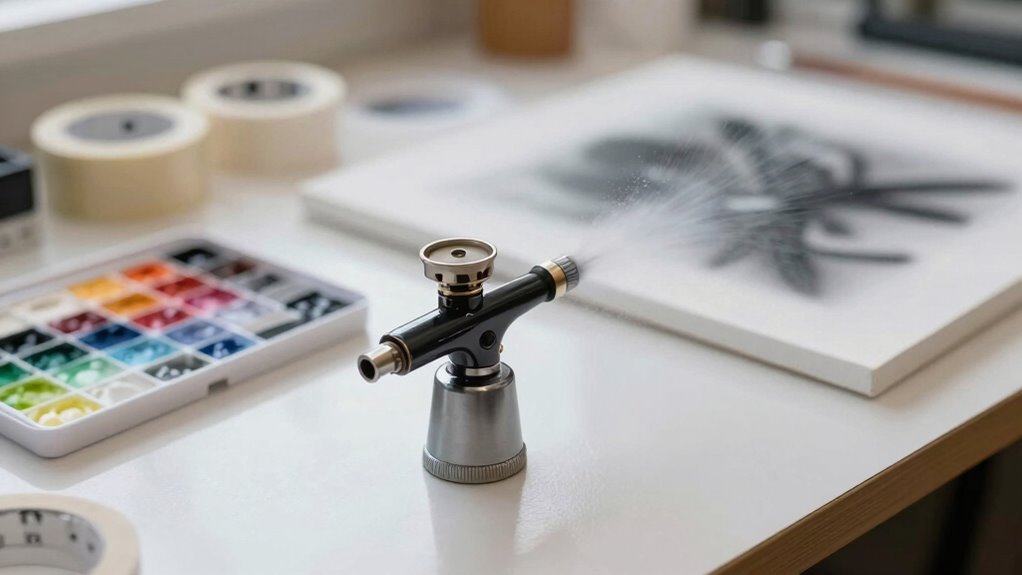
Equally important is employing effective masking techniques. Masking allows you to protect areas you don’t want to paint, creating crisp edges and clean designs. Use painter’s tape, frisket, or masking fluid, depending on the level of detail and the surface you’re working on. When applying masking materials, ensure they adhere firmly without wrinkling or lifting, which can cause bleed-through. Precise masking minimizes the need for corrections and touch-ups, saving you time and effort. For complex designs, consider using stencils or custom-cut masks to achieve sharp, professional results. Always remove masking materials carefully and at the right moment—preferably after the paint has dried sufficiently—to prevent smudging or damaging your work.
In your workflow, preparation extends beyond just color mixing and masking. Set up your workspace with all necessary tools within reach—cleaning supplies, brushes, and spare parts—so you don’t waste time searching during the process. Keep your airbrush clean and well-maintained; a clogged nozzle or dirty needle can ruin a session and cause frustration. Regularly cleaning your equipment prevents buildup and ensures consistent spray patterns. When you’re ready to start, plan your layers and transitions ahead of time, using masking and color mixing techniques to guide your process. This foresight helps you work faster and more efficiently, producing professional results with less rework.
Frequently Asked Questions
What Are Common Mistakes Beginners Make in Airbrush Setup?
You often make mistakes in airbrush setup by neglecting proper airbrush maintenance, which can clog your needle and affect spray patterns. You might rush through assembling the parts or skip testing your spray pattern before starting, leading to uneven results. To avoid this, take your time, clean your airbrush thoroughly, and troubleshoot spray pattern issues early. Proper setup guarantees smooth operation and professional-looking results.
How Often Should I Clean My Airbrush During a Session?
During a session, you should clean your airbrush every 10-15 minutes of continuous use to maintain ideal performance. Frequent cleaning prevents clogs and keeps your spray smooth. Follow maintenance tips like flushing with cleaner after each color change and inspecting parts regularly. If you notice uneven spray or sputtering, clean immediately. Consistent cleaning frequency ensures your airbrush stays in top shape, saving time and improving your results.
Which Airbrush Brands Are Most Reliable for Professionals?
Did you know 85% of professional artists choose Iwata or Badger for their airbrush brands? These brands are renowned for their professional reliability, ensuring consistent performance and durability. Iwata offers precision and smooth airflow, while Badger is praised for affordability and ease of maintenance. If you want dependable tools, these brands are your best bet to achieve top-tier results every time you pick up your airbrush.
How Do Temperature and Humidity Affect Airbrush Results?
Temperature and humidity substantially impact your airbrush results. High humidity can cause humidity effects like paint running or uneven coverage, while low humidity helps the paint dry faster for cleaner lines. Temperature control is essential; too hot or cold affects paint flow and drying times. To achieve ideal results, keep your workspace stable, monitor humidity effects, and maintain consistent temperature control to prevent issues like sputtering or inconsistent spray.
What Safety Precautions Should I Follow When Using an Airbrush?
Safety doesn’t happen by chance—wear protective gear like masks, gloves, and goggles to shield yourself from fumes and paint. Make certain proper ventilation to keep air quality safe. Keep your workspace clean and store paints properly to prevent accidents. Always read manufacturer instructions, and never spray near flames or heat sources. These airbrush safety tips help protect you while achieving flawless results, so prioritize safety every time you pick up your tool.
Conclusion
Remember, mastering your airbrush is 80% about the setup, so take the time to prepare your workspace and materials. Following a proven workflow guarantees smooth results every time. Did you know that artists who follow consistent setup routines are 30% more likely to achieve professional-looking finishes? Stay disciplined, refine your process, and you’ll see your skills improve faster than you imagined. Keep practicing, and your airbrushing will become more precise and enjoyable with each session.