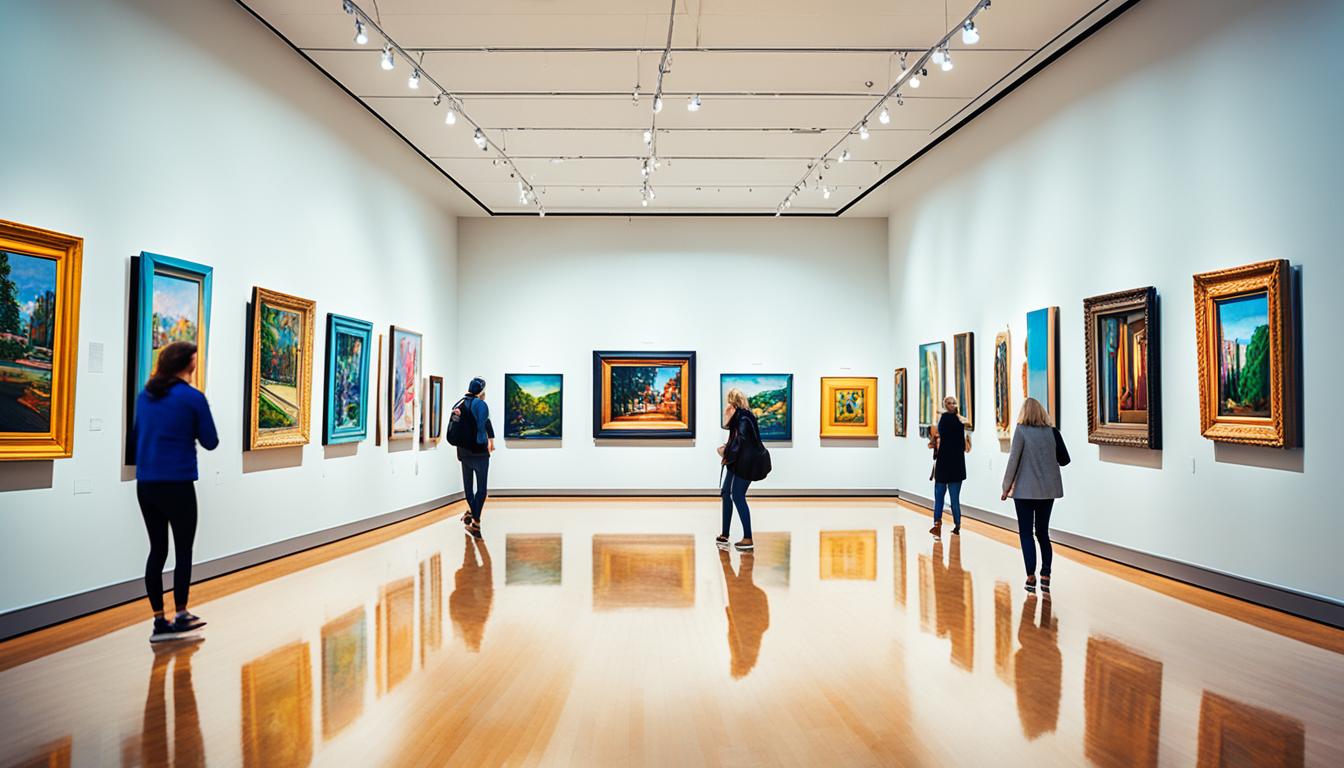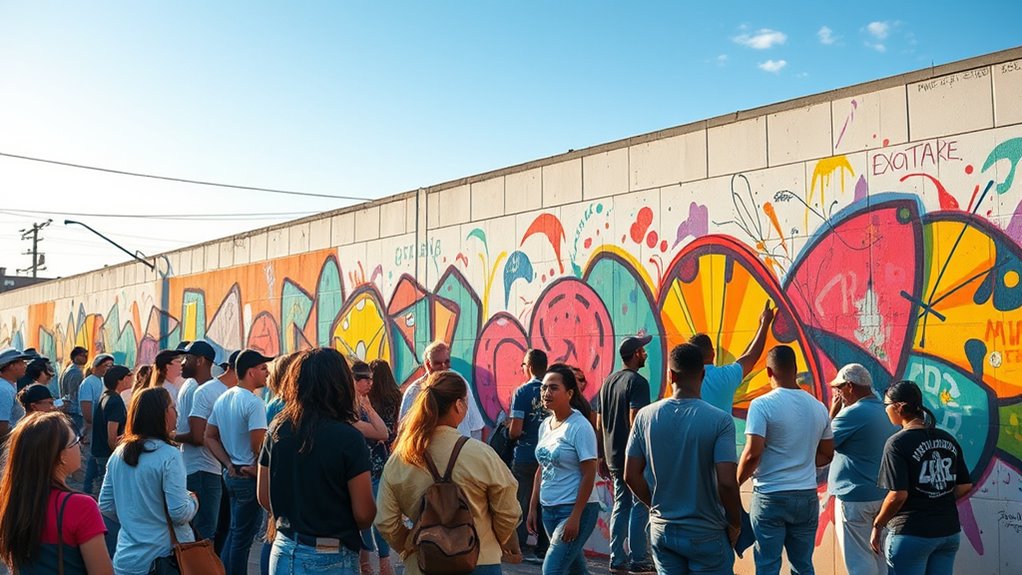

Art collectives transform urban spaces by fostering collaboration that unites diverse talents and perspectives. They turn neglected areas into vibrant cultural hubs, celebrating local histories and traditions while inspiring community pride. Through murals, workshops, and public art, they shape cityscapes that honor cultural roots and encourage social engagement. If you stay tuned, you’ll discover how these groups act as catalysts for urban growth and cultural preservation, making your city a better place to live.
Key Takeaways
- Art collectives harness diverse talents to create innovative, impactful artworks that reflect community voices and foster cultural dialogue.
- They transform neglected urban spaces into vibrant cultural hubs through murals, installations, and public art initiatives.
- Collectives promote community engagement and pride by making art accessible and meaningful to local residents.
- They incorporate traditional motifs and local stories, serving as custodians of cultural heritage within urban development.
- Collaborative efforts support economic vitality, social cohesion, and urban identity by balancing development with cultural preservation.
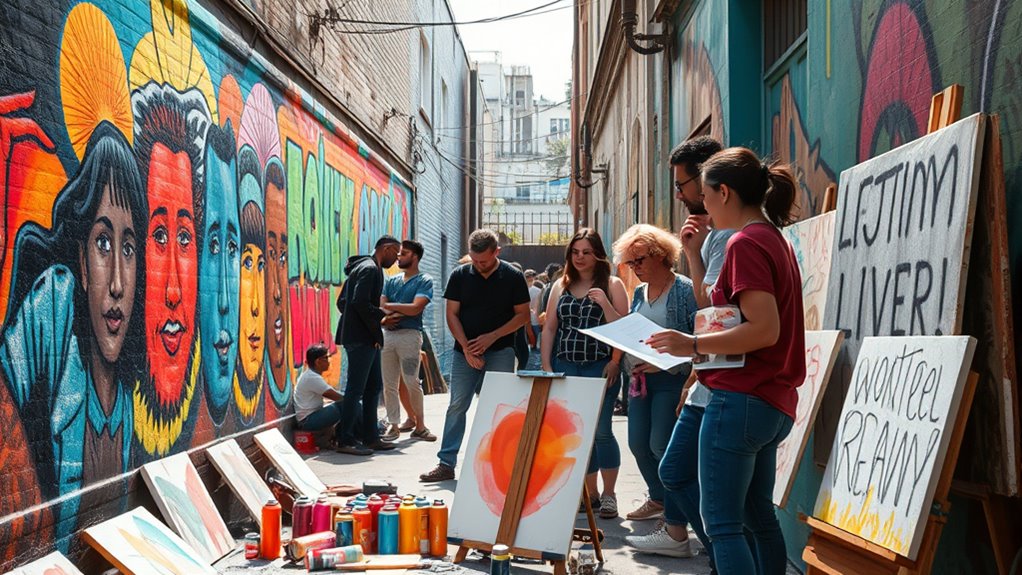
Have you ever wondered how groups of artists come together to create more impactful and innovative work? Art collectives are the answer. These collaborative groups harness the power of multiple perspectives and talents to produce artwork that resonates deeply within communities. They often emerge in urban environments, where the clash of modern development and rich cultural histories creates both challenges and opportunities. By working together, artists in collectives can influence urban development in positive ways, shaping cityscapes that honor cultural preservation while fostering creativity. Rather than working in isolation, these groups use their collective voice to advocate for public art projects, community spaces, and initiatives that celebrate local heritage. They transform neglected neighborhoods into vibrant cultural hubs, making art accessible and meaningful to residents. This collaboration not only beautifies urban areas but also fosters a sense of pride and ownership among community members, reinforcing the importance of cultural preservation amid rapid city growth. Additionally, the use of urban development strategies by collectives ensures their projects integrate seamlessly into the evolving cityscape. In an art collective, the exchange of ideas is dynamic and continuous. You’re encouraged to share your unique perspective, challenge conventional norms, and experiment with new techniques. This environment pushes boundaries, leading to innovative creations that might never emerge in solitary practice. As a result, the collective’s work often reflects the diverse voices within the community, making the art more authentic and relatable. This collaborative approach also spreads the financial burden of large projects, enabling more ambitious installations or murals that might be out of reach for individual artists. By pooling resources, skills, and networks, collectives can organize exhibitions, workshops, and public art campaigns that elevate the local cultural scene. These efforts contribute to urban development by turning empty lots or underused spaces into lively cultural landmarks, fostering community engagement and economic vitality. Moreover, art collectives serve as custodians of cultural preservation, ensuring that local history and stories are embedded into the fabric of the city. They often incorporate traditional motifs or historical narratives into their work, creating a dialogue between past and present. This effort helps prevent cultural erasure as cities modernize. Your involvement in such groups amplifies your impact, empowering you to contribute to the ongoing story of your community’s identity. Whether through murals that depict local legends or installations that celebrate indigenous traditions, collectives keep cultural heritage alive and relevant. They remind everyone that urban development doesn’t have to mean losing cultural significance; instead, it can be an opportunity for meaningful artistic expression that honors the roots of the community. In this way, art collectives become essential agents of change—driving urban development forward while safeguarding the cultural fabric that makes each city unique.
Frequently Asked Questions
How Do Art Collectives Secure Funding and Sponsorships?
You can secure funding and sponsorships by actively pursuing grant opportunities tailored to arts and community projects. Develop compelling proposals that clearly showcase your collective’s mission and impact. Use sponsorship strategies like building relationships with local businesses and organizations, demonstrating mutual benefits. Highlight your collective’s community engagement and visibility to attract sponsors. Consistently follow up, maintain professionalism, and showcase past successes to increase your chances of obtaining funding.
What Are Common Challenges Faced by Emerging Art Collectives?
You face common challenges like funding hurdles, which can limit your projects and growth. Creative conflicts may arise as members navigate different visions and styles, risking team cohesion. Time management also becomes tricky when balancing collective goals with individual commitments. Additionally, gaining visibility in a crowded art scene can be tough. To succeed, you need strong communication, clear roles, and proactive efforts to secure resources and resolve conflicts.
How Do Collectives Choose Their Collaborative Projects?
You typically choose your collaborative projects through a process of project selection that aligns with your collective’s goals and values. You consider each project’s potential for partnership development, ensuring it fosters meaningful community engagement. You evaluate the project’s relevance, feasibility, and impact, then involve all members in decision-making. This collaborative approach helps you build strong partnerships, strengthen your collective, and create impactful art that resonates with your community.
What Legal Considerations Are Involved in Forming an Art Collective?
When forming an art collective, you need to think about legal aspects like intellectual property rights and legal liability. Make sure you establish clear agreements on who owns the artwork and how rights are shared. Also, determine how liability is handled if disputes or damages occur. Drafting a solid legal foundation helps protect everyone involved, ensuring your collective operates smoothly and avoids future conflicts.
How Do Collectives Measure Their Community Impact Effectively?
Imagine your collective’s impact as a garden growing with vibrant blooms. You track community engagement through surveys, event attendance, and social media interactions—your impact metrics. Collecting feedback and observing participation helps you see which seeds flourish. Regularly analyzing this data reveals how your art cultivates connection, enabling you to nurture meaningful change and measure true community impact effectively.
Conclusion
So, next time you stumble upon an art collective, don’t dismiss it as just a bunch of hipsters with paint-splattered jeans. Remember, these groups are secretly rewriting the rules of community, creativity, and maybe even your idea of what “art” really means. Who knew that behind all those wild murals and collaborative chaos, there’s a sneaky plan to make the world a slightly more interesting place—one collective masterpiece at a time.