Between the 17th and 18th centuries, European art shifted from the dramatic grandeur of Baroque to the playful elegance of Rococo. You’ll notice that Baroque emphasizes bold contrasts, religious themes, and emotional intensity, while Rococo features delicate brushwork, secular motifs, and a focus on leisure and romance. This change reflects society’s move from religious devotion to personal enjoyment. Exploring this progression reveals how art mirrors broader cultural and social shifts over time.
Key Takeaways
- The transition from Baroque to Rococo reflects a societal shift from religious grandeur to secular, courtly elegance.
- Baroque art emphasizes dramatic contrasts, religious symbolism, and emotional intensity; Rococo favors delicate, playful themes.
- Techniques like chiaroscuro and sfumato enhance realism and storytelling in both styles but serve different aesthetic purposes.
- Baroque’s focus on awe-inspiring religious scenes contrasts with Rococo’s depiction of love, leisure, and aristocratic life.
- The evolution showcases changing cultural values, highlighting the move from spiritual devotion to personal enjoyment and ornate beauty.
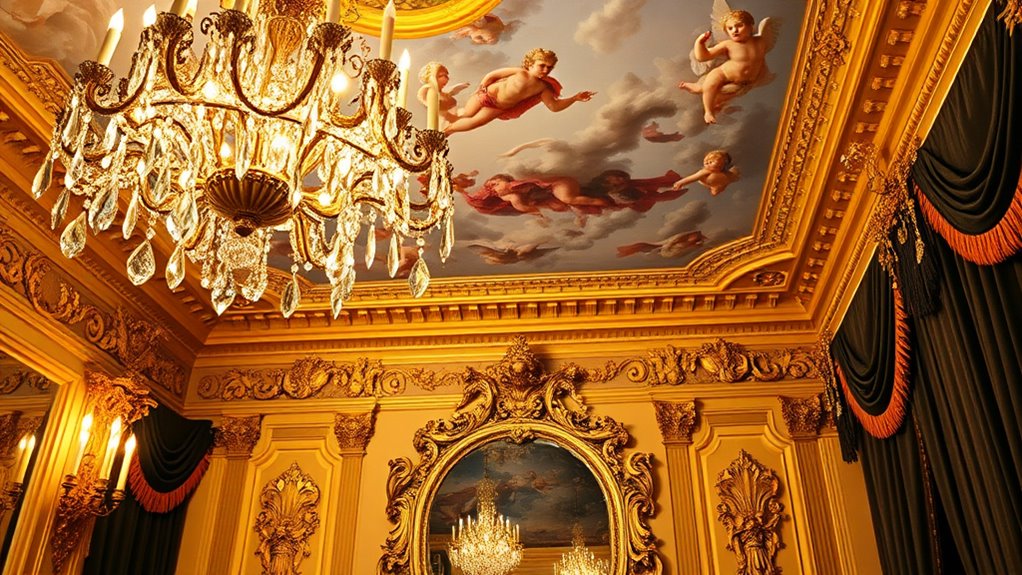
The 17th and 18th centuries were dynamic periods that saw dramatic shifts in artistic styles and ideas across Europe. During this time, art evolved from the grandeur and emotional intensity of the Baroque to the playful delicacy of Rococo, reflecting changing tastes, social structures, and cultural values. As you explore this era, you’ll notice how religious symbolism played a central role in the grandeur of Baroque art, often used to inspire awe and devotion. Artists like Caravaggio and Bernini infused their works with dramatic contrasts of light and shadow, emphasizing divine power and spiritual fervor. Religious themes weren’t just about storytelling; they aimed to evoke emotional responses that reinforced faith and church authority. Moving into the Rococo period, you’ll find a shift away from the spiritual to the secular, where courtly elegance takes center stage. Art becomes more intimate and ornate, emphasizing leisure, love, and the pleasures of aristocratic life. Artists like Watteau and Boucher crafted scenes filled with grace and refinement, often depicting mythological or romantic subjects. Their works are characterized by soft color palettes, delicate brushwork, and a sense of movement that captures the fleeting moments of courtly life. This shift reflects broader societal changes, as the focus moves from religious devotion to personal enjoyment and social display. You’ll also notice how Rococo artists emphasized intricate details and playful arrangements, making their works perfect for decorating the refined interiors of palaces and salons. The use of light, airy forms, and elegant curves conveys a sense of lightheartedness and sophistication, appealing to the tastes of the aristocracy. Throughout these centuries, art was a reflection of the shifting priorities of European society. While religion remained influential, especially in the early part of the period, the rise of secular themes demonstrates a move towards individualism and enjoyment of worldly pleasures. Both styles reveal a fascination with beauty, but their approaches differ markedly: Baroque aims to inspire awe and spiritual reverence through boldness and grandeur, whereas Rococo seeks to delight and entertain with its intricate, playful elegance. Additionally, understanding the influence of artistic techniques like chiaroscuro and sfumato helps to appreciate how artists conveyed depth and emotion in their works. These techniques not only enhanced realism but also contributed to the visual storytelling that defined each style. You’ll realize that they’re more than just aesthetic movements—they’re visual narratives of the social and cultural currents shaping Europe at the time. From the sacred to the secular, the art of this era captures a society in constant transformation, blending religious symbolism with courtly elegance to create works that continue to resonate today. Recognizing the cultural shifts of this period enriches our understanding of how art reflects societal values and historical context.
Frequently Asked Questions
How Did Political Events Influence Baroque and Rococo Art Styles?
You see that political upheavals and shifts in courtly power directly shaped Baroque and Rococo art styles. During times of upheaval, artists often created grand, dramatic works to emphasize authority and divine right, reflecting the power struggles. Conversely, as courtly power stabilized, Rococo emerged with lighter, ornate designs that celebrated elegance and leisure, showcasing the changing political landscape’s influence on artistic expression.
What Are the Key Differences Between Baroque and Rococo Architecture?
Imagine walking into a grand hall and noticing the differences. You’ll see that Baroque architecture features bold, dramatic forms with ornate detailing and elaborate structural complexity, creating a sense of awe. Rococo, by contrast, is lighter and more playful, with delicate ornamentation and asymmetrical designs. The key difference lies in Baroque’s grandeur versus Rococo’s elegance, shaping each style’s unique emotional and visual impact.
Which Artists Defined the Transition From Baroque to Rococo?
You might wonder which famous artists marked the stylistic evolution from baroque to rococo. Artists like François Boucher and Jean-Honoré Fragonard are key figures who embody this shift. Their work highlights a shift toward lighter, more playful themes and decorative details, showcasing how the artistic style evolved. These artists helped bridge the grandeur of baroque with the elegance and whimsy of rococo, shaping the artistic landscape of the 18th century.
How Did Religious Themes Evolve in Art During These Periods?
Imagine stepping into a world where religious symbolism shifts like the wind, guiding spiritual imagery from dramatic intensity to playful elegance. During these periods, art becomes lighter, emphasizing grace and intimacy over grandeur. You’ll notice a move from stirring, emotional depictions to delicate, ornate details. Religious themes evolve from powerful, awe-inspiring scenes to softer, more personal expressions, reflecting changing attitudes toward faith and spirituality that invite you to see the divine in everyday beauty.
What Role Did Patronage Play in Shaping Artistic Trends?
You should recognize that patronage influence notably shapes artistic direction. Patrons, whether religious, royal, or wealthy individuals, fund and commission works that reflect their values and tastes. This support guides artists’ choices, encouraging them to create pieces aligned with patrons’ preferences. As a result, patronage impacts not only the subject matter but also style and innovation, ensuring art serves specific social, political, or cultural agendas during these periods.
Conclusion
As you step back from the dazzling worlds of Baroque and Rococo, you realize they’re like twin flames dancing across centuries—each flickering with emotion and elegance. Their intricate details and dramatic flair paint a vivid tapestry of history, inviting you to explore the passionate heartbeats of art’s grand evolution. You’re left with a sense of wonder, as if peering through a stained glass window into a world where beauty and drama intertwine like a graceful waltz.