In the 1960s, Pop Art transformed the art world by turning everyday consumer images, celebrities, and commercial merchandise into bold, recognizable works. You’ll see how artists challenged traditional boundaries, using techniques from advertisements, comic strips, and billboards to make art accessible and reflect society’s material pursuits. This movement blurred the lines between high and popular culture, shaping societal perceptions. Continuing will reveal how Pop Art responded to and influenced the consumer age’s cultural landscape.
Key Takeaways
- Pop Art of the 1960s reflected and critiqued consumer culture through bold imagery from advertising and mass media.
- It blurred boundaries between high art and popular culture, democratizing artistic expression.
- Artists used familiar commercial visuals to create accessible, relatable art with social commentary.
- The movement challenged traditional art norms, emphasizing consumerism, celebrity influence, and materialism.
- Pop Art responded to and shaped societal perceptions of consumerism, highlighting mass media’s role in cultural values.
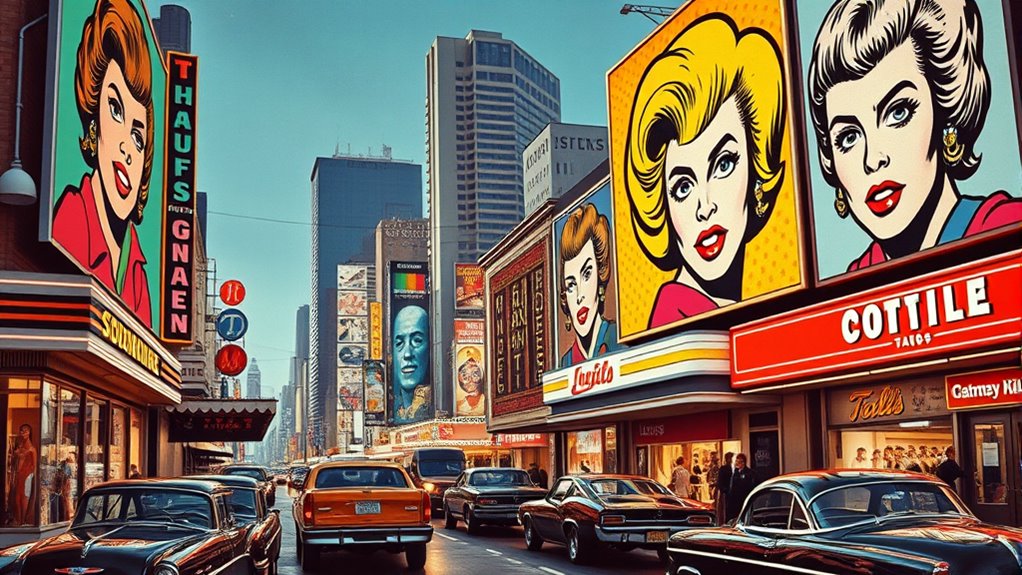
The 1960s marked a revolutionary moment in the art world, as Pop Art emerged to challenge traditional boundaries and reflect the rapidly changing culture around it. You see, this movement wasn’t just about creating visually striking images; it was a bold commentary on the rise of consumerism and the pervasive influence of celebrity culture. Artists like Andy Warhol and Roy Lichtenstein didn’t shy away from using commercial imagery—advertisements, comic strips, and mass-produced products—to blur the lines between high art and popular culture. They recognized that society was increasingly defined by what was accessible and mass-produced, and they made that the centerpiece of their work.
As you look at a Warhol Campbell’s Soup can or a Lichtenstein comic panel, you realize these aren’t just art objects—they’re statements about the commodification of everyday life. Pop artists took images that you’d see on billboards, magazine covers, and in storefronts, elevating them to the status of art. This direct approach forces you to confront how much of what you consume shapes your identity and perceptions. The use of commercial imagery wasn’t accidental; it was a deliberate act to democratize art, stripping away the elitism that often surrounded traditional fine art. Instead, it became accessible, relatable, and embedded in the fabric of popular culture. Additionally, the movement’s emphasis on visual language helped bridge the gap between high art and mass media, making art more inclusive and reflective of contemporary society. Recognizing the influence of mass media was crucial in understanding how Pop Art both responded to and shaped public perceptions of consumerism. Moreover, the movement’s embrace of commercial imagery underscored its role as a mirror to societal values and material pursuits during the era.
Frequently Asked Questions
How Did Pop Art Influence Contemporary Advertising?
Pop art heavily influences contemporary advertising by shaping consumer branding and visual marketing strategies. You see its impact in bold colors, familiar imagery, and playful designs that grab your attention quickly. This approach makes brands more relatable and memorable, encouraging you to connect emotionally. By mimicking pop art’s style, advertisers create a vibrant, engaging experience that appeals to your senses and enhances brand recognition in a competitive market.
What Were the Main Critics’ Arguments Against Pop Art?
You might wonder what critics argued against pop art. They believed that its focus on mass reproduction and commercial superficiality reduced art to mere commodities, lacking depth and originality. Critics felt pop art celebrated consumer culture at the expense of true artistic expression, arguing it was too focused on surface appeal rather than meaningful content. They saw it as superficial, undermining traditional artistic values and elevating commercialism over creativity.
Which Lesser-Known Artists Contributed to the Pop Art Movement?
Think of pop art as a vibrant garden, where many lesser-known artists bloom. You might discover underground artists who pushed boundaries with experimental techniques, adding unique flavors to the movement. These creators often worked behind the scenes, influencing mainstream pop art with their innovative approaches. Their contributions helped shape the movement’s diversity, proving that even lesser-known voices can leave a lasting mark on art history.
How Did Pop Art Impact Global Art Scenes Outside the US and UK?
You see that pop art’s international reception was vibrant, influencing global art scenes beyond the US and UK. Artists worldwide embraced its themes of consumer culture and bold imagery, leading to cultural adaptation that reflected local identities. This movement sparked new dialogues, inspiring diverse artistic practices and collaborations. Its impact fostered a broader appreciation for contemporary art, shaping the development of modern art across different countries and integrating pop art’s playful, provocative spirit globally.
Are There Any Modern Artists Inspired by 1960S Pop Art?
You see many modern artists drawing inspiration from 1960s pop art, embracing its bold colors, commercial imagery, and satirical edge. These artists create modern reinterpretations that revive pop art’s vibrancy, challenge conventions, and reflect current consumer culture. Today’s pop art revival fosters innovation, blending old techniques with new media, proving that the spirit of pop art still influences contemporary art scenes worldwide and sparks fresh conversations about society and media.
Conclusion
As you step back from the vibrant chaos of Pop Art, you realize it’s like a mirror reflecting the consumer age’s wild heartbeat. It’s not just paint on canvas; it’s a loud, colorful shout in the noise of capitalism. Pop Art turns everyday objects into iconic symbols, transforming the mundane into masterpieces. In this kaleidoscope of consumer culture, you see how art becomes a mirror, showing us who we are in the whirlwind of the 1960s.